


Litter tracking is a common headache for pet businesses, impacting cleanliness and client satisfaction. Spilled litter not only demands constant cleanup but also undermines a professional environment. Finding the right system to control this mess is essential for efficient operations and a positive brand image.

This article delves into how automatic litter robots compare against innovative designs like Furrbby's high-walled boxes in reducing scatter. We explore the effectiveness of each approach, from standard accessories like the 30'' x 23'' litter mat, to Furrbby's internal data showing a 99.2% reduction in tracking with its pine-pellet system. We aim to help you identify the best strategies for a cleaner, more efficient space.
Elevate Your Cat's Cleanliness: Durable Stainless Steel Litter Boxes
Final Thoughts

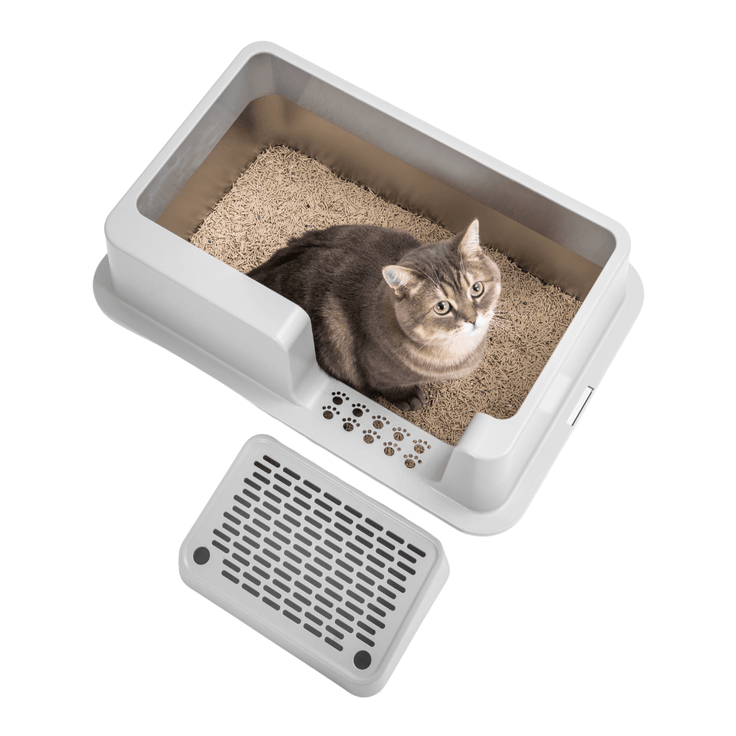
The discussion around 'tracking' reveals two aspects: the Litter-Robot's ability to monitor pet activity and the ongoing challenge of litter granules spreading outside the box. Litter-Robot models use various sensors to track cat usage, weight, and litter levels. Still, the primary concern for many cat owners, and central to this topic, is litter tracking. While Litter-Robot offers solutions like a dedicated fence, step, and a recommended mat to contain scatter, Furrbby addresses this issue with a pine-pellet system and specialized sifting boxes, claiming significant reductions in tracking. Each system provides tools to manage litter scatter, using different strategies.

For managing litter scatter, a Litter-Robot user benefits from accessories like specific fences, steps, and litter mats. These add-ons are important for catching stray granules. Furrbby, with its large pine pellets and sifting box design, presents an alternative, focusing on preventing scatter at the source. Choosing between these systems depends on your priority: advanced automation with supplementary scatter control, or a simpler system built around minimizing tracking with a specific litter type. Both aim for a cleaner floor, but achieve it through distinct design philosophies.
Frequently Asked Questions
Do Litter Robots track?
Yes, Litter-Robot models track cat usage, litter levels, waste levels, and cat weights using integrated sensors like OmniSense™ (laser and weight-based), Distance Sensors, Motion Sensors, and SmartScale® technology. SmartScale® distinguishes cats by weight increments as small as 1 pound.
How can I stop litter tracking?
To reduce litter tracking, use the included Litter-Robot 4 Fence & Step or add the LitterTrap® Mat (30'' × 23'' EVA foam mesh). These help catch granules before they spread. Also, maintain litter levels to the fill line and trim your cat's paw fur for optimal results.
High wall vs robot for tracking?
Robots excel over high walls for tracking in wall-climbing applications, achieving reliable adhesion and transitions on surfaces up to 90° inclination with horizontal forces of 41-42 N and vertical forces down to 32 N. This is enabled by modular magnetic, vacuum, or fan-based systems that autonomously detect and adapt to wall angles via servo-ultrasonic mechanisms.
What is the best box for scatter control?
For scatter control around a Litter-Robot, an effective 'box' solution is a three-sided containment tray or enclosure. It should be at least 3–4 inches (7.5–10 cm) high at the front, and 5–8 inches (12–20 cm) high on the sides and back, with a footprint extending at least 4–6 inches (10–15 cm) beyond the Litter-Robot’s base on all sides. Given the Litter-Robot 4's footprint of approximately 22 x 27 in (560 x 690 mm), this implies a minimum external tray size of roughly 30 x 34 in (760 x 865 mm) for effective scatter capture. There is no formal ASTM/ISO standard for 'scatter control boxes' for cat litter; guidance comes from manufacturer dimensions and mat design practice.
Does Furrbby have litter tracking test data?
Furrbby's internal 'tracking test' data shows that using its pine‑pellet system with large particles reduces litter tracking by about 99.2%. This claim is based on the performance of their XL/XXL stainless steel sifting litter boxes designed for pine pellets. There is no published ASTM/ISO 'litter tracking' test standard, so this 99.2% reduction is Furrbby's key metric, tied to pellet size and their specific sifting-box design.
Is a litter mat needed?
Yes, a litter mat is needed for the Litter-Robot to catch tracked litter granules from the self-cleaning litter box base. The industry standard size is 30’’ x 23’’ (or 76cm x 58cm), often with 0.5-inch thickness, made from materials like EVA foam mesh, polyester fiber, and PE plastic film for urine-repellent containment.

Best Sustainable Litter Box Materials for Odor Control
The Ultimate 2026 Buying Guide: Why Furrbby XL Wins for Big Cats
Space Matters: Choosing the Right Extra Large Metal Box for Your Layout