


Taking the Lid Off: Transitioning from Covered Plastic to Open Steel
by Laura Jane on Jun 04, 2026
Businesses in the pet supply sector often face a common challenge: selecting the right litter box that meets both pet owner expectations and feline preferences. Moving away from traditional covered plastic options to open steel designs offers significant advantages in hygiene, odor control, and overall cat comfort.
This article explores the compelling reasons for transitioning from covered plastic to open steel litter boxes, delving into cat behavioral preferences—with research showing 70% of cats have no preference between box types when cleaned daily. We will also detail how open designs improve ventilation and hygiene by preventing ammonia buildup, and offer practical, step-by-step guidance for a seamless transition for cats and their owners.

Forever Clean, Odor-Free: Discover Stainless Steel Litter Boxes
Final Thoughts
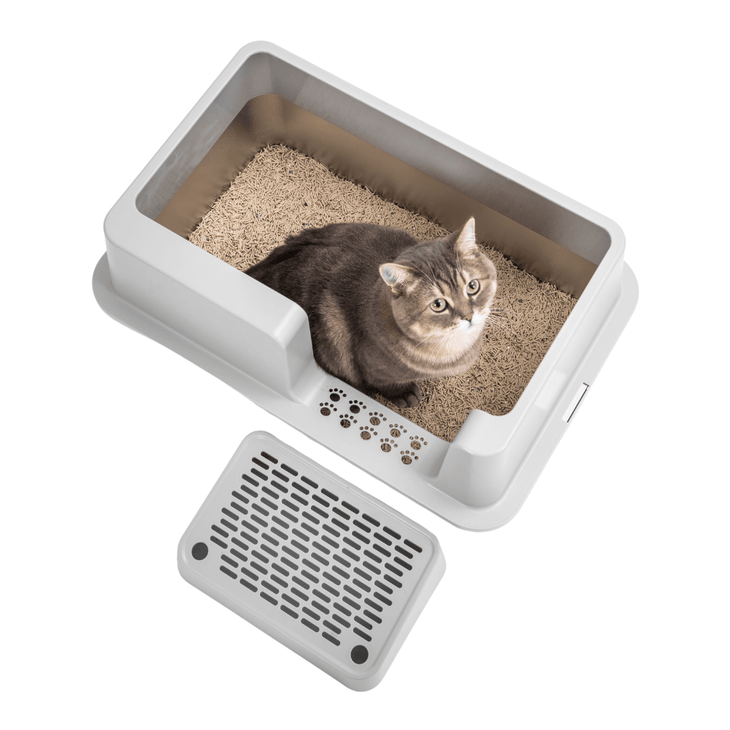
Cats often don't have a strong preference for covered or uncovered litter boxes, with a study showing 70% had no overall choice. However, open designs usually offer better air circulation and make cleaning easier for owners. Covered boxes can trap odors and ammonia, potentially bothering sensitive cats. An open top setup, like the Furrbby design, provides easy access for cats and helps reduce litter scatter with high sides, all while simplifying daily scooping.
Switching to an open litter box is a good idea for improved hygiene and ventilation. If you decide to make the change, use a gradual transition method over 7-21 days. Place the new open box next to the old one, then slowly introduce it by mixing in some used litter. Make sure the new box has a low entry for easy access, especially for older or less agile cats.
Frequently Asked Questions
Do cats prefer open or closed boxes?
A study of 28 cats found no overall preference between covered and uncovered litter boxes when factors like size, litter type, and daily cleaning were consistent. 70% of cats showed no preference, while 15% preferred covered and 15% preferred uncovered options.
Should I switch to an open litter box?
Switching to an open litter box is often recommended for better ventilation and easier hygiene monitoring. Hooded designs can trap odors and ammonia. For large cats, open boxes should have sides 3.9–5.9 inches high and entries at least 17.09 inches wide.
Why would my cat dislike a covered box?
Cats don't universally dislike covered litter boxes; a study showed 70% had no preference for covered versus uncovered boxes when cleaned daily. However, covered boxes can trap odors if not cleaned frequently, which might bother sensitive cats, or feel restrictive in multi-cat homes.
What is the recommended height for high wall privacy?
The industry standard for high wall privacy fences ranges from 6-8 feet, with 8 feet being the minimum recommended for effective privacy, noise reduction, and security in residential settings. Higher security needs may require 10-12 feet or more.
What are the benefits of Furrbby's open top configuration?
The Furrbby open top design offers easy access for cats of all ages and mobility levels, simplifies scooping and cleaning by allowing tool-free lid removal, and helps reduce litter scatter with high sides (11.5-12.5 inches) that also prevent urine leaks.
What are some effective transition tips for a new litter box?
To transition your cat to an open litter box, use a side-by-side method over 7-21 days. Place the new open box next to the old one (days 1-7), gradually mix used litter (days 8-14), then remove the old box once your cat consistently uses the new one (days 15-21). Ensure the new box has a low entry, under 7.5 inches (19 cm), for easy access.
Robots Can't Keep Up: Why 4 Cats Break Automatic Boxes
Is the Sifting Pan Too Heavy? Techniques for [Petite Owners]
The "Non-Stick" Economy: How Stainless Steel Saves 30% on Litter