


Robots Can't Keep Up: Why 4 Cats Break Automatic Boxes
by Laura Jane on Jun 06, 2026
For businesses operating multi-cat facilities, the allure of automated litter boxes is strong, promising reduced labor and consistent hygiene. Yet, many discover that these 'robot' solutions struggle to meet the demands of a busy cattery or shelter, leading to frequent maintenance and early failure.
This article explores why automatic systems, even those manufacturer-rated for 'up to 4 cats,' often fall short in high-traffic multi-cat environments. We will compare their long-term reliability against robust manual solutions, showing how the mechanical simplicity of options like those using 304 stainless steel can prevent common failure points and reduce overall operational costs.

Say Goodbye to Litter Box Odor & Mess – Permanently!
Final Thoughts
Even though some automatic litter boxes, like the Litter-Robot 4, are rated for up to four cats, the sheer daily volume and frequency of use from so many felines often overwhelm their systems. This constant demand pushes internal components, motors, and sensors past their practical limits. This leads to more frequent maintenance or earlier breakdowns than expected.
For homes with four or more cats, relying only on a single automatic litter box might not meet everyone's needs. Cat owners could consider adding robust, traditional litter boxes or exploring simpler, heavy-duty manual systems. This ensures all cats have clean facilities and reduces the strain on any automated unit.
Frequently Asked Questions
Is the Litter-Robot suitable for 4 cats?
The manufacturer-rated capacity for the Litter-Robot 4 is up to 4 cats per unit. This is based on its MultiCat™ design and sensor system. While this is the upper design limit, it exceeds the typical guidance of one box per cat plus an extra for conventional boxes.
How reliable are automatic litter boxes?
Automatic transmissions, as an example of complex mechanical systems, demonstrate reliability with lifespans ranging from 300,000 to 700,000 km before a major overhaul. Hydro-mechanical designs can last up to 700,000 km, while robotic (DSG) and CVT types typically average 100,000 to 400,000 km under heavy use.
What is the best litter box for multiple cats?
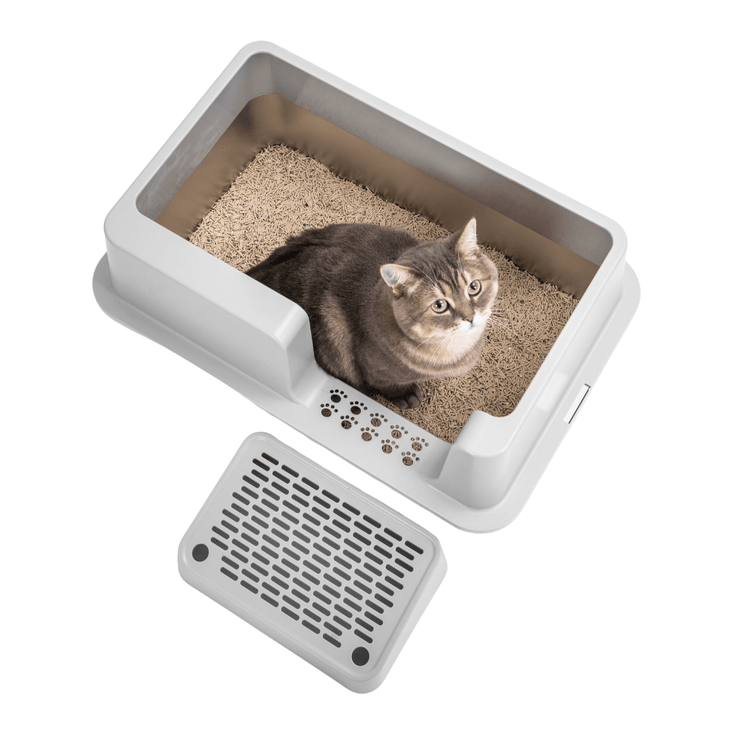
For multiple cats, an ideal setup includes jumbo/XL, open, rectangular litter boxes. Each box should be at least 1.5 times the length of your largest cat, with an interior width of 13–15 inches. You generally need one box per cat, plus an additional one. Jumbo/XL pans, 22–28+ inches long, with 2–4 inches of litter depth, should be placed in different locations.
What defines a heavy-duty litter box?
A heavy-duty litter box for multi-cat or large-cat homes is typically a rigid metal or thick BPA-free plastic box. It needs to be large enough for big cats, with walls 8–12 inches high (up to 12–14 inches for high-pee-ers). The internal floor area is usually 22–24 inches long by 16–18+ inches wide, offering 30–40 L internal volume. Stainless steel options often use austenitic stainless steel pans, 14–16 inches by 21–23 inches, with 6–12 inch walls, designed to withstand aggressive scratching and frequent cleaning.
How does Furrbby compare to automatic litter boxes?
Furrbby’s manual stainless-steel sifting system is mechanically simpler and avoids the failure points of motors or electronics found in automatic robot boxes. It uses 304 stainless steel for odor and bacteria resistance. While automatic boxes reduce daily scooping, they introduce more potential failure points, maintenance needs, and higher costs, especially with multiple cats.
What causes motor burnout?
Motor burnout happens when the winding insulation temperature exceeds its class limit, such as Class F (155°C) or Class H (180°C), as defined by IEC 60034-1. This occurs well before the actual burning point. Repair ovens for burnout typically limit temperatures to 360°C (680°F) for organic insulation or 400°C (750°F) for inorganic insulation.
Is the Sifting Pan Too Heavy? Techniques for [Petite Owners]
Taking the Lid Off: Transitioning from Covered Plastic to Open Steel
The "Non-Stick" Economy: How Stainless Steel Saves 30% on Litter