


Is the Sifting Pan Too Heavy? Techniques for [Petite Owners]
by Laura Jane on Jun 05, 2026
Lifting a heavy litter box can increase lumbar disc pressure by up to 80%, turning a daily chore into a physical risk. A standard automatic unit can weigh over 44 pounds before adding litter, creating a significant pain point for many customers, particularly petite individuals. This challenge directly impacts product satisfaction and presents an opportunity for brands that offer more ergonomic solutions.
This article provides techniques to manage heavy litter boxes. We'll examine how modular designs and "Tilt & Pour" methods reduce physical strain. We will also analyze how simple adjustments, like lowering litter levels, can decrease the total lift weight by 40–60%. These insights will help you address a key customer concern and better position products for a broader audience.

Expected Outcome (Easy Lift)
For a heavy automatic litter box, the 'easy lift' outcome means daily maintenance involves handling lightweight, modular components like a waste drawer, not lifting the entire 21–44 lb unit. This design restricts heavy lifting to infrequent deep cleans, making routine tasks manageable.
Modular Design for Daily Maintenance
The "easy lift" benefit comes from a modular design where day-to-day interaction involves handling lightweight components, not the main chassis. You primarily handle smaller parts like waste drawers and liners. This approach separates routine cleaning from the heavy, stationary shell that houses the motors and sensors. The entire system can weigh between 21 and 44 pounds, but you only need to lift that full weight during initial setup or for rare deep cleaning.
Weight Breakdown: Chassis vs. Waste Drawer
The empty base unit of a typical automatic litter box weighs between 21 and 44 pounds (9.7–20 kg). In contrast, the removable waste drawers you handle are designed to be much lighter. These drawers typically have a capacity of 9 to 12 liters. When completely full of waste and saturated litter, a drawer can weigh up to 17–26 pounds (8–12 kg). Emptying the drawer regularly ensures that the component you lift daily remains a manageable fraction of the total system weight.
Before You Begin: Weight Limits
Before choosing a heavy litter box, check two key limits. First, ensure your cat is within the operational range, typically between 3.5 to 22 pounds, for sensors to work and to prevent motor strain. Second, consider the total weight you'll lift, as units can weigh 26-44 pounds plus another 20+ pounds of litter.
Your Cat’s Weight for Safe Operation
Automatic litter boxes operate within a specific weight range, typically requiring a cat to weigh at least 3.5 pounds (1.58 kg) and no more than 22 to 25 pounds (10-11.3 kg). The minimum weight is a crucial safety feature; it ensures the unit’s sensors can detect a small cat or kitten and will not start a cleaning cycle while they are inside. The maximum weight limit protects the drum's rotation motor from mechanical strain and potential damage, which helps the unit function reliably over its lifespan.
Total Lifted Weight: The Unit, Litter, and Waste
Beyond your cat's weight, you must also manage the system's total weight. The empty unit alone can be quite heavy, with some models weighing between 26 and 44 pounds right out of the box. Adding litter increases the load significantly, as a standard two to three-inch depth can weigh over 23 pounds. A full waste drawer, with capacities often around 12 to 13 liters, also adds to the total mass you will handle during setup and cleaning.
Technique 1: The "Tilt & Pour"
The 'Tilt & Pour' technique is an ergonomic method for emptying litter boxes by tilting them to use gravity for separating waste. This approach avoids heavy lifting and reduces physical strain, relying on design features like integrated spouts and curved bases to control the pour.
| Design Feature | Example System | Key Specification |
|---|---|---|
| Two-Stage Tilting | Popur Split Litter System (SLS) | Handles up to 33 lbs of clumping litter |
| Curved Base & Pour Spout | Litter Genie Litter Box | High, flexible edges prevent overflows |
| Locking Edges & Pour Side | Manual Aid (EVA Litter Mat) | Dimensions: 23.6 x 17.7 inches |
The Principle of Gravity-Assisted Sifting
This method uses gravity to do the heavy work, separating soiled clumps from clean litter without requiring you to lift the entire weight of the box. The core idea is to reduce physical strain, which is especially useful when managing modern litter boxes that can weigh 24-32 lbs even when empty. By simply tilting the pan, waste slides toward a designated collection point. Some systems are engineered so effectively that they allow for nearly one-handed operation, making waste management faster and more accessible.
Design Features and Weight Capacities
Specific design features make the "Tilt & Pour" method possible. Many litter boxes incorporate integrated pour spouts, curved bases, and high brims to guide waste and prevent spills during the process. For instance, the Popur SLS system employs a two-stage tilting mechanism to manage up to 33 lbs of clumping litter. Even manual aids like EVA mats, measuring 23.6x17.7 inches, are designed with locking edges and a dedicated pour side to contain litter while you tilt the pan for cleaning.
The Ultimate Upgrade for a Cleaner Home & Happier Cat
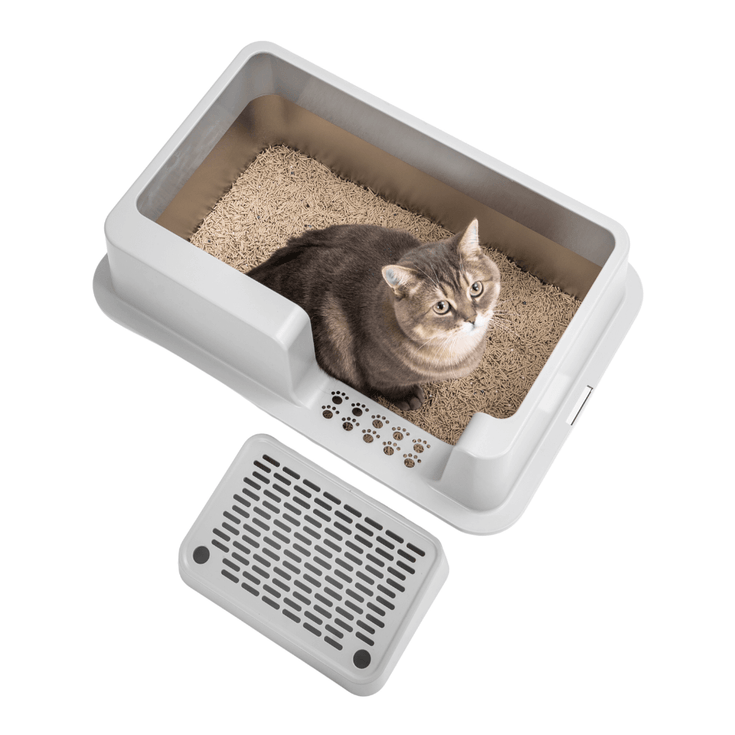
Technique 2: Lower Litter Levels
Keeping litter at the recommended depth of 2–3 inches is a simple technique that can reduce the box's total weight by 40–60%. This makes lifting easier while still giving your cat enough material to dig and cover comfortably.
The 2-to-3-Inch Rule for Lighter Lifting
Aim for a consistent litter depth of 2–3 inches (5–7.5 cm). This depth provides enough material for most cats to dig and cover their waste effectively without adding unnecessary weight to the box. Reducing the litter level from 4–5 inches down to this recommended range can cut the total lift load by 40–60% in a standard-sized litter box.
Maintaining this optimal depth also helps prevent urine from pooling and sticking to the bottom of the pan. It creates a balance where the box remains functional for your cat but light enough for easier scooping and full-box changes.
Material Choice: Standard vs. Lightweight Litters
The type of litter you choose directly impacts the box's weight. Lightweight clay litters are formulated to provide more volume for their weight; a 10-pound bag can often fill the same space as a 20-pound bag of standard clay. This makes them an excellent choice for reducing the overall load you have to lift.
| Litter Characteristic | Standard Clay Litter | Lightweight Clay Litter |
|---|---|---|
| Weight-to-Volume Ratio | Higher density; more weight per inch of depth. | Lower density; up to 50% less weight for the same volume. |
| Stability for Heavy Cats | Recommended. Provides a firm, stable surface that prevents sinking. | Not ideal. Cats may feel unsteady or sink into the substrate. |
| Best Use Case | Large, overweight, or senior cats who need better footing. | Smaller cats where the owner's lifting capacity is the main concern. |
There is an important trade-off to consider, especially for large or overweight cats. Veterinary guidance suggests that standard-weight clay provides a more stable surface and prevents heavy cats from sinking, which can make them feel more secure. If you have a large cat but need a lighter box, use standard clay but keep the depth at the low end of the range (around 2 inches). You can manage cleanliness by scooping more frequently instead of relying on extra litter depth for absorption.
Troubleshooting: Back Safety
Lifting a heavy litter box from the floor can easily exceed safe spinal load limits, especially for petite users. Recommended weights for floor-level lifts are often under 12 kg (26 lb). To avoid injury, reduce the litter volume, raise the box on a stand, or slide it instead of lifting.
Understanding the Risk of Floor-Level Lifting
Lifting a litter box from the floor is more strenuous than it seems. Safety guidelines from Liberty Mutual show that for many women, the recommended weight limit for a floor-level lift with a slight reach can be as low as 10–12 kg (22–26 lb). A large litter box filled with 6–10 liters of clumping litter often weighs between 10–22 lb, not including the box itself. This places the total weight at or above the cautious safety limit. Furthermore, bending your torso forward 20–30 degrees while holding a load away from your body increases lumbar disc pressure by approximately 50–80%, putting direct stress on your lower back.
Practical Strategies to Reduce Spinal Load
You can significantly lower the risk of injury by modifying how you handle the litter box. The most direct method is to reduce the source weight. Try filling the box with less litter, aiming to keep the total mass under 12 kg (26 lb). This simple adjustment can bring the load within a safer range for floor-level handling.
Another effective strategy is to improve the lifting posture. Place the litter box on a low stand or platform to raise its handles to a height between 80–100 cm (about hip level). This brings the lift into an ergonomically favorable zone, reducing the need to bend your back and significantly decreasing spinal compression.
Whenever possible, avoid lifting the box entirely. Sliding it across a smooth floor requires far less effort and poses less risk to your back. Moving a 15 kg (33 lb) box by sliding it only requires about 7–10 lbf of horizontal force—a substantial reduction in strain compared to a deadlift from the floor.
Final Thoughts
Managing a heavy litter box does not need to be a workout. The key is to separate daily chores from infrequent deep cleans. Modern automatic systems let you handle lightweight waste drawers, leaving the heavy base untouched. For manual boxes, techniques like the "Tilt & Pour" use gravity to do the work for you. Simply using less litter can also make a big difference, making the pan much lighter and easier to handle without sacrificing cleanliness.
Ultimately, your safety comes first. Lifting a heavy, awkward box from the floor puts unnecessary strain on your back. Instead of forcing the lift, change the setup. Placing the box on a low stand or choosing to slide it across the floor are simple adjustments that protect you from injury. By focusing on smart techniques and the right equipment, you can make litter box maintenance a manageable and pain-free task.
Frequently Asked Questions
How heavy is a sifting litter box?
Most consumer sifting litter boxes weigh about 4–9 lb (1.8–4.1 kg) when empty. Plastic models are typically lighter, around 4 lb, while stainless-steel models can weigh up to 9 lb.
Can a petite person lift a sifting box?
Yes. Most commercial sifting boxes are designed to be manageable. A petite adult can typically lift one with a standard litter load, which is usually around 8–11 lb of litter plus the weight of the box itself.
Is there too much litter in my sifting box?
You might have too much litter if it's deeper than 2–3 inches (about 5–7.5 cm) or weighs more than the manufacturer's limit, often around 10–11 lb. Exceeding this makes the box heavy and can reduce sifting effectiveness.
How can I lift a heavy litter box safely?
Use a proper squatting technique. Bend at your knees, not your waist, and keep your back straight. Grip the box firmly, hold it close to your body, and lift by pushing up with your legs.
Do I have to lift the whole pan to sift?
No, you do not need to lift the entire pan if you have a modern self-cleaning litter box. These models use automated mechanisms to separate waste, handling the heavy work for you.
Are there lightweight sifting boxes available?
Yes, lightweight options exist. These are often smaller, like stackable 6-inch diameter classifiers or simple screens made from plastic and steel mesh, designed for easier handling.
Robots Can't Keep Up: Why 4 Cats Break Automatic Boxes
Taking the Lid Off: Transitioning from Covered Plastic to Open Steel
The "Non-Stick" Economy: How Stainless Steel Saves 30% on Litter