


![Types of Stainless Steel Litter Boxes: A Style Guide for [Modern Interiors]](http://www.furrbby.com/cdn/shop/articles/5_6a86a83c-3714-4370-a27c-610e6fc9c73e.jpg?v=1772502249&width=360)
Types of Stainless Steel Litter Boxes: A Style Guide for [Modern Interiors]
by Laura Jane on Feb 02, 2026
Sourcing pet accessories that complement high-end modern interiors can be a major challenge. A bulky plastic litter box often clashes with a clean aesthetic and can retain odors, undermining the quality of a space. Stainless steel presents a sleek, hygienic alternative, but not all options meet the same standards for design and durability.
This style guide explains how to select the right types of stainless steel litter boxes based on material, function, and aesthetics. We analyze the specifications that matter—from ensuring the use of 304-grade steel to comparing how different entry styles perform. For instance, some side-entry models can contain up to 85% of litter scatter, while certain finishes mimic the look of high-end appliances, blending seamlessly into your design.

The Main Types of Stainless Steel Boxes Explained
The main types include open-top trays for accessibility, hooded boxes for odor control, high-sided models to contain mess, and sifting or modular systems for easy cleaning. All are typically made from durable, non-porous 304-grade stainless steel to resist odors and bacteria.
| Box Type | Key Features | Ideal Use Case |
|---|---|---|
| Open-Top Tray | Easy entry/exit, excellent ventilation, minimum size of 18” x 14”. | Senior cats, kittens, or cats that dislike enclosed spaces. |
| Hooded/Covered Box | Provides privacy and contains odors with carbon filters and tight seals. | Small living areas or for owners focused on odor management. |
| High-Sided Models | Extra-tall walls (e.g., 11.4") to prevent litter scatter. | Cats that dig aggressively or tend to kick litter outside the box. |
| Modular/Sifting Systems | Built-in waste separation, adjustable configurations, reduces litter waste. | Multi-cat households or for simplifying daily cleaning routines. |
Open Trays and Hooded Boxes
Open-top trays are the most straightforward design, offering maximum accessibility and ventilation. Their simple, low-profile structure is ideal for senior cats with mobility issues or felines that feel anxious in confined spaces. A typical minimum size of 18 by 14 inches gives the cat enough room to turn around comfortably. These boxes are almost always constructed from a single piece of 304-grade stainless steel, which prevents bacteria and odors from penetrating the surface.
Hooded or covered boxes prioritize privacy and odor containment. They feature a removable lid, often made from ABS plastic, that helps trap smells inside. Many models include carbon filters and tight seals around the seam to further manage ammonia gas. This design is particularly well-suited for smaller homes or apartments where the litter box might be in a shared living area. The enclosed space gives the cat privacy while preventing odors from escaping.
High-Sided and Sifting Systems
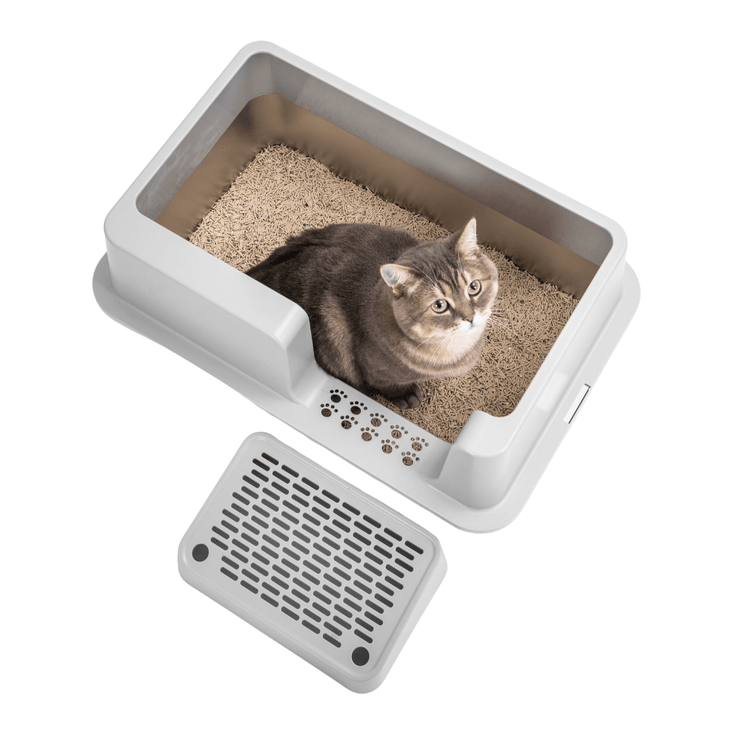
High-sided models are engineered specifically to combat litter scatter. With extra-tall walls, some reaching up to 11.4 inches, they effectively contain litter kicked up by cats that dig aggressively. This design is highly favored by users, with research showing 89% of owners prefer it for its ability to keep the surrounding area clean. Despite the high walls, one side is often lower to allow for easy entry and exit.
Modular and sifting systems are built for efficiency and simplified cleaning. These boxes often feature a built-in sifting mechanism that separates waste from clean litter, reducing consumption and making daily scooping faster. Some modular designs can be adjusted or expanded, making them a good fit for large breeds like Maine Coons or for multi-cat households. Their focus on waste separation and adaptability makes them a practical choice for owners looking to streamline their cleaning process.
How to Choose the Right Type
To choose the right type, first verify it uses 304-grade stainless steel for durability. Next, select a size at least 1.5 times your cat's length—typically around 23x16 inches for a single cat. Finally, consider high walls (8+ inches) for scatter control and a low entry for accessibility.
| Selection Criteria | Recommendation | Key Benefit |
|---|---|---|
| Material Grade | AISI 304 Stainless Steel | Resists corrosion, stains, and scratches. |
| Box Size | Length ≥ 1.5x cat's body length (nose to tail base). | Allows cat to turn around and dig comfortably. |
| Wall Height | Minimum 6 inches; 8+ inches for active diggers. | Controls litter scatter and urine spray. |
| Construction | Seamless or sealed-seam design. | Prevents urine leaks at joints and corners. |
Assess Material Grade and Box Dimensions
The first decision point is the material itself. Always prioritize boxes made from AISI 304 grade stainless steel. This alloy offers superior resistance to rust, scratches, and stains caused by acidic urine, ensuring the box remains hygienic and looks clean over time. Lower-grade steel can pit or degrade, trapping odors and bacteria. After confirming the material, focus on size. A good rule is to select a box with a length at least 1.5 times your cat’s nose-to-tail measurement. This provides enough space for them to turn around and dig without feeling cramped.
For a single, average-sized cat, a footprint of around 23–24 inches long by 16 inches wide is a common and effective size. If you have multiple cats sharing a box, look for an XL model with a length of 23 inches or more. A larger box reduces competition and territorial stress, helping maintain a peaceful multi-cat household.
Select Wall Height and Entry Style
Wall height directly impacts litter containment. A minimum wall height of 6 inches can manage basic litter scatter. For cats that are vigorous diggers or tend to spray, walls of 8 inches or higher provide much better protection. Many designs pair high walls with a lower entry point on one side. This combination offers excellent containment while ensuring easy access for kittens, senior cats, or those with mobility issues.
Check that the box features seamless construction or has fully sealed seams. This detail is critical for preventing urine from seeping through joints, which can damage floors and create hidden odors. Some manufacturers also offer specialized stainless steel trays, such as a 14.8 x 22.5 x 3.2-inch insert, designed to replace the plastic tray in specific self-cleaning litter box systems. These drop-in trays provide the durability and odor resistance of steel while integrating with your existing automated unit.
Quick Comparison Table
Side-entry stainless steel boxes excel at litter containment, retaining about 85% of litter. Front-entry models prioritize accessibility, which is great for senior cats or kittens. Both designs use a non-porous, rust-proof material that resists scratches and odors better than plastic.
Litter Containment and Tracking
Side-entry designs are highly effective at keeping litter inside the box, containing up to 85% of kicked-up material. This makes them a strong choice for reducing tracking across your floors. In comparison, front-entry models retain around 60% of litter, which can result in up to 30% more scatter on surrounding surfaces.
Accessibility and Hygiene
When it comes to ease of use for your cat, front-entry designs are the clear winner, earning an excellent (5/5) accessibility rating. Their low entry point is perfect for kittens, senior cats, or felines with mobility issues. Side-entry models have higher walls that contribute to better litter containment but result in a fair (2.5/5) accessibility rating that might be challenging for some cats.
Both designs benefit from the non-porous stainless steel material. It is rust-proof and highly scratch-resistant, which helps stop bacteria from forming in grooves and absorbing odors. This is a significant advantage over plastic boxes, which can develop scratches that harbor smells and germs.
The Litter Box That Never Stinks & Cleans in Seconds.
Final Thoughts
Choosing the right stainless steel litter box comes down to a few practical details. Look for a model made from 304-grade steel that gives your cat enough room to turn around. High walls and seamless corners are also important features that contain litter and prevent leaks, making cleanup much simpler and protecting your floors.
A well-selected stainless steel box does more than just solve common issues like lingering odors and stains. Its clean lines and simple finish can blend into a modern home, turning a necessary item into a discreet part of your space. It shows you don’t have to choose between a clean home and a stylish one.
Frequently Asked Questions
How can I hide a litter box in my living room?
Use a hidden litter box enclosure designed as a furniture cabinet. Models sized between 25-55 inches long and 20-25 inches wide can serve as end tables or benches, fitting standard litter boxes while providing ventilation and supporting up to 110 lbs.
Are there litter boxes that look like furniture?
Yes, many litter box enclosures are designed to look like furniture. These pieces typically have external dimensions ranging from 31.5 to 55 inches long, 19 to 21 inches wide, and 22 to 35 inches high, accommodating most standard litter boxes.
Does a stainless steel box look too industrial?
Stainless steel litter boxes do not have a single “industrial” look. They use the same high-end finishes as modern kitchen appliances, like No. 4 brushed or No. 8 mirror finishes. Manufacturers often design them with rounded corners and sleek lines to appear elegant and blend with contemporary home décor.
What is the best looking litter box for modern homes?
For modern homes, a 304 or 316-grade stainless steel box with a brushed finish is a great choice. Look for units with concealed walls, radius corners for easy cleaning, and an interior width of 22–24 inches. These features align with a minimalist aesthetic and high hygiene standards.
How do I stop litter tracking on my hardwood floors?
To prevent litter tracking on hardwood, use a high-sided litter box placed on a large, textured waterproof mat extending at least 24–36 inches from the exit. Combining this with a low-tracking pellet litter and daily sweeping around the area will contain the mess.
Can I put a stainless steel box inside a cabinet?
Yes, you can put a stainless steel litter box inside a cabinet if it has enough clearance for airflow and access. For proper integration, designers often follow casework standards similar to those for industrial stainless cabinets, ensuring sufficient space for removal and ventilation.
Managing Pine Pellets for 3+ Cats: Capacity & Frequency Guide
Sifting vs. Traditional Scooping: Why You Should Ditch the [Poop Shovel]
Navigating in the Dark: Why Tactile Cues Matter for Blind Cats
Gunmetal vs. Silver: Choosing the Right Finish for Your Bathroom