


The Senior Cat Bathroom Checklist: 5 Things You Must Change
by Laura Jane on Jun 01, 2026
For pet businesses and service providers, understanding the evolving needs of senior cats is crucial. Owners of aging felines frequently seek solutions for their pets' comfort, mobility, and hygiene, especially concerning bathroom habits and accessibility as their cats get older.
This guide outlines five essential adjustments for creating a senior-friendly bathroom environment. We cover everything from lowering litter box entry points, a common need for cats over 10 years who often avoid jumping, to improving overall hygiene by recommending stainless steel surfaces with specific sanitary design guidelines like a surface roughness at or below ≤32 µ-inch.

Lower the Entry.
Adapting a senior cat's home environment makes high places like food bowls, litter boxes, and resting spots easier to access. This helps cats with reduced mobility from arthritis or stiffness. Cats over 10 years often avoid jumping, seeking lower sleeping areas. Watch for limping, unusual routes to high spots, or less activity, as these indicate a need for such changes.
| Modification Area | Recommended Action | Purpose |
|---|---|---|
| Elevated Access Points | Use pet stairs, ramps, or lower shelves for food, water, litter boxes, and beds. | Reduces jumping strain for senior cats. |
| Litter Box Accessibility | Place boxes at ground level in low-traffic areas; consider larger or low-sided boxes. | Accommodates difficulty with entry/exit and potential incontinence. |
| Sleeping Areas | Provide soft, orthopedic bedding in sheltered, low spots; set up multiple stations. | Offers comfort and encourages resting without climbing. |
Why Lowering Entry Points is Crucial for Senior Cats
Adapting a senior cat's home environment offers easier access to high places like food bowls, litter boxes, and resting spots.
This adjustment accommodates reduced mobility in aging cats due to conditions such as arthritis or stiffness.
Cats over 10 years old often avoid jumping and naturally seek lower sleeping areas.
Look for signs like limping, seeking alternative routes to elevated spots, or decreased activity levels as indicators for these modifications.
Practical Home Modifications for Enhanced Accessibility
For elevated access points, use pet stairs, ramps, or lower shelves for food, water, litter boxes, and beds to minimize jumping strain.
Adjust litter boxes by placing them at ground level in low-traffic areas; consider larger or low-sided boxes if straining or dribbling becomes an issue.
Provide soft, orthopedic bedding in sheltered, low spots; setting up multiple stations encourages use without requiring climbing.
Veterinary guidelines suggest monitoring for pain and environmental changes during bi-annual exams for cats over 10 years.
These adaptations improve a senior cat's quality of life by maintaining independence, complementing regular checks for weight and appetite changes, and joint health.
Increase the Size.
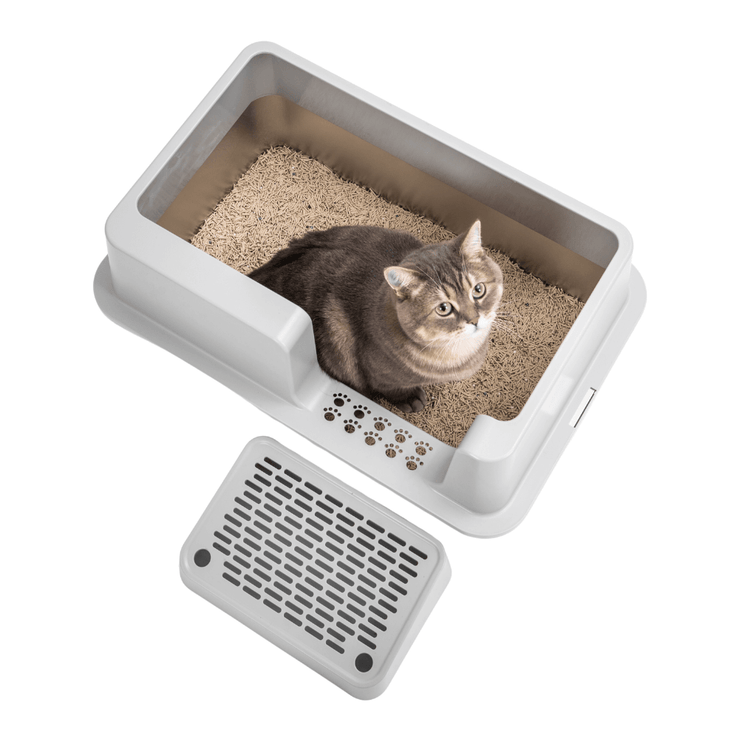
Increasing the size of a senior cat's litter box provides more comfortable space for movement, helps manage mobility issues, and can reduce instances of house-soiling. Larger boxes accommodate various body sizes and offer a cleaner area, improving overall quality of life.
The Benefits of Greater Litter Box Space
A larger litter box provides more room for senior cats to move and turn comfortably, which is crucial for those experiencing mobility issues or degenerative joint disease.
Increased space helps accommodate fluctuations in body weight or BCS 1–9, ensuring continuous ease of use, particularly for larger senior cats.
A spacious environment can mitigate house-soiling and elimination patterns disruption, common concerns with cognitive dysfunction in older cats.
Selecting the Right Dimensions for Senior Cats
Choose litter boxes that allow a senior cat to fully turn around and comfortably squat without touching the sides, optimizing comfort.
Sizes like L, XL, and XXL are commonly available to cater to varying cat sizes and spatial needs.
A larger footprint provides a cleaner area for repeated use and can act as an environmental change to support quality-of-life optimization for cats with physical limitations.
Ensure the box's entry remains accessible, even as the overall size increases, considering cats with higher pain scores or lower mobility scores.
Soften the Litter.
To enhance comfort for senior cats, choose soft, low-dust litters like recycled paper or wheat-based options. These litters minimize joint and paw discomfort, and also help cats with respiratory issues. Avoid hard or noisy litters. When changing litter, introduce new, softer types gradually. This helps your cat adjust and maintains their normal litter box habits. Also, consider litters that balance softness with good clumping and moderate granule size for stable footing, reducing impact on arthritic joints.
Enhancing Comfort: The Need for Softer Litter
Select soft, low-dust litters (e.g., recycled paper, wheat, vegetal formulas) to reduce joint and paw discomfort for senior cats.
Softer options also benefit cats with respiratory issues due to minimal dust output.
Avoid hard, noisy, or coarse litters like silica crystal or some mineral types, which can deter arthritic or sensitive senior cats.
Prioritize litters explicitly marketed as "soft" or "gentle on paws" to reduce irritation for geriatric cats.
Practical Steps: Transitioning and Optimizing Litter Choice
Implement a gradual transition by mixing new, softer litter with the old to prevent stress and allow your cat's paws and joints to adapt.
Monitor your senior cat's preference and normal elimination habits throughout the transition period.
Balance softness with practical considerations: choose formulas that offer moderate granule size and good clumping to ensure stable footing for unsteady seniors.
This balanced approach improves stability in the litter box while reducing impact shock on arthritic joints.
Effortless Clean, Odor-Free Home: Discover Stainless Steel Litter Boxes
Add a Nightlight.
Adding a dim, steady nightlight helps senior cats with poor vision safely navigate to key resources like the litter box, food, and water during the night. This reduces disorientation, anxiety, and the risk of falls or missed litter-box trips in low-light conditions.
Supporting Nighttime Navigation
A dim, steady nightlight helps senior cats with declining vision navigate safely.
This setup assists them in finding key resources like the litter box, food, and water during the night.
It reduces disorientation, anxiety, and the risk of falls or missed litter-box trips in low-light conditions.
Choosing and Placing Nightlights
Select low-wattage or LED plug-in nightlights that provide constant, gentle illumination.
Strategically place nightlights in areas near the litter box, food, water, and common pathways.
This enhances senior cat comfort, supports their mobility, and accommodates low-vision needs, ensuring nighttime safety.
Upgrade to Steel (Hygiene).
Upgrading pet food and water contact surfaces to high-grade stainless steel significantly improves hygiene. Stainless steel is non-porous and corrosion-resistant, which makes cleaning easier and reduces microbe growth. Optimal steel surfaces have smooth welds and low roughness, preventing biofilm and food residue. Light-reflective stainless steel allows for quick visual detection of any remaining soils, supporting effective hygiene checks.
Advantages of Stainless Steel for Sanitary Pet Environments
In 2026, moving primary food and water contact surfaces from plastic or coated metals to high-grade stainless steel offers significant hygiene benefits.
Stainless steel is non-porous and resists corrosion. This makes it easier to sanitize and less likely to harbor microbes.
Smooth stainless steel surfaces, like those in bowls, food dishes, and water fountains, allow visual checks for cleanliness. They show any leftover fats or soils that need more cleaning.
Engineered Surfaces for Superior Cleanliness
Optimal hygiene in 2026 demands steel components with continuous, smooth welds and surface roughness at or below sanitary design guidelines (e.g., ≤32 µ-inch).
Removing pits, cracks, and crevices stops biofilm and food residue from building up. This lowers the chance of pathogen growth and makes cleaning faster.
Choosing steel grades that work with common cleaning and sanitation chemicals keeps the surface strong. This prevents corrosion or pitting even after many wash-disinfect cycles.
Visual Indicators for Effective Hygiene Checks
Exposed, light-reflective stainless steel surfaces are key for hygiene-critical areas. They allow easy visual detection of residual soils during pre-use inspections in 2026.
A uniformly clean stainless steel surface should not have colored films. Blue, white, or yellowish tints can mean fats or organic deposits remain, so more cleaning is needed.
Designing open, visible feeding platforms and worktops helps with quick visual checks. This supports thorough hygiene checklists based on food-industry operational standards.
Frequently Asked Questions
What are the essentials for caring for a senior cat?
Older cats benefit from a highly digestible, senior-specific diet, multiple accessible food and water stations, low-entry litter boxes placed in several locations, soft and supportive bedding, and mobility aids like ramps. Regular veterinary checkups with parasite control, daily health monitoring, gentle grooming, mental stimulation through play, and a safe, predictable home environment are also crucial for their well-being in 2026.
What should be on a checklist for an aging cat's health?
When monitoring an aging cat, look for changes in behavior (disorientation, increased vocalization, altered sleep patterns, accidents outside the litter box), appetite/weight/thirst/urination (loss or gain, increased water intake or frequency), mobility (stiffness, reluctance to jump), cardiorespiratory signs (coughing, panting), skin/coat health (dullness, new lumps, excessive scratching), dental health (bad breath, difficulty chewing), vision/hearing (bumping into objects, reduced response to sound), and general appearance (poor grooming, increased hiding). These changes can signal various age-related conditions requiring veterinary attention.
How can I improve my old cat's life and extend their lifespan?
To enhance an old cat's life and potentially extend their lifespan, focus on maintaining an ideal body condition score (BCS 4/5), ensuring they are neutered, keeping them indoors, and providing consistent regular veterinary care. Factors like breed (mixed-breeds and certain purebreds like Burmese or Birman tend to live longer) and continuous advancements in veterinary medicine in 2026 also contribute significantly to increased longevity. For senior cats aged 9-10 years, they typically have approximately 6 more years remaining, while at 19-20 years, they average about 1.4 more years.
What are the benefits of a 'Furrbby' (senior cat) for human seniors?
While 'Furr Bby' typically implies a robotic pet, research highlights that companionship with real senior cats (often affectionately called 'furbabies') offers substantial benefits for human seniors. These include improved mental health, such as reduced loneliness, stress, and depressive symptoms, alongside physical health gains like lower blood pressure, increased opportunities for light exercise, and better maintenance of physical function. By providing optimal care and nutrition for senior cats, companies like Furr Bby indirectly contribute to their longer, healthier lives, thereby maximizing the duration of these valuable companionship benefits for human seniors.
When should senior cats switch to more frequent veterinary check-ups?
Senior cats should transition to twice-yearly veterinary checkups, typically starting between age 7 and 11 years, though this can vary by veterinary recommendation. Some sources even suggest cats over 15 years may require checkups every four months. This increased frequency is vital for the early detection and management of common age-related conditions such as kidney disease, hyperthyroidism, and diabetes, ensuring timely intervention in 2026.
Final Thoughts
Caring for an older cat means paying close attention to their changing needs, especially when it comes to their bathroom area. Simple yet vital adjustments like lowering the litter box entrance, increasing its size, and choosing softer litter directly address common mobility and comfort issues. Adding a nightlight helps those with failing eyesight, making nighttime trips safer. Even upgrading to stainless steel bowls helps maintain a cleaner environment.
These practical changes do more than just make things easier; they actively support your senior cat's health, confidence, and peace of mind. By adapting their environment, you help prevent accidents, reduce pain, and lessen anxiety. This care allows your beloved companion to enjoy their golden years more fully, keeping them comfortable and independent for longer.
Managing Pine Pellets for 3+ Cats: Capacity & Frequency Guide
Sifting vs. Traditional Scooping: Why You Should Ditch the [Poop Shovel]
Navigating in the Dark: Why Tactile Cues Matter for Blind Cats
Gunmetal vs. Silver: Choosing the Right Finish for Your Bathroom