


The "Elevator Butt" Survival Guide: Best Litter Boxes for Standing Pee-ers
by Laura Jane on Apr 15, 2026
Your customers are looking for a real solution to “elevator butt”—the common problem where a cat stands to urinate, spraying over the edge of a standard litter box. Stocking generic boxes that don't address this specific behavior can lead to frustrated pet owners and missed opportunities for your business.
This guide analyzes the critical features of a litter box for cats that pee standing up. We compare models based on the specifications that matter most, such as wall heights between 8 and 12 inches and an overall size that is at least 1.5 times the cat's length. With this information, you can stock effective solutions that solve your customers' problems and keep them coming back.

The Last Litter Box You'll Ever Need
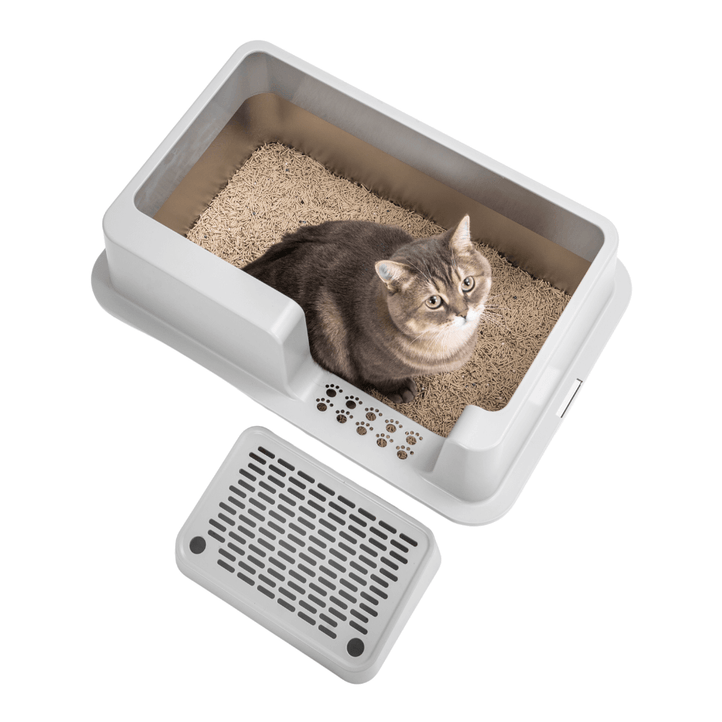
Final Thoughts
Dealing with “elevator butt” really comes down to containment. A litter box with high sides and a spacious interior is the most effective solution. It gives your cat enough room to get comfortable while keeping spray off your walls and floors. This simple switch can solve one of the most frustrating litter box problems.
While the right box is a big step, paying attention to your cat's habits will help you perfect the setup. You might find that adding a waterproof mat underneath or a splash guard behind the box offers complete peace of mind. Ultimately, creating a clean and stress-free bathroom environment makes life easier for both you and your cat.
Frequently Asked Questions
What exactly is 'elevator butt' in cats?
“Elevator butt” is an informal term for when a cat urinates in a semi-standing posture. Its hind end lifts, causing urine to spray higher than usual and often miss a standard litter box. To manage this, specialty boxes use high walls, typically 8–12 inches (20–30 cm), to contain the spray.
Why does my cat pee over the edge of the box?
A cat might pee over the edge if the litter box is too small—it should ideally be 1.5 times the length of your cat to allow proper positioning. Low sides are another common reason. A box with higher walls gives your cat space to move without accidental spraying.
How high should a litter box's walls be for a high-sprayer?
For cats that stand to urinate, a box with back and side walls between 8 and 12 inches high is generally effective. Some extra-large models offer heights up to 12.1 inches for maximum protection against spray.
Do I still need wall protectors with a high-sided litter box?
Yes, wall protection is still recommended. For cats that spray vertically, a splash guard or mat that extends 11–18 inches (28–46 cm) above the litter provides an extra layer of defense for your walls and floors.
The Best Litter Boxes for [Maine Coons] and Large Breeds in 2026
The "Vertical Stench": Why Wall Urine Smells Worse Than Litter Urine
The "Bathroom Queue": Why One Robot Can't Handle 4 Cats (But 2 Furrbbys Can)
Stopping the "Litter Box Bully": Why Open-Top Steel Works