


The "Vertical Stench": Why Wall Urine Smells Worse Than Litter Urine
by Laura Jane on Jun 12, 2026
Your customers complain about litter box odor, but the real problem is often the box, not the litter. That persistent ammonia smell in a house frequently comes from urine sprayed on the sides of a plastic pan—a “vertical stench” that scooping alone can't fix.
This article explains the science behind why wall urine smells worse than buried waste. We will compare how porous plastic traps odor with non-porous materials that don't. While plastic develops tiny scratches that harbor bacteria and urine residue, a material like stainless steel provides a surface that resists odor absorption, offering a more permanent solution for your customers.

The Last Litter Box You'll Ever Need
Final Thoughts
The intense smell from urine on a wall comes down to two things: air exposure and surface absorption. Unlike urine buried in litter, wall spray is completely exposed to the air. This speeds up the chemical reaction that creates that sharp ammonia smell. At the same time, porous surfaces like drywall or baseboards soak up the urine, making the odor incredibly difficult to remove.
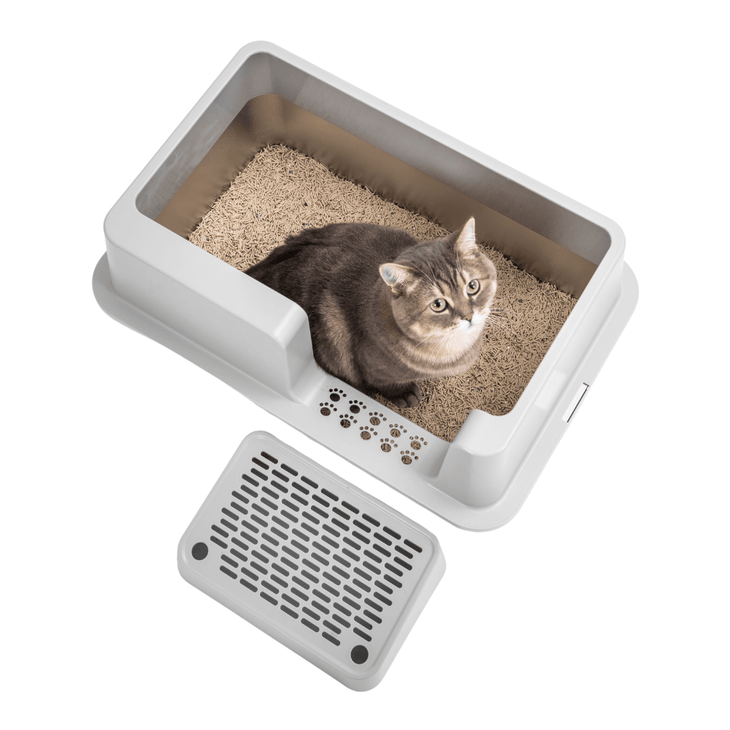
Understanding this helps you tackle cat pee smell more effectively. A litter box with high sides, especially one made of stainless steel, can stop urine from hitting your walls in the first place. Pairing the right box with a deep layer of absorbent litter gives your cat a proper place to go, keeping odors contained and your walls clean.
Frequently Asked Questions
Why does my litter box smell like ammonia?
The ammonia smell is caused by bacteria breaking down urea in cat urine. This odor can become noticeable in as little as three days after you've completely cleaned the box.
Does stainless steel hold odors like plastic does?
No, stainless steel does not hold odors. Its surface is non-porous, so it resists odor absorption and bacteria growth. Plastic, on the other hand, develops tiny scratches over time that trap urine residue and smells.
What is the best type of litter box for preventing smells?
A seamless stainless steel pan with high sides is the most effective choice for odor control. Using 3-4 inches of litter also helps a lot, as it ensures waste is properly buried and moisture is absorbed.
Can I use baking soda to help with litter box odor?
Yes, adding baking soda to the litter can help. It works by adsorbing moisture and neutralizing the acidic compounds in urine that cause bad smells.
How can I clean stubborn urine smells out of a plastic box?
After washing a plastic box with soap and water, you can treat lingering smells with a 10% bleach solution or 3% hydrogen peroxide. Let it sit for several minutes to break down the set-in residue before you rinse it off.
The Best Litter Boxes for [Maine Coons] and Large Breeds in 2026
The "Bathroom Queue": Why One Robot Can't Handle 4 Cats (But 2 Furrbbys Can)
Stopping the "Litter Box Bully": Why Open-Top Steel Works