


![The Best Litter Box Setup for [Multi-Cat Households] in 2026](http://www.furrbby.com/cdn/shop/articles/blog_35_b927cf60-5c7a-4f9e-b50f-5b4d48fe0858.png?v=1769672328&width=360)
The Best Litter Box Setup for [Multi-Cat Households] in 2026
by Taylor Claier on Jan 24, 2026
Managing hygiene and preventing territorial stress in a home with multiple cats requires a specific, evidence-based strategy. An incorrect setup can lead to box avoidance and conflict, but these issues are preventable with the right approach.
This guide details the essential requirements for an effective multiple cat litter box setup. We'll cover the veterinarian-recommended “n+1” rule for box quantity and explain why each box should be at least 1.5 times the length of your largest cat. We also share our testing criteria for choosing products that reduce conflict and keep your cats healthy.

Our Top Picks at a Glance
For multi-cat homes, the standard is the "n+1" rule: one litter box per cat, plus one extra. Each box should be at least 1.5 times the length of your largest cat and placed in a quiet, low-traffic area, with boxes separated to prevent territorial issues.
Litter Box Quantity: The N+1 Rule
The established standard for multi-cat households is the "n+1" formula, which means you need one litter box for each cat you own, plus one additional box. For example, a home with three cats requires four litter boxes. This guideline is widely endorsed by veterinary and feline behavior experts, including the American Animal Hospital Association (AAHA), Zoetis, and Purina, to help minimize territorial disputes and prevent cats from avoiding the box.
Box Size and Design
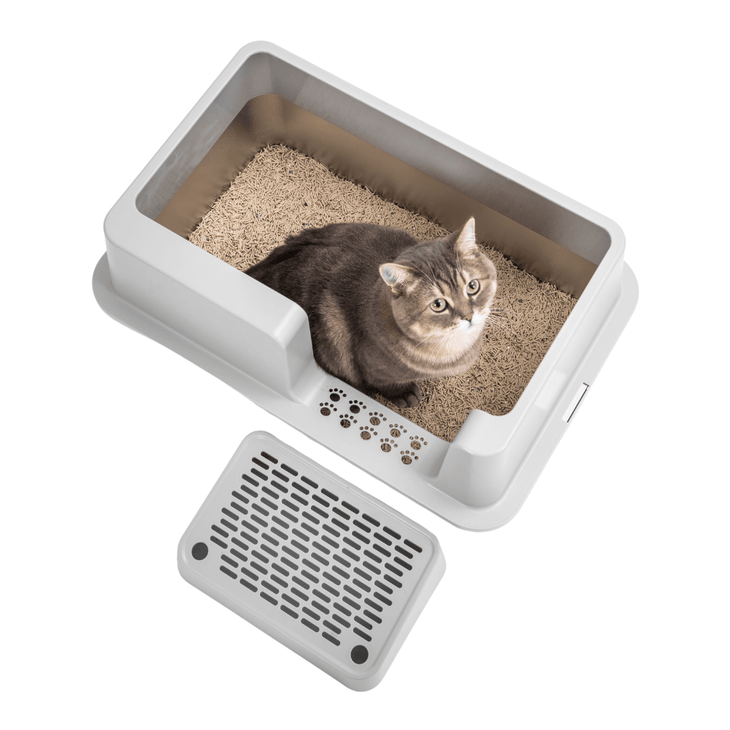
A proper litter box should be at least 1.5 times the length of your largest cat, not including the tail. This size allows them to turn around and dig comfortably. The sides should have a minimum height of six inches to provide easy access, especially for kittens, senior cats, or those with mobility issues. Higher sides can be used to control litter scatter, but the entry point should remain low.
Strategic Placement
Proper placement is just as important as quantity. Boxes should be distributed throughout the home to prevent one cat from guarding access to all of them. In multi-level homes, place at least one box on each floor. Always choose quiet, low-traffic locations away from noisy appliances, air vents, and your cat's food and water stations to create a secure environment.
Advanced Monitoring for Multi-Cat Homes
For owners who want to monitor their cats' health more closely, smart litter box systems offer a technological solution. Systems like Petivity use AI-driven sensors to track each cat's weight, frequency of visits, and waste characteristics. These monitors can distinguish between different cats based on their unique weight and behavioral data, providing valuable health insights without requiring the cats to wear special collars.
How We Chose and Tested (Buying Guide)
We evaluate multi-cat litter boxes based on the 'n+1' quantity rule, ensuring interior box dimensions are 1.5 times the cat's length. Our testing measures optimal litter depth (3-4 inches), automated cycle performance (15-20 min delays), and waste capacity to guarantee hygiene and prevent territorial stress in households with multiple cats.
| Metric | Specification | Reasoning |
|---|---|---|
| Box Quantity | 1 box per cat + 1 extra (n+1) | Reduces competition and territorial blocking. |
| Interior Box Size | 1.5x the cat's body length | Allows adequate space for turning, digging, and covering. |
| Litter Depth | 3–4 inches (manual); 2–3 inches (automated) | Ensures proper clumping without interfering with auto-clean sensors. |
| Automated Cycle Delay | 15–20 minutes after use | Provides sufficient time for clumps to fully form before scooping. |
Core Principles: Space, Quantity, and Placement
Our evaluation is built on three core principles. First, box size must accommodate cat comfort, so we test for an interior length at least 1.5 times the cat's body length to provide enough room for turning and digging. Second, we adhere to the veterinarian-recommended "n+1" quantity rule—one box per cat, plus one extra—to reduce competition. Finally, we assess strategic placement, locating boxes in separate rooms or on different floors to ensure easy access and prevent one cat from blocking another.
Key Testing Metrics for Hygiene and Performance
To measure hygiene and reliability, we focused on specific performance metrics. We maintained an optimal litter depth of 3–4 inches in manual boxes and a slightly shallower 2–3 inches for automated systems to balance clumping with sensor accuracy. For auto-cleaning models, we tested cycle delays, aiming for a 15–20 minute pause after use, and verified that waste drawers could hold waste from multiple cats for at least three days without errors. We also prioritized designs with high sides to control litter scatter while ensuring entry points were low enough for senior or mobility-impaired cats.
In-Depth Reviews of the Best Multi-Cat Setups
A successful multi-cat setup requires following the "plus one" rule: provide one litter box for each cat, plus one extra. These boxes must be placed in separate locations, not side-by-side, to ensure cats view them as distinct resources and to minimize territorial conflicts.
Setting up a harmonious multi-cat household depends heavily on the litter box environment. The primary goal is to reduce competition and stress by providing enough clean, accessible, and safe options for every cat. Veterinary behaviorists have established clear guidelines that function as the industry standard, focusing on quantity, placement, and physical design to accommodate feline instincts.
| Component | Specification | Purpose |
|---|---|---|
| Number of Boxes | One per cat + one extra | Reduces resource guarding and ensures a clean option is always available. |
| Placement | Dispersed; different rooms or floors | Prevents cats from viewing them as one unit and avoids territorial blocking. |
| Box Size | 1.5x the length of the largest cat | Allows for comfortable movement, turning, and digging without constraint. |
| Accessibility | Low entry point; multiple exits | Aids senior or mobility-impaired cats and prevents a cat from feeling trapped. |
Box Quantity and Placement Strategy
The "N+1" formula (where N is the number of cats) is the foundation of a stable multi-cat environment. For a home with three cats, this means a minimum of four litter boxes are necessary. Just as important as the number is their placement. Placing boxes side-by-side is a common mistake, as cats perceive them as a single, large litter box. If one section is used, they may consider the entire area soiled. Instead, distribute boxes across different quiet, low-traffic areas and on each floor of a multi-level home. This strategy ensures that one cat cannot easily guard or block access to all the toilets, reducing social friction.
Physical Dimensions and Accessibility
A litter box must be large enough to allow a cat to enter, turn around completely, and dig comfortably. The recommended size is at least 1.5 times the length of your largest cat, measured from the nose to the base of the tail. Side height presents a trade-off; it should be high enough to contain litter scatter (at least 6 inches) but low enough for easy entry. For senior cats, kittens, or those with arthritis, a box with a very low entry point is essential to prevent pain and subsequent litter box avoidance.
Advanced Monitoring with Smart Technology
Modern smart litter systems add a layer of health monitoring that is particularly useful in multi-cat homes. These devices use integrated sensors to track data points for each visit, including the cat's weight, visit frequency, duration, and waste type. Advanced systems use AI to calibrate these metrics and can distinguish between individual cats without requiring them to wear special collars. This allows owners to monitor the health and habits of each specific cat, providing early warnings for potential urinary or digestive issues.
The Last Litter Box You'll Ever Buy
Final Thoughts
Setting up a successful litter box system for multiple cats comes down to three simple rules: quantity, size, and placement. Always follow the "n+1" formula—one box per cat plus one extra. Make sure each box is large enough for your biggest cat to use comfortably, roughly 1.5 times their body length. Finally, distribute the boxes in separate, quiet locations to prevent any single cat from guarding them.
Sticking to these guidelines helps create a peaceful environment and reduces the chances of territorial stress or out-of-box urination. A well-planned setup ensures every cat feels secure and has access to a clean space when they need it. While advanced tools like health monitors can offer extra insight, getting these fundamentals right is the most important step toward maintaining harmony in a multi-cat home.
Frequently Asked Questions
How many litter boxes do I need for 3 cats?
For 3 cats, the standard is 4 litter boxes. This follows the 'one litter box per cat plus one extra' rule recommended by veterinary and pet care authorities.
Can multiple cats share one large litter box?
Multiple cats should not share a single litter box, even a large one. The golden rule is N+1 boxes (number of cats plus one). An exception might be a high-capacity automatic unit rated by the manufacturer for up to four cats, but this is product-specific.
How do I stop one cat from guarding the litter box?
Provide at least one litter box per cat plus an extra one. Place them in separate locations with two ways in and out so no cat can be trapped. For high-conflict homes, you might need up to two boxes per cat, spread out on every floor to prevent a single cat from controlling access.
What is the best litter box placement for multiple cats?
Follow the 'N+1 rule' by placing boxes in separate, quiet, low-traffic areas throughout the home. If you have multiple floors, put at least one box on each level to ensure easy access and reduce territorial conflicts.
How often should I scoop for multiple cats?
For multiple cats, you need to scoop the litter box every day, or even twice a day. This removes waste, prevents odor, and stops cats from avoiding the box.
Do big cats bully small cats in the litter box?
Litter box guarding by a larger or more confident cat is a known resource-control problem. You can design your setup to make it difficult. Use the 'N+1' rule, place each box in a separate location with an escape route, and use large boxes (about 1.5 times the length of your largest cat) so smaller cats don't feel cornered.
The Furrbby Difference: Built to Last, Designed to Save You Money
Perfect Memorial Day Upgrade for Multi-Cat Homes
Planned Obsolescence vs. Heirloom Quality: Why Steel Wins
Memorial Day Sale: Why Now Is The Best Time To Upgrade Your Cat’s Litter Setup