


Stainless Steel vs. Plastic Litter Boxes: Which is Right for Your [Odor-Free Home]?
by Laura Jane on Apr 16, 2026
The cycle of replacing smelly plastic litter boxes is a common frustration for cat owners and a product challenge for retailers. While plastic offers an affordable starting point, its surface scratches over time, trapping bacteria and odors that cleaning can't remove. This material failure often leads to customer dissatisfaction and the search for a permanent solution.
This analysis compares stainless steel and plastic based on material science, focusing on hygiene, durability, and long-term value. The core difference is porosity. After cleaning, a plastic surface can hold onto 45% of bacteria, while stainless steel retains only about 2%. This hygienic superiority, combined with a lifespan of 10+ years, makes steel a compelling alternative to plastic boxes that often need replacement every year or two.

Quick Comparison Table
Stainless steel significantly outperforms plastic with a 10+ year lifespan compared to plastic's 1–2 years. It offers superior hygiene, retaining only ~2% of bacteria after cleaning versus 45% for plastic, and provides 95.6% better odor control due to its non-porous surface.
Hygiene and Odor Control
Stainless steel’s non-porous surface prevents it from absorbing odors, unlike plastic, which is porous and can permanently trap urine smells. This difference in material science has a direct impact on cleanliness. After a standardized cleaning, a stainless steel surface retains only about 2% of bacteria. A plastic surface, in contrast, holds onto approximately 45% of bacteria. In controlled 48-hour tests, the non-absorbent nature of stainless steel resulted in about 95.6% better odor control compared to plastic.
Durability and Long-Term Value
A litter box made from 304 stainless steel typically lasts for 10 or more years, while plastic boxes often need to be replaced every 1 to 2 years. The metal is highly resistant to scratches that can trap waste and bacteria, but plastic scratches easily, creating grooves where residue builds up. This smooth surface also makes cleaning much faster—wiping a stainless steel box takes about 3 seconds, compared to the 45 seconds needed to scrub a plastic one. Stainless steel is also 100% recyclable. Plastic litter boxes have a much lower recyclability rate of around 30% and more often end up in landfills.
Understanding Plastic: Features, Pros & Cons
Plastic litter boxes, typically made from polypropylene (PP) or HDPE, are lightweight, affordable, and allow for versatile designs like top-entry or covered models. Their main drawback is a softer surface that can scratch over time, creating micro-grooves that trap odors and bacteria, eventually requiring replacement.
| Feature | Advantage | Disadvantage |
|---|---|---|
| Material Properties | Lightweight and affordable, making boxes easy to lift and move. | Feels less substantial than metal and has a shorter functional lifespan. |
| Design Flexibility | Molding allows for complex shapes like covers, top-entry configurations, and high walls. | Thin, single-walled designs can be flimsy or flex under load. |
| Surface & Longevity | Initially non-porous and simple to wipe clean. | Prone to scratches that trap odor-causing bacteria, requiring replacement. |
Lightweight and Versatile by Design
Most plastic litter boxes are made from materials like polypropylene (PP) or high-density polyethylene (HDPE). These polymers have a low density (around 0.90–0.97 g/cm³), which makes the final product very lightweight and easy for cat owners to lift, clean, and reposition. The injection molding process used to manufacture them gives designers immense freedom. This allows for integrated features such as high walls, seamless covers, and top-entry openings that effectively contain litter scatter and help trap odors.
Some premium models enhance this basic structure with double-walled molded plastic, which improves stiffness and durability. These designs often include a rubber base to increase stability and provide better grip on smooth floors. For different needs, flexible plastics like ethylene-vinyl acetate (EVA) offer a unique alternative. EVA provides a crack-resistant and impact-absorbent construction, making it ideal for foldable or portable litter boxes that can withstand being bumped or dropped without damage.
Surface Durability and Odor Retention
The primary weakness of plastic is its surface durability. Plastic is significantly softer than metal and is susceptible to scratches from a cat’s claws during normal digging and covering behavior. Over time, these tiny abrasions and micro-grooves create a textured surface that traps urine residue and provides a breeding ground for odor-causing bacteria. Once these bacteria colonize the scratches, they become very difficult to remove completely, even with aggressive scrubbing.
As the surface continues to degrade, the plastic can begin to absorb persistent odors into the material itself. This is why a plastic litter box can start to smell even moments after a thorough cleaning. The plastics used, such as polypropylene (ASTM D4101) and high-density polyethylene (ASTM D4976), are specified by industry standards for their chemical resistance and basic strength. But these standards don't account for the long-term effects of physical wear from claws, which ultimately limits the hygienic lifespan of the product.
Understanding Stainless Steel: Features, Pros & Cons
Stainless steel, specifically 304 grade, provides a non-porous, rust-resistant surface that stops odor absorption and bacterial growth. This makes it exceptionally durable and easy to clean, offering a long-lasting, hygienic solution that won't crack or warp, unlike plastic.
Core Properties: Superior Hygiene and Odor Control
Most high-quality stainless steel litter boxes are constructed from 304 Austenitic Stainless Steel, a grade chosen for its excellent corrosion resistance. Its surface is completely non-porous, which is a primary failure point for plastic boxes. This non-porous nature prevents odors from absorbing into the material and stops bacteria from colonizing microscopic scratches. The naturally smooth, non-stick finish also allows wet clumps and residue to slide off with minimal effort, making cleaning much simpler.
Practical Design: Durability and Lifetime Use
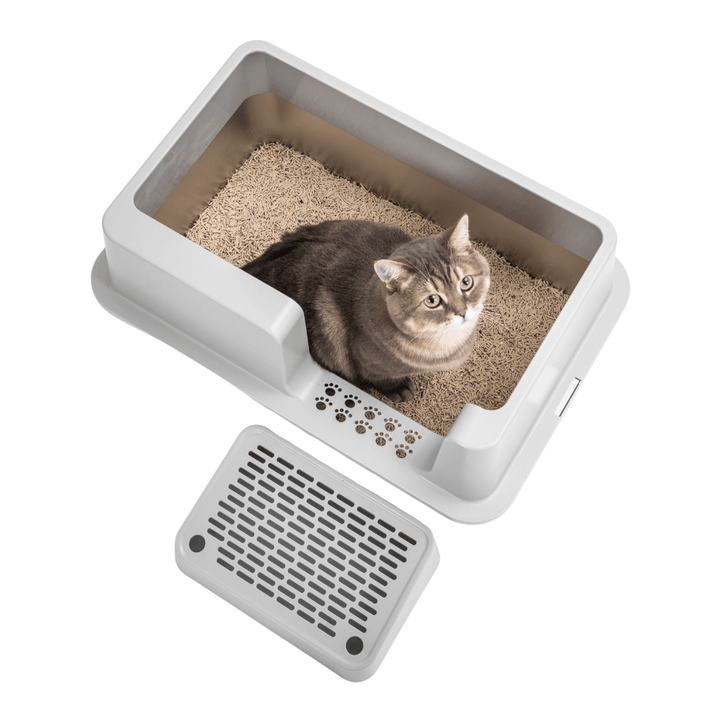
Stainless steel is engineered to be rust-resistant, so it will not degrade from exposure to urine or common cleaning agents. It is built to withstand heavy, daily use without warping or cracking, ensuring it can last for a cat's entire lifetime. To improve function, these boxes often feature high walls—some up to 15.8 inches—to effectively contain litter scatter from active cats. They also offer generous dimensions, such as 23.7"L x 16"W, which provides comfortable space for cats weighing up to 20 pounds.
The End of Scooping, Scrubbing, and Stink.
Head-to-Head Analysis for the Hygiene Conscious
For hygiene, stainless steel is the clear winner. Its non-porous, scratch-resistant surface prevents bacteria and odors from embedding. Plastic is porous and develops scratches that trap waste and create persistent smells, leading to frequent and costly replacements.
| Factor | Stainless Steel | Plastic |
|---|---|---|
| Odor & Bacteria Resistance | Excellent. The non-porous surface does not trap bacteria or absorb odors. | Poor. The porous surface develops micro-scratches that harbor odor-causing bacteria. |
| Durability | High. Rust-proof and corrosion-resistant material lasts for years or decades. | Low. Becomes brittle and cracks, often needing replacement every few months to a year. |
| Long-Term Cost | Lower. A one-time purchase that eliminates the need for frequent replacements and extra odor products. | Higher. Requires regular replacements and more spending on odor control products over time. |
Material Porosity and Its Impact on Odor Control
Plastic litter boxes have a porous surface. Over time, your cat's claws create micro-scratches that trap urine and bacteria. This combination leads to persistent, embedded odors that are almost impossible to eliminate. In contrast, stainless steel is non-porous and highly resistant to scratches. Its smooth, solid surface prevents any moisture absorption, so odor-causing bacteria have nowhere to hide. This makes cleaning simple and keeps the box smelling fresh.
Durability, Cleanliness, and Long-Term Cost
Stainless steel is an investment that pays off. It is rust-proof and will not corrode, crack, or become brittle, providing durability that lasts for years, sometimes even decades. Plastic boxes degrade quickly and usually need to be replaced every few months to a year. While the upfront cost of stainless steel is higher, it saves you money over the long run. A five-year cost analysis shows that stainless steel owners spend less on replacements and supplemental odor control products ($20) compared to plastic owners ($60).
The Verdict: The Best Choice for a Modern Home
For a modern home, a 304 stainless steel litter box is the definitive choice. Its non-porous, scratch-proof surface prevents the bacterial growth that causes persistent odors in plastic. This results in superior hygiene, a longer lifespan, and a cleaner home environment.
Superior Odor Control and Longevity
Stainless steel pans deliver far better odor control, achieving a 95.6% odor reduction in tests, while plastic boxes typically only manage around 60%. This performance gap is due to the material's non-porous nature, which prevents it from absorbing urine and developing the persistent smells that plague plastic litter boxes. Because odors can't penetrate the surface, the box stays fresh after cleaning.
The durability also makes it a sensible long-term investment. A stainless steel box has a functional life of more than five years, unlike plastic alternatives that often require replacement every 1-2 years due to odor saturation and cracking. This means less waste and fewer recurring expenses.
The Material Science of a Hygienic Home
The hygienic properties come from its construction using 304 austenitic stainless steel, finished to a low surface roughness (Ra ≤ 0.8 µm) that minimizes bacterial colonization. Its Brinell hardness of approximately 150–215 HB provides strong resistance to scratches from cat claws. In contrast, softer plastics (Shore D hardness ~60-70) easily accumulate grooves that trap bacteria and create a permanent source of odor.
This material toughness allows for true sanitization. Stainless steel tolerates high-temperature steam cleaning and aggressive disinfectants like hypochlorite or peroxides, which would warp or degrade plastic. The ability to use these powerful cleaning methods ensures the litter box can be returned to a completely sanitary condition, promoting a healthier environment for both pets and their owners.
Final Thoughts
Choosing between a stainless steel and a plastic litter box really depends on what you value most. If your main goals are eliminating odors, easy cleaning, and a product that lasts for years, stainless steel is the superior option. Its non-porous surface simply doesn't hold onto smells or bacteria the way plastic does. But if you're on a tight budget or need a specific design like a top-entry or covered box, plastic offers more variety at a lower upfront price.
While a stainless steel box costs more at first, it's a one-time purchase that can last a decade or more. You're investing in a permanently odor-free and hygienic solution that saves you from the cycle of buying and throwing away scratched, smelly plastic boxes every year. A plastic box might seem cheaper today, but its true cost adds up over time in replacements and the lingering odors that even deep cleaning can't fix.
Frequently Asked Questions
Do stainless steel litter boxes smell after cleaning?
No, stainless steel litter boxes do not smell after cleaning. Their non-porous surface prevents odor absorption, unlike plastic which often retains smells even after being washed.
Will my cat be afraid of the noise in a metal box?
Some cats may be startled by the noise of litter scratching a metal surface. The sound can reach 40-65 dB. Using a quieter litter, like pine pellets, can reduce the noise to around 40 dB, as stainless steel can dampen vibrations more effectively than plastic in some cases.
Is stainless steel too cold for cats to step on?
Stainless steel feels colder than plastic because it conducts heat away from a cat's paws much faster, about 40–80 times faster. In a normal room (20–22 °C), the surface isn't cold enough to cause harm, just a brief cool sensation on first contact.
Will cat urine cause stainless steel to rust?
High-quality stainless steel, like grade 304 or 316, will not rust from cat urine if cleaned regularly. Cheaper grades, such as 201 series stainless, are more likely to corrode and rust over time with exposure to urine and cleaning chemicals.
Why are stainless steel litter boxes better than plastic?
Stainless steel is better than plastic mainly for three reasons: it's more durable and lasts for years, it resists scratches where bacteria and odors can get trapped, and it's more hygienic because the non-porous surface doesn't absorb moisture or smells.
How long does a stainless steel litter box last?
A quality stainless steel litter box can last for 5–10 years of daily use, and some are designed to last for decades if not physically damaged. In contrast, plastic boxes usually need to be replaced every 1–3 years due to scratching and odor absorption.
The Eco-Footprint of 3 Cats: Reducing Waste with Steel & Pine
The Science of Hole Size: Why 5mm Matters for Pine Pellets
The True Cost of a Litter Box: Why a $150 Stainless Steel Box is Cheaper Than Plastic
We Swabbed It: ATP Test Results of Plastic vs. Stainless Steel