


How to Choose the Right Litter Box for Your [Cat's Health & Comfort]
by Laura Jane on Mar 11, 2026
Litter box avoidance is a leading cause of feline health consultations and customer dissatisfaction. Many of these issues are not behavioral but environmental, stemming directly from the wrong litter box setup. Choosing a healthy litter box is critical for preventing stress-related urinary conditions and reducing bacterial exposure, which can lead to client complaints or product returns.
This guide provides the data-backed criteria for selecting the right litter box. We cover the five essential factors, explaining why a box must be at least 1.5 times the cat's length and how the "n+1" rule reduces stress in multi-cat environments. We also analyze the long-term hygiene of different materials and the practical trade-offs of automatic systems.

The 5 Key Factors to Consider
Key factors for choosing a litter box include its size (1.5x your cat's length), the quantity (one per cat plus an extra one), wall height for scatter control, low-entry access for kittens or seniors, and the correct litter depth for hygiene.
| Factor | Recommendation | Why It Matters |
|---|---|---|
| Box Size | 1.5 times cat's length (nose to tail base) | Allows proper space for turning and digging. |
| Quantity | One per cat + one extra (n+1 rule) | Reduces territorial stress in multi-cat homes. |
| Wall Height | 8–12 inches with a low-entry point (3–5 inches) | Contains scatter while ensuring easy access for all cats. |
| Litter Depth | 3–4 inches for clumping clay; 1–2 inches for pellets | Supports natural burying instincts and maintains hygiene. |
Box Size and Quantity
The ideal litter box should be at least 1.5 times the length of your cat from nose to tail base. For example, a 16-inch cat requires a 24-inch box, and large breeds may need one up to 35 inches long. This gives them enough room to turn around and dig comfortably. For multi-cat households, follow the "n+1" rule: provide one litter box for each cat, plus one extra. Placing boxes on each level of your home makes them easily accessible at all times and helps prevent territorial issues.
Wall Height, Entry, and Litter Depth
The box's design also plays a crucial role. Side walls should stand between 8 and 12 inches high to contain litter scatter and urine spray. But the entry point must be low—around 3 to 5 inches—for kittens, seniors, or cats with mobility problems. The right litter depth is also important for hygiene. Maintain a depth of 3 to 4 inches for standard clumping clay litter to support burying behavior. If you use pellet-based litters, a shallower depth of 1 to 2 inches is enough.
Common Mistakes to Avoid
Key mistakes include choosing a box that is too small, not having enough boxes per cat, and placing them in noisy areas. Infrequent scooping, using scented litters, and keeping plastic boxes for too long can also cause litter box avoidance and related health problems.
Mistakes in Box Setup and Environment
Two of the most common errors involve the box's size and number. A litter box should be at least 1.5 times the length of your cat, providing enough space to turn around and dig comfortably. For households with multiple cats, the general rule is to provide one box per cat plus one extra. Placing these boxes in separate locations helps reduce competition and prevents one cat from guarding access to them.
The box's location and contents also matter. Cats feel vulnerable when eliminating, so placing a box near loud appliances like a washer, furnace, or air conditioner can cause stress and avoidance. Many cats also reject covered boxes, which can trap ammonia odors and make them feel confined. Most cats prefer a fine-grained, unscented clumping litter, as strong perfumes from scented litters are a frequent cause of litter box aversion.
Poor Hygiene and Maintenance Schedules
A lax cleaning schedule is a primary driver of litter box problems. Waste should be scooped at least once daily to keep the environment clean and inviting. A full litter change and box wash should occur every one to three weeks. When washing, use only mild, unscented soap and water. Harsh chemical cleaners or those with strong scents can leave a residue that deters your cat.
The box itself has a limited lifespan. Because plastic is porous, it absorbs odors and can develop micro-scratches that harbor bacteria over time. You should replace plastic litter boxes at least once a year. Finally, failing to monitor your cat's output is a missed opportunity for early health detection. Any significant changes in the size of urine clumps or the consistency of stool can be the first sign of kidney, bladder, or digestive diseases.
Quick Comparison of Popular Types
Stainless steel offers superior hygiene and durability over plastic, which easily scratches and retains odors. Automatic self-cleaning boxes add convenience but introduce potential issues like noise, specific litter requirements, and more complex mechanical maintenance.
| Litter Box Type | Primary Advantage | Primary Disadvantage |
|---|---|---|
| Standard Plastic | Low initial cost. | Scratches easily, trapping bacteria and odors. Short service life (1–3 years). |
| Stainless Steel | Durable, scratch-resistant, non-porous, and easy to sanitize. Long service life (10+ years). | Higher initial cost. |
| Automatic Self-Cleaning | Convenience from automated scooping. | Mechanical failure points, noise (40-60 dB), specific litter requirements, and complex cleaning. |
Plastic vs. Stainless Steel: Material and Hygiene
Standard plastic litter boxes, typically made from polypropylene (PP) or high-density polyethylene (HDPE), are prone to scratching from cat claws. These micro-grooves create a porous surface that traps odor-causing bacteria, making the box difficult to fully sanitize. Over time, this leads to persistent odors and material degradation, giving plastic boxes a typical service life of only 1–3 years before they require replacement.
In contrast, stainless steel boxes are fabricated from non-porous, corrosion-resistant alloys like AISI 304. The material’s hardness prevents scratching, so it does not harbor bacteria or absorb odors. This makes cleaning more effective and ensures a higher level of hygiene. While the initial investment is greater, a stainless steel box can last for more than 10 years, making it a more durable and sanitary long-term option.
Automatic Self-Cleaning Systems: Convenience and Complications
Automatic litter boxes use electromechanical components like motors, sensors, and gears to remove waste. This complexity introduces multiple points of potential failure and requires a constant power supply (often 120V AC). During a cleaning cycle, these units can produce noise levels between 40–60 dB(A), which may startle anxious cats and discourage them from using the box.
These systems also present maintenance and compatibility challenges. Most are engineered for fine-granule clumping clay litters and may jam or malfunction with pellet or plant-based alternatives. Although they automate daily scooping, the internal mechanisms—such as rakes, waste chutes, and sensor housings—demand regular manual disassembly and deep cleaning to prevent waste buildup and biofilm formation. This required upkeep can be more complex than cleaning a simple passive box.
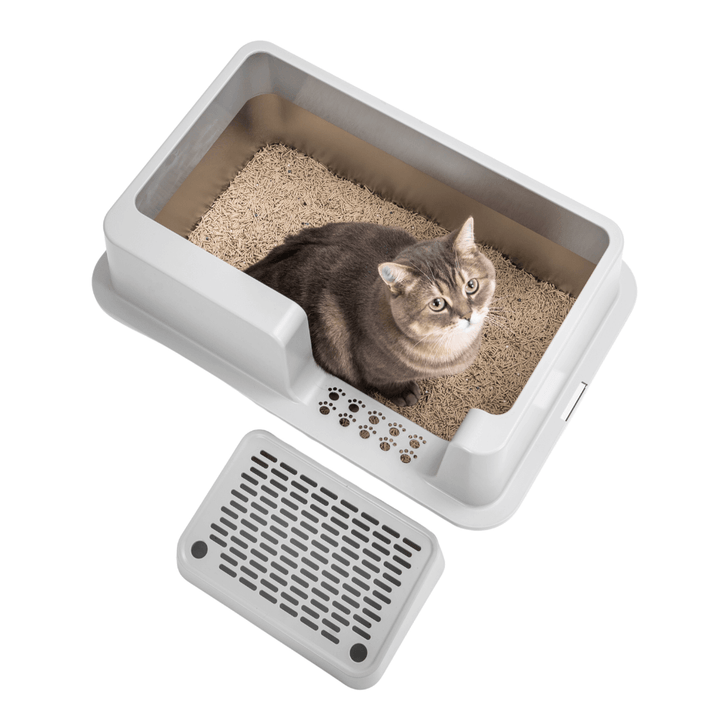
The End of Odor & Endless Scooping
Final Thoughts
Choosing the right litter box comes down to meeting your cat’s basic needs for space, cleanliness, and security. A large, open box—at least 1.5 times their body length—gives them room to move, while following the "n+1" rule reduces stress in multi-cat homes. A durable material like stainless steel is a smart investment because it won’t scratch and trap odors the way plastic does. These simple choices make a big difference in how comfortable your cat feels.
Paying attention to your cat's litter box setup is one of the easiest ways to support their long-term health. A clean, spacious, and well-placed box prevents stress and encourages consistent use. And observing your cat’s habits can help you spot early signs of illness, making the litter box an important tool for proactive care. When your cat is happy with their bathroom, you both win.
Frequently Asked Questions
Can a dirty litter box cause UTIs in cats?
No, a dirty litter box does not directly cause UTIs in cats; UTIs are bacterial infections. A dirty box can contribute to house-soiling behaviors or cause stress that leads to other urinary issues like feline idiopathic cystitis (FIC). In just 10 days, ammonia levels in a dirty box can reach 15 ppm, which may cause respiratory symptoms like panting or coughing in cats.
How can I check for blood in my cat's urine?
The most reliable way is a veterinary urinalysis. A vet uses a chemical dipstick and a microscopic exam to look for red blood cells (RBCs). In healthy cats, having up to 5 RBCs per high-power field (HPF) is considered normal. Any number higher than that confirms blood in the urine (hematuria).
Is an open or closed litter box better for health?
For health, an open (uncovered) litter box is generally safer because it provides better ventilation, which lowers trapped ammonia and moisture. It also makes it easier to monitor your cat's stool and urine. Covered boxes can trap odors and bacteria, which may lead to respiratory irritation or cause your cat to avoid the box if it isn't cleaned very frequently.
Does plastic harbor bacteria that harms cats?
Yes, plastic litter boxes can develop microscopic scratches that trap waste, moisture, and bacteria. After 30 days of simulated use, plastic can harbor 400% more bacterial colonies than stainless steel. This is linked to a higher risk of urinary tract infections and contact dermatitis for cats.
How often should I fully replace the litter?
For a healthy indoor cat, you should fully replace all clumping litter about once per week. For non-clumping or paper litter, it should be changed 2–3 times per week. Silica gel or crystal litters typically last about a month, while pine or other natural litters should be changed around weekly.
What are the signs my cat hates their litter box?
Signs a cat dislikes their box include eliminating outside it, perching with only their front paws inside, rushing in and out, or vocalizing after using it. Any house-soiling is a sign to reassess the box's size, cleanliness, type, and placement, and to rule out medical issues. A common cause of aversion is a box that is too small; it should be at least 1.5 times the cat's body length.
Managing Pine Pellets for 3+ Cats: Capacity & Frequency Guide
Sifting vs. Traditional Scooping: Why You Should Ditch the [Poop Shovel]
Navigating in the Dark: Why Tactile Cues Matter for Blind Cats
Gunmetal vs. Silver: Choosing the Right Finish for Your Bathroom