


Hooded vs. Open Litter Boxes: The Final Verdict
by Taylor Claier on Oct 15, 2025
Choosing the right litter box often feels like a balancing act for cat owners. You want to keep your home clean while making sure your feline feels comfortable and safe.
With so many styles available, especially hooded and open litter boxes, deciding which suits your cat’s habits and your home environment can be confusing. Each type comes with unique benefits and trade-offs that affect both your pet’s health and your daily maintenance routines.
This article dives into the differences between hooded and open litter boxes, guiding new cat owners or those seeking better options. We will explore key factors like ventilation, odor control, and cat comfort to help you find the best fit.
What You Need to Remember About Litter Box Choices
- Open litter boxes offer better ventilation and health monitoring, while hooded options help reduce odor and litter tracking but may cause airflow issues.
- Choosing the right litter box depends on your cat’s behavior, health needs, and your household’s environment.

How Litter Box Designs Impact Your Cat’s Comfort and Health
The design of a litter box plays a significant role in a cat’s overall comfort and well-being. Ventilation is a critical factor; open litter boxes allow maximum airflow, which helps reduce the buildup of unpleasant odors and keeps the environment fresher for your cat. Better airflow also prevents the trapping of moisture and ammonia, substances that can cause respiratory irritation or discomfort. Conversely, hooded litter boxes may restrict air circulation, trapping odors inside and potentially creating an uncomfortable environment for sensitive cats.
Visibility of waste is another important aspect influenced by litter box design. Open boxes enable owners to clearly see their cat’s waste, which can be invaluable for early detection of health problems such as urinary tract infections or digestive issues. Being able to monitor changes in urine color, stool consistency, or frequency can prompt timely veterinary attention, ultimately benefiting your cat’s long-term health. Therefore, understanding the impact of ventilation and visibility on both comfort and health monitoring can guide you to choose the best litter box suited to your cat’s needs.
Ventilation and Visibility: Why Open Litter Boxes Excel
Open litter boxes provide superior airflow compared to hooded alternatives, which significantly enhances your cat’s comfort by reducing the buildup of trapped odors and moisture. This increased ventilation helps maintain a fresher environment that many cats find less stressful, encouraging consistent use. Additionally, the absence of a cover allows owners to clearly see the waste inside the box, which is invaluable for early detection of health issues such as urinary tract infections or digestive problems. Cat behavior expert Jackson Galaxy emphasizes the importance of visible waste cues as a practical way for pet owners to monitor their cat’s wellbeing at home.
For example, one cat owner noticed a subtle but persistent change in the color and consistency of their cat’s urine while scooping an open litter box. This early observation prompted a timely veterinary visit that identified a urinary tract infection before it could worsen. Such visibility is often less achievable with closed or hooded boxes where waste is obscured, potentially delaying critical health alerts. Learning more about monitoring your cat's health can empower owners to act quickly and support their cat’s long-term health.
The Privacy and Odor Advantages of Hooded Litter Boxes
Hooded litter boxes offer an important privacy feature that many cats appreciate, making them feel more secure and comfortable during their bathroom routine. This sense of enclosure can encourage consistent use, especially for shy or easily startled cats who prefer a quiet, secluded space. Additionally, the hood acts as a barrier that significantly reduces litter scattering around the box, helping to keep your home cleaner and more tidy.
One of the key benefits of hooded boxes is their ability to contain odors better than open designs by trapping smells inside the enclosed space. However, this improved odor containment can come with a trade-off: reduced airflow inside the box can cause unpleasant smells to become concentrated, which might make some cats uncomfortable. To mitigate this, regular cleaning and the use of odor-absorbing products are essential to maintain a fresh environment. For more tips on how to maintain cleanliness and reduce mess, see our reducing litter tracking.
Upgrade Your Cat’s Experience
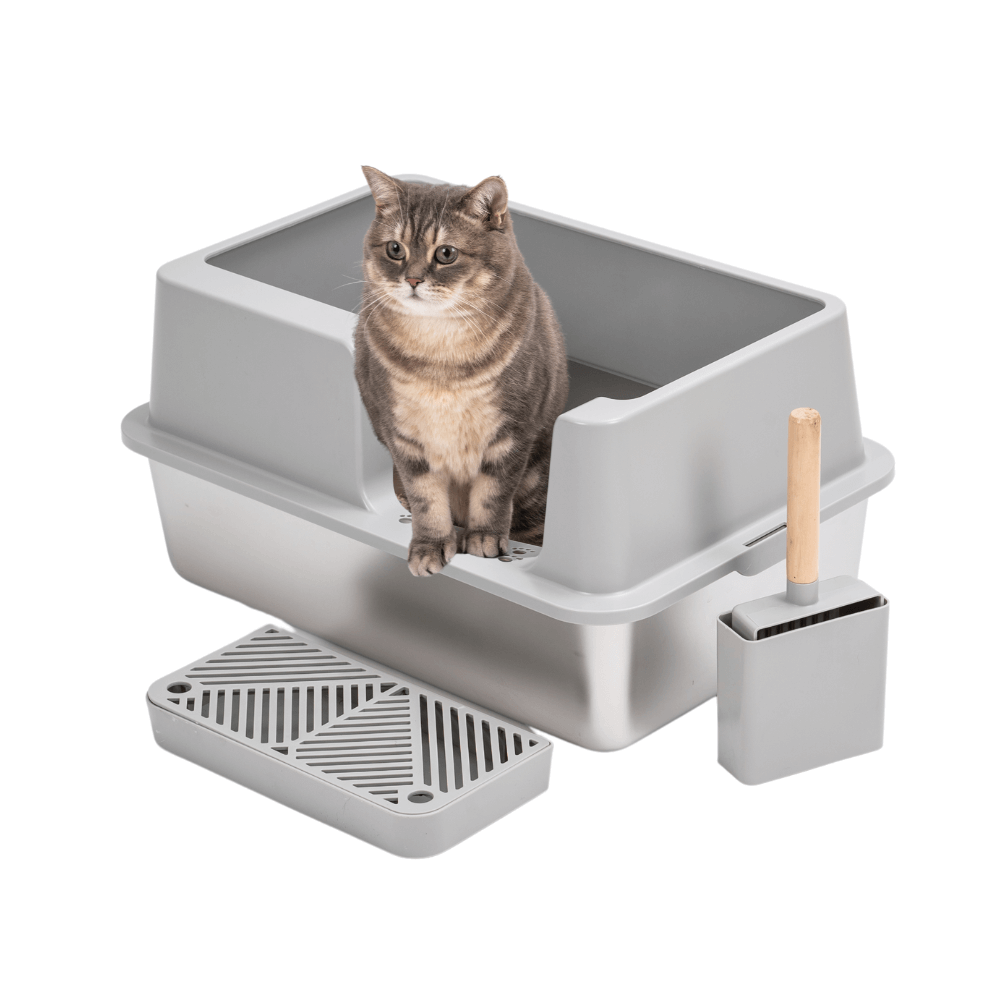
Transform your cat's litter routine with our XL Side Entry Stainless Steel Litter Box. Designed for durability and ease of use, it keeps your home cleaner while providing comfort for your feline friend. Act now to take advantage of our special offer!
Choosing the Right Litter Box for Your Cat and Household
Selecting between hooded and open litter boxes largely depends on your cat’s unique personality and the specific dynamics of your household. Cats that value privacy and tend to be shy or anxious often prefer hooded boxes, as the enclosed design provides a safe, secluded space that encourages consistent use. On the other hand, more sociable or larger cats might favor open boxes for easy access and better ventilation, which can also help reduce respiratory discomfort.
Household considerations like space, the number of cats, and maintenance preferences also play a crucial role. Open litter boxes are typically more affordable and easier to clean regularly, making them a practical choice for budget-conscious pet owners or those with multiple cats. Conversely, hooded boxes excel at minimizing litter tracking and controlling odors, which can be especially beneficial in smaller homes or apartments. To make the best decision, observe your cat’s behavior closely and consider how factors like airflow, odor control, and cleaning frequency align with your daily routine and living environment.
Matching Box Type with Cat Behavior and Preferences
When choosing between hooded and open litter boxes, it's important to consider your cat's individual behavior and preferences. Some cats feel more comfortable and have easier access to open litter boxes, benefiting from the enhanced ventilation and unobstructed space. Conversely, cats that value privacy or are more shy and easily startled often prefer hooded boxes, which provide a secluded environment that can encourage consistent litter box use.
Additionally, cats prone to eliminating outside the box may find the enclosed nature of hooded litter boxes reassuring, reducing accidents caused by distractions or anxiety. Observing how your cat interacts with different box types is key to making the right choice. Paying attention to factors such as your cat’s comfort, frequency of use, and even litter box location will help ensure you select a litter box that aligns with their natural habits and promotes healthy bathroom routines. For more on this topic, exploring cat litter box preferences can provide valuable insight tailored to your feline friend’s needs.
Considering Household Factors and Maintenance Needs
Open litter boxes are often the more budget-friendly option, making them appealing for cat owners looking to save without sacrificing functionality. Their simple design usually means fewer parts to clean and easier, quicker access for regular scooping and full litter changes. This ease of maintenance can encourage more frequent cleaning, which is vital for keeping the litter box fresh and your cat comfortable.
In contrast, hooded litter boxes offer significant advantages in homes with multiple cats or limited space by helping to contain visible mess and minimize odors. The enclosed design traps odors better and reduces litter tracking around the home, which is especially valuable in smaller living areas. However, limited airflow inside hooded boxes can cause trapped odors to accumulate faster, so owners often need to rely on additional odor control strategies such as frequent cleaning, use of odor-absorbing litters, or ventilation solutions to maintain a pleasant environment.
For more detailed guidance on keeping your cat’s bathroom area hygienic and odor-free, check out our litter box cleaning tips to optimize your chosen litter box’s performance and enhance your cat’s comfort.
Solving Common Litter Box Challenges
Odor management is one of the most common challenges cat owners face regardless of the litter box type. Hooded litter boxes effectively contain odors within the enclosed space, but this can sometimes lead to a buildup of unpleasant smells inside, making frequent cleaning and the use of odor-absorbing products essential. On the other hand, open litter boxes allow odors to dissipate more freely into the air, which can prevent the accumulation of strong smells inside the box but may cause your home to briefly experience the scent if the box isn’t cleaned regularly. Ventilating the litter area and using high-quality clumping or odor-control litters make a significant difference in maintaining fresh surroundings.
Another common issue is cats refusing to use certain litter boxes, especially hooded ones. Cats can feel trapped or uncomfortable if airflow is poor in covered boxes, leading them to avoid the box entirely. Gradual introduction, keeping the box exceptionally clean, and sometimes offering both types to observe preference can help retrain a reluctant cat. Additionally, litter tracking can be minimized by choosing hooded boxes or using mats around open boxes to catch stray litter. Selecting the right litter type with heavier granules or low-dust formulas also reduces tracking, ultimately keeping your home cleaner and your cat more comfortable.
Odor Management: Tricks for Both Box Types
Hooded litter boxes are designed to contain odors within the enclosure, but this benefit comes with a trade-off: trapped odors can accumulate if the box is not cleaned frequently, making the use of odor control products and regular maintenance essential. Incorporating natural odor absorbers like baking soda or activated charcoal in the litter can also help maintain freshness inside a hooded box. Additionally, cleaning the box thoroughly at least once a week prevents bacteria buildup that contributes to unpleasant smells.
Open litter boxes allow odors to dissipate into the surrounding air more easily, which can reduce the intensity inside the box but potentially spread smells throughout the room if cleaning is neglected. To combat this, it’s important to maintain good ventilation in the litter box area by opening windows or using an air purifier, especially in smaller or less ventilated rooms. Selecting high-quality, clumping litters with odor-neutralizing properties and cleaning the box daily will greatly improve odor control regardless of the box type. For more detailed strategies, explore our guide on odor control in litter boxes.
Encouraging Your Cat to Use the Litter Box
Some cats reject hooded litter boxes, feeling trapped by poor airflow and the resulting confinement. For this reason, many felines—especially those new to litter boxes—prefer open designs that offer easy access and superior ventilation. Open boxes may seem messier, but their higher acceptance rate often makes them a better starting point for cats still adjusting to their habits.
Behavior modification techniques and gradual acclimation are key strategies to help cats embrace whichever box type is chosen. Introducing the box slowly, maintaining cleanliness, and using positive reinforcement can encourage consistent use. Observing your cat’s preferences closely and adapting the environment accordingly will improve acceptance and reduce litter avoidance over time. For more detailed guidance, exploring tips on retraining your cat can be especially helpful.
Keeping Your Home Clean: Litter Tracking Solutions
Hooded litter boxes are effective at containing litter inside the box, which significantly reduces the spread of debris around your home. However, because the litter is more confined, dust can sometimes accumulate within the enclosed space, potentially requiring more thorough or frequent cleaning inside the hood to prevent buildup. This design benefits cat owners looking for a tidier appearance but still demands attention to trapped dust and airflow.
On the other hand, open litter boxes naturally allow more loose litter to escape, making mats or designated litter trays essential tools for controlling tracking. Frequent sweeping and timely maintenance play a crucial role in keeping the area clean. Additionally, the type of litter used can greatly influence tracking tendencies; for example, heavier clumping litters or crystals tend to stick less to paws and thus minimize spread compared to finer or dusty alternatives. Understanding these factors can help you implement practical strategies for controlling litter tracking in your living space.
Quick Comparison: Hooded vs Open Litter Box Features
Choosing between hooded and open litter boxes can become simpler when you understand their key differences across essential factors such as ventilation, odor control, privacy, cost, and health monitoring. Open litter boxes excel in providing superior airflow and visibility, which helps keep odors at bay and allows cat owners to easily monitor waste for early signs of health issues. However, they often allow more litter tracking and may feel less private to some cats. On the other hand, hooded litter boxes offer enhanced privacy and better containment of litter scatter and odors, making them a favored choice for multi-cat households or smaller living spaces, but they can sometimes trap odors inside due to limited ventilation, potentially causing discomfort for sensitive cats.
This side-by-side comparison highlights that open boxes are generally more affordable and easier to clean, while hooded boxes, despite slightly higher costs, improve tidiness and odor control but require more frequent cleaning and odor management efforts. Ultimately, the decision depends on your cat’s personality and household environment, balancing comfort and hygiene needs. Understanding these fundamental trade-offs allows cat owners to make a swift, well-informed choice that supports both pet welfare and a cleaner home.
Comparison Table: Key Factors at a Glance
When deciding between hooded and open litter boxes, a side-by-side comparison on key factors such as ventilation, odor control, privacy, cost, health monitoring, and suitability can clarify which option best fits your needs. Open litter boxes excel in ventilation because they allow maximum airflow, reducing trapped odors and providing clear visibility of waste, which aids early health detection; however, they typically offer less odor containment and privacy. Conversely, hooded litter boxes excel at controlling odors and providing a private space that many cats prefer, though the reduced airflow can trap smells inside and limit easy monitoring of waste.
Cost-wise, open litter boxes tend to be more affordable and simpler to maintain, making them practical for households prioritizing ease of cleaning. Hooded boxes often carry a higher price point but can help contain litter tracking and odors, especially beneficial in multi-cat homes or smaller living spaces. Ultimately, the suitability of each design depends on your cat’s personality and behavior, along with your household environment, balancing comfort and hygiene needs for an optimal litter box experience.
| Feature | Hooded Litter Box | Open Litter Box |
|---|---|---|
| Ventilation | Poor; traps odors and moisture. | Excellent; allows maximum airflow. |
| Odor Control | Good at containing smells initially, but can concentrate them. | Poor at containing smells; requires frequent cleaning. |
| Privacy | High; preferred by shy or anxious cats. | Low; may not be suitable for cats needing seclusion. |
| Cost | Generally more expensive. | Often more affordable. |
| Health Monitoring | Difficult; waste is hidden from view. | Easy; waste is clearly visible for daily checks. |
| Litter Tracking | Reduces litter scatter outside the box. | Allows more litter to be kicked out. |
| Suitability | Good for tidy homes, shy cats, and controlling litter scatter. | Ideal for easy cleaning, health monitoring, and cats who dislike enclosed spaces. |
Conclusion
Ultimately, the choice between hooded and open litter boxes hinges on balancing specific needs. Open designs excel in ventilation and allow for easy health monitoring, though they offer less control over odor and litter tracking. Hooded boxes provide privacy and cleaner surroundings, but can trap smells and reduce airflow. The best decision comes from observing your cat’s preferences and recognizing that routine maintenance is key regardless of the box you choose.
By evaluating your cat’s habits and your home environment, you can select a litter box that improves both pet comfort and home hygiene. Consider exploring an upgraded option to enhance your cat's routine.
Frequently Asked Questions
Do covered litter boxes actually trap odor?
Covered litter boxes are designed to contain odors within the enclosure, but this very feature can also lead to reduced airflow inside the box. When ventilation is limited, unpleasant smells can become trapped and concentrated, sometimes creating a less comfortable environment for your cat. Because of this, odor control products such as baking soda or specialized litters, along with regular and thorough cleaning, become essential to maintain a fresh and hygienic box.
Frequent maintenance plays a key role in preventing the buildup of odors inside covered litter boxes. Without diligent scooping and cleaning, the trapped smells can intensify over time, potentially causing your cat discomfort or aversion to using the box. Understanding this trade-off helps cat owners balance the benefits of odor containment with the need for consistent upkeep to keep both their home and their feline companion happy.
Why won't my cat use a hooded litter box?
Cats may avoid hooded litter boxes if they feel confined or stressed by the enclosed space, especially if the box limits airflow and traps unpleasant odors. Reduced ventilation inside hooded designs can create an uncomfortable environment for some cats, discouraging them from using the box consistently. Additionally, cats are very sensitive to smell and may be deterred if odors build up due to poor circulation.
To encourage your cat to use a hooded litter box, introduce it gradually alongside a familiar open box and ensure it is cleaned frequently to minimize any trapped smells. Providing positive reinforcement and allowing your cat to explore the hooded box at their own pace can help ease their transition and improve acceptance over time. Maintaining cleanliness and good airflow are key to making hooded boxes more appealing to hesitant cats.
Are open litter boxes messier?
Open litter boxes generally allow more litter to scatter outside the box area, making them appear messier compared to hooded alternatives. Because their design lacks enclosing walls or covers, cats can easily kick or track litter onto the floor during use, which often means owners need to sweep or vacuum more frequently to maintain a tidy space.
However, this openness also brings advantages: better ventilation helps reduce trapped odors and creates a more comfortable environment for cats. Additionally, the lack of covers or doors makes open boxes simpler and quicker to access for daily scooping and deep cleaning, which can help owners maintain overall hygiene despite the increased litter tracking.
The Psychology of Material: Do Cats Prefer Plastic or Steel?
Why $40 "Stainless" Pans Rust: The 304 vs. 201 Steel Difference
The "Twice-a-Day" Rule: Maintaining Hygiene for 2+ Cats
The "Cone of Shame" Challenge: Why You Need an Open Top XXL