


EVA Litter Mats vs. Traditional Rugs: A Containment Test
by Taylor Claier on Nov 02, 2025
Cat owners often struggle with scattered litter and persistent odors in the litter box area, making cleaning a constant chore.
Traditional rugs fail to contain litter and pet waste effectively due to their absorbent fibers. In contrast, EVA litter mats, engineered from a specialized polymer, offer a better solution. Understanding the differences between these two options can help cat owners make a more informed choice.
This article compares EVA litter mats with traditional rugs, focusing on containment, cleaning ease, and odor control, to determine which material better suits cat owners.
What You Need to Remember about EVA Litter Mats vs Traditional Rugs
- EVA litter mats provide superior containment due to their water-resistant, non-porous, and antimicrobial properties.
- Choosing an EVA mat reduces odors and cleanup effort compared to traditional rugs, enhancing cleanliness for cats and owners alike.

Understanding EVA Litter Mats and Traditional Rugs
EVA litter mats are made from ethylene-vinyl acetate, a copolymer containing 10-50% vinyl acetate. This composition grants them water resistance, flexibility, and durability. Designed with textures like honeycomb patterns, EVA mats efficiently trap scattered litter and prevent bacterial growth due to their antimicrobial properties.
In contrast, traditional rugs made from fabric fibers like nylon or wool are porous and absorbent, trapping moisture, litter, and odors. Over time, these rugs become matted and difficult to clean, making them less hygienic and less effective for litter containment compared to the non-porous EVA mats.
What Is an EVA Litter Mat?
EVA, or ethylene-vinyl acetate, is a copolymer made up of ethylene and vinyl acetate, with 10-50% of the latter. This combination creates a resilient, water-resistant polymer, ideal for pet products. EVA mats are antimicrobial, preventing the growth of odor-causing bacteria, unlike traditional fabric mats.
These mats often feature textures such as honeycomb patterns, which trap stray litter particles. For example, a cat owner noted that an EVA mat maintained a cleaner area over several weeks, whereas a fabric rug showed signs of embedded litter. For more on EVA, explore EVA polymer applications .
How Do Traditional Rugs Compare?
Traditional rugs around litter boxes are typically made of fabric fibers like polyester or cotton, which are porous and absorb moisture. This makes them prone to trapping litter and odors, creating a breeding ground for bacteria. Over time, the fibers may become matted and difficult to clean, leading to persistent odors and stains.
Cleaning traditional rugs requires intensive efforts like deep washing or professional cleaning, which can be costly and time-consuming. Persistent exposure to pet waste further reduces the rug's effectiveness. For more on this, see our guide on traditional rugs cleaning challenges .
Containment Efficiency: How EVA Mats Outperform Rugs
EVA litter mats excel at trapping cat litter and preventing moisture from escaping, outperforming traditional rugs in containment. Their textured surfaces, often honeycomb or ridge patterns, capture litter particles effectively. Unlike fabric rugs, which lose their shape and trapping ability over time, EVA mats remain durable and maintain consistent performance.
Additionally, EVA's water-resistant properties prevent liquids like urine from soaking into the mat, reducing bacterial growth and odors, a common issue with traditional fabric rugs. As a result, EVA mats offer a more reliable and hygienic option for pet owners.
Design Features Impacting Litter Trap
The textured surfaces of EVA mats, such as honeycomb patterns, are designed to trap litter particles efficiently. These features reduce the spread of litter, requiring less frequent sweeping and vacuuming. This design is particularly beneficial for busy cat owners.
In contrast, fabric fiber rugs rely on dense piles to trap litter, but these fibers lose shape over time, becoming flattened and matted. As a result, litter can easily slip through, complicating cleanup. For a more effective solution, EVA mats clearly outperform traditional rugs in long-term litter containment.
Upgrade Your Cat's Comfort
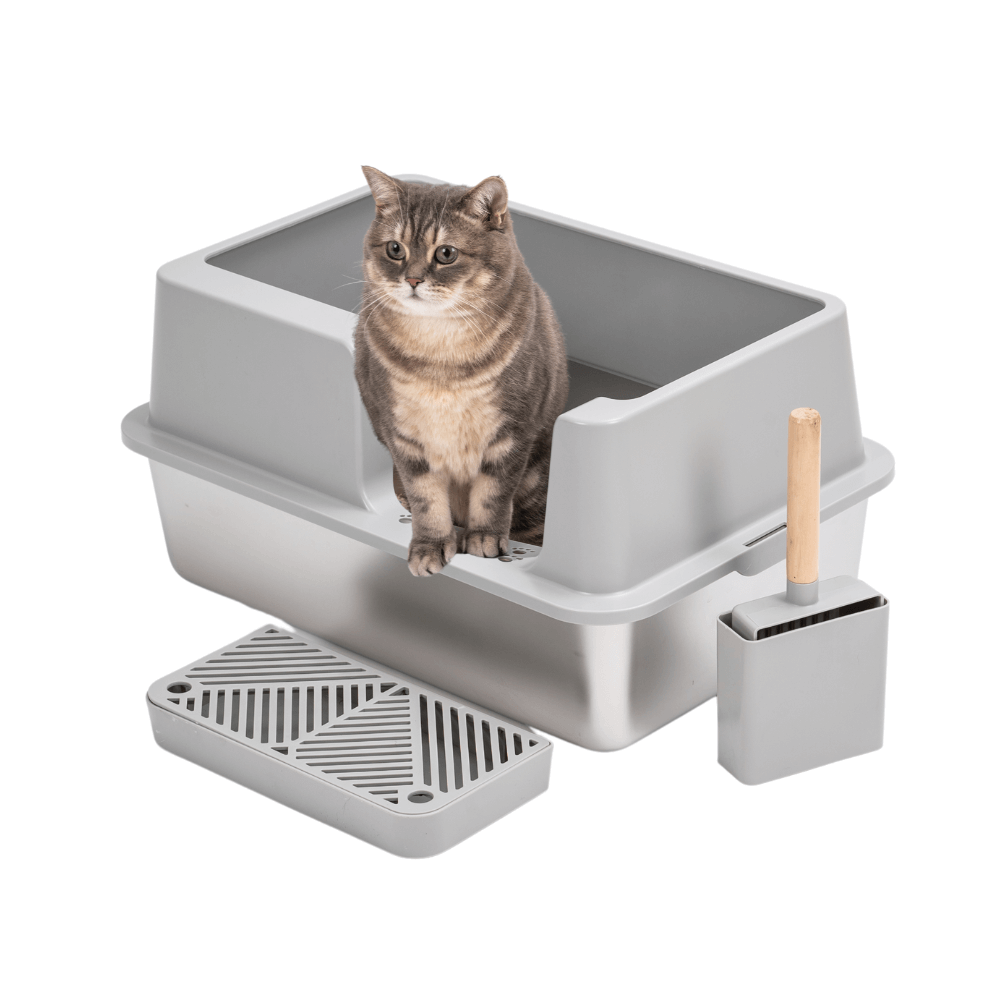
Elevate your litter box experience with our XL stainless steel design—durable, non-stick, and odor-repellent for a cleaner home. Enjoy extra space and smart features that keep litter where it belongs.
Moisture and Odor Control
EVA mats' non-porous surface inhibits moisture absorption, which is crucial for maintaining a clean and hygienic litter area. This water resistance prevents liquid from seeping into the mat, thus reducing bacterial growth and odors.
Traditional fabric rugs absorb moisture, making them ideal for bacterial and mildew growth. This leads to persistent odors and complicates the cleaning process. EVA mats, however, provide an easier and more effective solution for odor control and long-term cleanliness.
Cleaning and Maintenance: Easier with EVA Mats
EVA litter mats are easier to clean than traditional rugs due to their water-resistant, non-porous surface. They can be quickly rinsed or wiped down with soap and water, allowing for rapid drying that prevents the growth of odor-causing bacteria. Their antimicrobial properties reduce the need for frequent deep cleans.
In contrast, fabric rugs absorb moisture and pet waste, requiring extensive cleaning efforts. Over time, moisture buildup and trapped litter can damage the fibers, requiring deep washing or replacement. For a low-maintenance solution, EVA mats are the superior choice.
Cleaning Honeycomb EVA Mats
Cleaning honeycomb EVA mats is easy. A quick wash with soap and water removes debris, and the textured design facilitates efficient rinsing. EVA mats dry quickly, reducing the risk of mold and mildew buildup.
In addition, EVA mats' antimicrobial properties inhibit odor-causing bacteria, keeping the litter box area fresher. Regular maintenance, like shaking out loose litter and spot cleaning, ensures the mat remains effective over time.
Upgrade Your Cat's Comfort
Elevate your litter box experience with our XL stainless steel design—durable, non-stick, and odor-repellent for a cleaner home. Enjoy extra space and smart features that keep litter where it belongs.
Challenges Cleaning Traditional Rugs
Traditional fabric rugs absorb moisture deeply, making them difficult to clean when soiled with pet waste. Over time, they become matted, retaining odors and requiring professional cleaning.
The porous nature of fabric fibers allows moisture and bacteria to build up, leading to unpleasant smells. In contrast, EVA mats prevent moisture absorption, making them easier to maintain and more hygienic for your cat.
Selecting the Best Litter Mat for Your Cat
Selecting the right litter mat depends on your cat's behavior, household needs, and cleaning preferences. EVA mats are ideal for homes where durability and ease of cleaning are priorities. Their antimicrobial and water-resistant properties help reduce odors and bacterial growth.
Traditional rugs may appeal to those seeking a softer surface, but they often require more frequent cleaning. Considering durability, cost, and environmental impact, EVA mats provide better long-term value.
Factors to Consider When Choosing
When choosing a litter mat, durability is key. EVA mats excel in durability, resisting wear and tear better than traditional fabric rugs. They also offer easier cleaning, requiring less frequent deep cleaning.
Consider environmental impact and cost. While EVA mats have a higher initial price, their long lifespan and low maintenance costs offer better long-term value. Fabric rugs, though biodegradable, often require more resources to maintain.
For more insight, see our guide on how to choose the best litter mat .
DIY Litter Mats: When and How
DIY litter mats can be a budget-friendly option. Materials like non-slip shelf liners or rubber placemats can be used to create customizable mats. While these mats may lack advanced features like antimicrobial properties, they can serve as a temporary solution.
DIY mats may require more frequent cleaning due to their porous nature. For more detailed ideas, explore our guide on diy cat litter mat.
Conclusion
EVA litter mats offer superior containment and odor control with their water-resistant and antimicrobial properties.
Traditional rugs absorb moisture and odors, complicating cleanup and reducing effectiveness over time.
Choosing an EVA mat enhances cleanliness and simplifies maintenance, benefiting both cat and owner.
Explore EVA litter mats as a practical upgrade for your cat’s comfort and your home’s cleanliness.
Frequently Asked Questions
What is an EVA litter mat?
An EVA litter mat is made from ethylene-vinyl acetate, a polymer with water-resistant and durable properties. These mats trap litter and prevent odors, offering a cleaner, more hygienic solution than fabric rugs.
How do you clean a honeycomb litter mat?
Cleaning a honeycomb EVA mat is simple. Wash with soap and water, and it dries quickly, preventing bacterial growth. Its antimicrobial properties help keep it fresh.
Can I just use a regular doormat as a litter mat?
Regular doormats made of fabric fibers are less effective because they absorb moisture and odors. EVA mats, with their non-porous surface, offer superior litter containment and easier maintenance.
The Furrbby Difference: Built to Last, Designed to Save You Money
Perfect Memorial Day Upgrade for Multi-Cat Homes
Planned Obsolescence vs. Heirloom Quality: Why Steel Wins
Memorial Day Sale: Why Now Is The Best Time To Upgrade Your Cat’s Litter Setup