


Who Pooped? Health Monitoring in a Multi-Cat Box
by Laura Jane on Mar 22, 2026
Identifying individual cat health issues in a multi-cat household, especially from shared litter box observations, presents a significant challenge for animal care professionals.
This guide provides practical strategies for monitoring cat health in multi-cat settings. We'll explore how precise observation of urine color—which ranges from pale to deep yellow in healthy cats—can signal early changes, particularly when using non-absorbent surfaces like stainless steel. We also delve into modern "Clean Slate" monitoring systems that use devices to establish individual baselines, often distinguishing health metrics for up to 4-5 cats per system, helping to track each cat's unique behaviors and vital signs.

Industry Manufacturers List
Quick Comparison: Top Picks
| Manufacturer | Location | Core Strength | Verdict |
|---|---|---|---|
| Normal, healthy stool | Industry Wide | Visual metrics: sausage/log shape; firm yet pliable texture; smooth surface; light-to-dark brown color; minimal residue in litter; passed about once daily. | A normal cat stool is log-shaped, well-formed, firm but still moist, and easy to scoop. |
| Hard, dry, or pellet-like stool | Industry Wide | Visual metrics: very firm or crumbly texture; small pellets or pebbles; segmented, dry surface; may be lighter brown; often reduced total volume and less frequent passage.[1][3][2] | Hard, crumbly, or small pellet-like stools often indicate constipation or dehydration, especially if the cat is straining or visiting the box frequently with little output. |
| Soft, shapeless, or mushy stool | Industry Wide | Visual metrics: poorly formed or puddle-like shape; very soft texture leaving clear residue on litter; often stronger odor; normal to increased frequency of defecation.[1][2][3] | Soft, unformed, or mushy stool that still holds some shape but smears easily can reflect food intolerance, stress, gut dysbiosis, or mild inflammation. |
| Watery diarrhea | Industry Wide | Visual metrics: liquid to slurry consistency; no defined edges; extensive wet area in litter; often very strong, foul odor; increased frequency and urgency; possible splattering on box walls.[2][3] | Watery stool with little to no form represents diarrhea and is generally abnormal, often linked to gut inflammation, infection, parasites, dietary indiscretion, or systemic disease. |
| Color deviations: black, red, pale, yellow, or green stool | Global Standard | Visual metrics: baseline milk-chocolate to dark brown color as normal; black/tarry for suspected upper-GI bleeding; bright red streaks in or on otherwise brown stool; pale/white/chalky pieces; mustard/yellow or grey tinge; persistent green tones.[1][3][8][10] | Healthy stool is light-to-dark brown; deviations can signal significant disease. |
| Abnormal contents, coating, and smell | Industry Wide | Visual metrics: surface mucus coating; strings or tapeworm segments; undigested food; foreign objects; unusually glossy or slimy surface; strong, atypical or metallic smell; notes on frequency and volume.[2][3][5][6] | Visible worms, rice-like segments, large amounts of mucus, or foreign material in the stool can indicate parasites, inflammatory bowel disease, or pica. |
Normal, healthy stool
A normal cat stool is a reliable sign of effective digestion and adequate hydration. It typically appears log-shaped, is well-formed, firm yet moist, and easy to scoop from the litter box. Cats generally pass such stools once or twice daily, signifying proper digestive function.
This visual metric serves as a key tool for monitoring individual cat health. In multi-cat environments, consistent, similar-looking stools across cats sharing the same diet suggest overall herd well-being. Its characteristics are often tracked through simple visual checks or advanced camera/litter-box monitoring systems.
At a Glance:
- 📍 Location: Industry Wide
- 🏭 Core Strength: Visual metrics: sausage/log shape; firm yet pliable texture; smooth surface; light-to-dark brown color; minimal residue in litter; passed about once daily.
- 🌍 Key Markets: Health monitoring of individual and multiple cats using visual checks or camera/litter-box tracking.
Why We Picked Them:
| ✅ The Wins | ⚠️ Trade-offs |
|---|---|
|
|
Hard, dry, or pellet-like stool
Hard, crumbly, or small pellet-like stools often point to constipation or dehydration. This is particularly true if a cat is straining or visiting the litter box frequently with little output. Such stool appearance offers a key visual cue for monitoring feline health.
These stools show specific visual metrics: a very firm or crumbly texture, often appearing as small pellets or pebbles. They typically have a segmented, dry surface and may be lighter brown. The total volume passed is frequently reduced, and bowel movements happen less often. These characteristics are vital for detecting constipation, dehydration, low-fiber intake, or painful defecation, especially in multi-cat environments.
At a Glance:
- 📍 Location: Industry Wide
- 🏭 Core Strength: Visual metrics: very firm or crumbly texture; small pellets or pebbles; segmented, dry surface; may be lighter brown; often reduced total volume and less frequent passage.[1][3][2]
- 🌍 Key Markets: Detection of constipation, dehydration, low-fiber intake, or painful defecation in multi-cat health surveillance.
Why We Picked Them:
| ✅ The Wins | ⚠️ Trade-offs |
|---|---|
|
|
Soft, shapeless, or mushy stool
Soft, unformed, or mushy stool, which retains some shape but smears easily, can be an indicator of underlying issues such as food intolerance, stress, gut dysbiosis, or mild inflammation in an animal's digestive system. Its appearance can vary from poorly formed to puddle-like, leaving clear residue.
If this stool consistency persists for more than 24 to 72 hours, particularly when repeatedly observed through monitoring systems like litter-box cameras, it is crucial to seek veterinary review to identify and address the cause before it escalates into more severe digestive problems.
At a Glance:
- 📍 Location: Industry Wide
- 🏭 Core Strength: Visual metrics: poorly formed or puddle-like shape; very soft texture leaving clear residue on litter; often stronger odor; normal to increased frequency of defecation.[1][2][3]
- 🌍 Key Markets: Early detection of GI upset, food sensitivities, or emerging diarrhea in monitored multi-cat households.
Why We Picked Them:
| ✅ The Wins | ⚠️ Trade-offs |
|---|---|
|
|
Watery diarrhea
Watery stool with little to no form is a significant indicator of feline health issues, often signaling underlying gut inflammation, infection, parasites, dietary indiscretion, or systemic diseases. Its presence is generally abnormal and warrants attention.[2][3][6]
Identifying watery diarrhea involves recognizing visual metrics such as liquid or slurry consistency without defined edges, extensive wet areas in the litter box, and often a very strong, foul odor. The condition is typically accompanied by increased frequency, urgency, and sometimes splattering on box walls, providing critical clues for diagnosis and management.[2][3]
At a Glance:
- 📍 Location: Industry Wide
- 🏭 Core Strength: Clear visual metrics aid in identification: liquid to slurry consistency; no defined edges; extensive wet area in litter; often very strong, foul odor; increased frequency and urgency; possible splattering on box walls.[2][3]
- 🌍 Key Markets: Triage of acute GI disease, infectious diarrhea, and stress-related bowel changes across multiple cats.
Why We Picked Them:
| ✅ The Wins | ⚠️ Trade-offs |
|---|---|
|
|
Color deviations: black, red, pale, yellow, or green stool
Healthy stool typically presents in shades from light to dark brown. Any significant deviation from this norm can indicate various health concerns. For instance, black, tarry stool suggests digested blood from the upper gastrointestinal tract, while bright red streaks often point to fresh bleeding from lower intestinal irritation. Pale, white, or chalky stool can signal issues with bile flow or excessive dietary calcium.
Yellow or grey stool may indicate problems with the liver or pancreas. Additionally, green or other unusual hues should be noted, as they might be linked to dietary factors or exposure to toxins. Monitoring these color changes is an important step in identifying potential health problems.
At a Glance:
- 📍 Location: Global Standard
- 🏭 Core Strength: Visual metrics: baseline milk-chocolate to dark brown color as normal; black/tarry for suspected upper-GI bleeding; bright red streaks in or on otherwise brown stool; pale/white/chalky pieces; mustard/yellow or grey tinge; persistent green tones.[1][3][8][10]
- 🌍 Key Markets: Color-based screening for bleeding, hepatobiliary disease, pancreatic issues, and diet- or toxin-related problems using litter checks and camera footage.
Why We Picked Them:
| ✅ The Wins | ⚠️ Trade-offs |
|---|---|
|
|
Abnormal contents, coating, and smell
Abnormal contents, coating, and smell in stool offer crucial insights into an animal's health. Visible worms, rice-like segments, significant mucus, or foreign materials can signal parasites, inflammatory bowel disease, or pica.[2][3][4] Additionally, very foul or metallic odors, deviating from a cat’s typical baseline, might suggest malabsorption, infection, blood in stool, or systemic illness.[5][6]
The core strength of this data lies in its application of visual metrics. This includes observations on surface mucus coating, the presence of strings or tapeworm segments, undigested food, foreign objects, unusually glossy or slimy surfaces, and strong, atypical, or metallic smells. Notes on frequency and volume further enhance these visual cues.[2][3][5][6]
At a Glance:
- 📍 Location: Industry Wide
- 🏭 Core Strength: Visual metrics: surface mucus coating; strings or tapeworm segments; undigested food; foreign objects; unusually glossy or slimy surface; strong, atypical or metallic smell; notes on frequency and volume.[2][3][5][6]
- 🌍 Key Markets: Decision support for when to collect fecal samples, pursue parasite testing, or schedule veterinary exams in multi-cat environments.
Why We Picked Them:
| ✅ The Wins | ⚠️ Trade-offs |
|---|---|
|
|
BJR Pet Cameras
BJR Pet Cameras specializes in providing high-quality indoor security cameras designed specifically for pet monitoring. Their offerings feature crystal-clear 2K HD video, giving pet owners a detailed view of their cats or other pets. These cameras come with full app control, enabling remote management and viewing from anywhere. Reliability is a key focus, supported by dual-band Wi-Fi for stable connectivity.
Focused on comprehensive home monitoring, BJR Pet Cameras integrates advanced functionalities like 360° smart coverage, ensuring no corner of a room is missed. They also include essential features such as night vision for clear monitoring in low-light conditions and motion alerts to notify owners of activity. A two-way microphone allows for listening in and communicating with pets remotely, enhancing the interactive experience for remote cat care.
At a Glance:
- 📍 Location: Industry Wide
- 🏭 Core Strength: 2K HD Indoor Security Cameras
- 🌍 Key Markets: Pet Monitoring, Remote Cat Care
Why We Picked Them:
| ✅ The Wins | ⚠️ Trade-offs |
|---|---|
|
|
Yakry Automatic Pet Feeder with Camera
The Yakry Automatic Pet Feeder with Camera provides a complete solution for pet owners needing remote feeding and monitoring. This device allows for fully customizable feeding schedules, controlled conveniently through a dedicated smartphone application.
Equipped with an HD 1080P camera, the feeder enables real-time observation of pets, supported by two-way audio for interaction and motion detection notifications to keep owners informed. It excels at monitoring pet eating habits and behavior, even in low-light conditions, ensuring pets are well cared for with a hygienic design and stable remote capabilities.
At a Glance:
- 📍 Location: Industry Wide
- 🏭 Core Strength: Automatic Feeder with 1080P Camera
- 🌍 Key Markets: Remote Feeding and Monitoring
Why We Picked Them:
| ✅ The Wins | ⚠️ Trade-offs |
|---|---|
|
|
PETLIBRO Automatic Cat Feeder with Camera
The PETLIBRO Automatic Cat Feeder with Camera offers a modern solution for pet owners managing their cat's feeding schedule. This device provides comprehensive control, allowing for up to 10 meals per day with customizable portions via a user-friendly app. Its integrated camera is strategically angled to monitor the food bowl, ensuring owners can oversee their pet's food intake directly.
Beyond its scheduling capabilities, the feeder includes real-time alerts for low food levels or potential jams, ensuring continuous operation. The system prioritizes food freshness with its 5L hopper and a stainless steel bowl, preventing spoilage. For added reliability, it features a backup battery and offers voice call options, enhancing communication and peace of mind for pet parents.
At a Glance:
- 📍 Location: Industry Wide
- 🏭 Core Strength: Automatic Feeder with Camera, 5L Hopper
- 🌍 Key Markets: Cat Feeding Monitoring, Travel Pet Care
Why We Picked Them:
| ✅ The Wins | ⚠️ Trade-offs |
|---|---|
|
|
Petcube Play
Petcube Play is a leading pet camera designed specifically for cat owners. It offers high-quality live video streaming, allowing pet parents to watch their feline friends from anywhere. Its robust features cater to monitoring multiple pets, ensuring no moment is missed.
As a key player in the pet monitoring market, Petcube Play focuses on delivering reliable pet camera solutions. The company develops technology for continuous pet observation, supporting cat owners across the industry with innovative monitoring capabilities.
At a Glance:
- 📍 Location: Industry Wide
- 🏭 Core Strength: Pet Camera with Live Video
- 🌍 Key Markets: Cat Monitoring
Why We Picked Them:
| ✅ The Wins | ⚠️ Trade-offs |
|---|---|
|
|
Furbo 360
Furbo 360 is a pet camera specifically designed for cat owners, offering comprehensive 360-degree coverage of their environment. This device ensures that no corner of a room goes unmonitored, providing peace of mind for pet parents.
The camera includes live video streaming, allowing owners to check in on their feline friends from anywhere. Select models also feature interactive treat dispensing, which helps engage pets and makes remote interaction enjoyable.
At a Glance:
- 📍 Location: Industry Wide
- 🏭 Core Strength: 360° Pet Camera
- 🌍 Key Markets: Interactive Pet Monitoring
Why We Picked Them:
| ✅ The Wins | ⚠️ Trade-offs |
|---|---|
|
|
Urine Color on Stainless Steel.
Observing cat urine on stainless steel helps assess health by enhancing color and clarity due to its non-absorbent, reflective surface. Normal urine is pale to deep yellow, indicating hydration status. Unusual colors like red, pink, cola, orange, brown, blue, or green, along with cloudiness, sediment, or persistent foam, can signal health problems and often need prompt veterinary attention. Consistent observation conditions improve accuracy.
Benefits of Observing Urine on Stainless Steel
Stainless steel offers a smooth, non-absorbent surface, which makes assessing urine color and clarity easier.
Reflective metal surfaces improve how we see and photograph urine, helping detect subtle changes.
Observing urine on stainless steel is more effective for new pet owners and those using cameras compared to absorbent litter.
Interpreting Urine Colors for Cat Health Insights
Normal cat urine color ranges from pale yellow to deep yellow or amber, mainly showing hydration level.
Very pale or almost clear urine suggests good hydration. Darker yellow or amber indicates concentrated urine, possibly from dehydration.
Red, pink, or cola-colored urine points to possible blood (hematuria) or severe muscle breakdown.
Orange or dark yellow-orange urine can signal significant dehydration, effects from medication, or liver issues.
Brown or tea-colored urine suggests rhabdomyolysis, severe liver disease, or degraded blood.
Rare blue or green urine might result from dyes, medications, diagnostic agents, or specific infections.
Maximizing Accuracy and Knowing When to Act
Cloudiness, sediment, or persistent foam on stainless steel can suggest infection, crystals, or proteinuria.
Stainless steel's reflective qualities, along with lighting and camera settings, can change how urine color appears. Standardize observation conditions for better accuracy.
Repeat episodes of red, pink, brown/tea, unexplained bright orange, or blue/green urine need prompt veterinary evaluation.
The "Clean Slate" Observation.
The "Clean Slate" Observation refers to starting health monitoring for cats from a baseline state, especially in multi-cat households, where devices establish initial profiles to distinguish individual cats and track normal behaviors before detecting deviations.
| Aspect | Core Idea | Examples/Details |
|---|---|---|
| Concept | Starting cat health monitoring from a baseline state, distinguishing individual cats and tracking normal behaviors. | This enables early detection of issues like urinary tract infections (UTIs), kidney disease, or changes in litter box usage for both novices and experienced owners. |
| Device Methods | Different devices use various techniques to establish unique baselines for each cat. | Petivity Smart Litterbox uses sensors and AI for weight and behavior profiles. Litter-based monitors track urine pH and color. Wearable devices like PetPace establish vital sign baselines. FitBark 2 focuses on sleep/activity, and GPS options track location/calories. |
| Setup Protocols | Setting up health monitoring devices involves specific calibration and profiling steps. | Key setup steps include app-based cat profiling and sensor calibration. Temporary isolation for similar-weight cats ensures accurate labeling. Baselines are monitored for 1-2 weeks before alerts activate. Initial setup may require trial-and-error. |
Concept of the 'Clean Slate' in Health Monitoring
Starting cat health monitoring from a baseline state, especially in multi-cat households.
Devices establish initial profiles to distinguish individual cats and track normal behaviors.
Enables early detection of issues like urinary tract infections (UTIs), kidney disease, or changes in litter box usage for both novices and experienced owners.
Device-Specific Baseline Establishment Methods
Petivity Smart Litterbox Health Monitoring System uses sensors for weight, behavior, and AI to build unique baselines, requiring user confirmation for accuracy (e.g., eight per cat).
Litter-based monitors (Purina Tidy Cats Tidy Care Alert, Fresh Step Health Monitoring Litter, Genius HI Smart Cat Health Litter) observe normal urine pH and color changes from the outset.
Wearable devices like PetPace smart collars establish vital sign baselines (heart rate, respiratory rate, temperature, activity) using AI.
FitBark 2 focuses on sleep quality and activity patterns, while GPS options (Tractive Cat GPS, Whistle Go Explore) track location and calories burned.
Initial Setup and Calibration Protocols
Key setup steps include app-based cat profiling and sensor calibration.
Temporary isolation for similar-weight cats helps ensure accurate labeling and differentiation.
Monitoring baseline metrics (weight changes, litter interactions, vital signs) typically occurs for 1-2 weeks before alerts activate.
Initial setup may require trial-and-error, especially differentiating similar-sized cats without isolation.
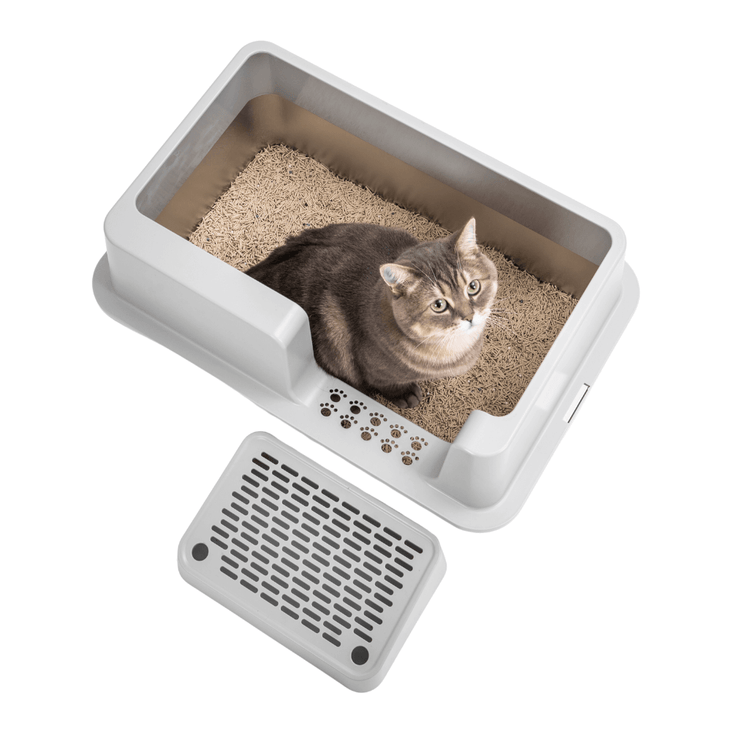
Finally, a Litter Box That Stays Clean & Odor-Free.
Frequently Asked Questions
How can I tell which cat has diarrhea in a multi-cat household?
With multiple cats, the only reliable way to know which one has diarrhea is to directly link each cat to its stool using supervision or tracking.
Practical methods include:
1) Temporary isolation: Confine one cat at a time (or each cat to its own room or large crate with a litter box) for 24–48 hours and check which box contains diarrhea. This is the simplest, most accurate method recommended by veterinarians when the source of abnormal stool is unknown.
2) Multiple labeled litter boxes: Give each cat a dedicated litter box in a separate, briefly restricted area so you can observe who uses which box and inspect the stool right after use.
3) Cameras or sensors: Use a pet camera or litter-box monitoring system to record which cat enters the box and what the stool looks like, useful if you cannot supervise in real time.
4) Butt/leg soiling signs: The affected cat may have feces stuck to fur around the anus, on back legs, or under the tail, and sometimes a dirty carrier or sleeping area. While this is a useful clue, it is less reliable than isolation.
Once you identify the cat, collect a fresh stool sample from that individual and take it to a veterinarian, because diarrhea is never considered normal in cats and can indicate anything from parasites or diet issues to more serious gastrointestinal or systemic disease.
Can I monitor multiple cats’ litter box usage?
Yes, you can monitor multiple cats’ litter box habits using smart litter box systems or under-box monitors. These systems identify each cat and track their visits, weight, and waste events individually. Devices like AI-based litter box monitors and self-cleaning boxes can often distinguish up to about 4–5 cats per system, providing per-cat data and alerts for health changes. This helps in early detection of issues like urinary problems, constipation, diarrhea, or weight changes, which can be hard to spot in multi-cat environments.
How do I determine which cat has blood in their urine?
Blood in a cat's urine (hematuria) cannot be definitively attributed to a specific cat without a veterinary examination. This symptom often indicates urinary tract issues common across cats, especially in multi-cat households where monitoring individual symptoms is crucial. To identify the affected cat, observe litter box use carefully. Look for any cat straining, crying, or leaving small spots of urine. Using separate litter boxes or cameras can help track individual behaviors. Key red flags include straining, frequent attempts to urinate, producing small drops, or avoiding the litter box. Since stress from multi-cat dynamics can be a risk factor, isolating and monitoring suspected cats can also provide clarity.
What are the best cameras for monitoring a cat's litter box?
For monitoring a cat's litter box, particularly for health tracking in multi-cat homes, the SiiPet LitterLens is notable for using image recognition to analyze litter box activity for signs of urinary or digestive issues. Other strong options include stationary indoor cameras like the Eufy Indoor Cam E30 (with 4K resolution, pet detection AI, and local storage) or Furbo 360° (offering 1080p HD and 360° pan-tilt). These cameras are selected from recent reviews for features like high-resolution video, AI pet detection, night vision, and app alerts, which are ideal for spotting subtle symptoms like straining or tracking multiple cats.
What are the visibility benefits of a system like Furr Bby for cat health monitoring?
The primary visibility benefit of a system like Furr Bby in multi-cat health monitoring is that it makes previously invisible or easily missed events visible and reviewable. Owners can see which cat used which resource (litter box, food, water), when, and how often, even if they were not in the room. This increased visibility helps reduce missed symptoms such as subtle changes in litter-box use, appetite, or activity. For homes already using cameras, it complements existing setups by structuring and centralizing video or event data into timelines, alerts, and per-cat histories that are faster to check than raw camera footage. This increased visibility shortens the time from the first abnormal behavior to the owner noticing it, which is crucial as many feline illnesses first appear as small, easily overlooked behavioral changes.
How can I detect worms in my cat?
You usually detect worms in cats through a combination of visual checks and behavior/health monitoring, which then requires veterinary confirmation. At home, look for visible worms or rice-like segments in stool, on the anus, in vomit, or stuck to fur; roundworms often resemble spaghetti, while tapeworm pieces look like small grains of rice. Also, observe for signs like vomiting or diarrhea (which may contain worms), a bloated abdomen, weight loss despite a normal or increased appetite, a dull coat, lethargy, dehydration, pale gums, or dark/tarry or bloody stools. However, some cats show no obvious symptoms. In multi-cat homes or when signs are subtle, use litter box and camera monitoring to track changes in stool, vomiting episodes, appetite, activity, and rear-end grooming. Your veterinarian can then run fecal exams or other lab tests to confirm and identify the specific type of worms, and for heartworm, blood tests are needed.
Final Thoughts
Observing a cat's urine on stainless steel helps spot early health issues. This method, combined with a 'Clean Slate' approach for tracking individual cat baselines, provides clear insights. Using smart litter boxes, cameras, and wearables lets pet owners monitor health, even in multi-cat homes, allowing for quick action when changes appear.
These monitoring strategies change how we care for our cats. They make it possible to catch subtle signs of illness much sooner, especially when living with many cats. By understanding each cat's normal patterns, owners can work with their vet to address health concerns quickly, leading to healthier, happier lives for their feline companions.
The Furrbby Difference: Built to Last, Designed to Save You Money
Perfect Memorial Day Upgrade for Multi-Cat Homes
Planned Obsolescence vs. Heirloom Quality: Why Steel Wins
Memorial Day Sale: Why Now Is The Best Time To Upgrade Your Cat’s Litter Setup