


Businesses often assume high-tech equals superior hygiene when it comes to self-cleaning litter boxes. Yet, a crucial problem persists: the plastic interiors of popular models like the Litter-Robot 4 can become porous, trapping residue and leading to hidden mold and unpleasant odors, undermining the very cleanliness pet owners expect.
This article explores that disconnect, comparing the design and real-world cleanliness of traditional stainless steel litter boxes against the Litter-Robot 4. We will examine critical differences like material hygiene, interior space for cat comfort—for instance, the Litter-Robot XXL offering 15-17 inches of headroom—and the surprising long-term financial implications, where an automated litter box can cost around $2,400 over five years. This deeper look reveals why a simpler approach can often be a much cleaner alternative.

Industry Manufacturers List
Quick Comparison: Top Picks
| Manufacturer | Location | Core Strength | Verdict |
|---|---|---|---|
| Traditional Litter Box Deep Clean: ~60 Minutes | Industry Wide | Manual deep-clean workflow: dump all litter, scrape stuck waste, soak and scrub pan, rinse, dry completely, refill and re-level litter; often repeated weekly or bi‑weekly for odor control.[1][5] | A full "deep clean" of a standard open litter box typically involves dumping all litter, scraping adhered waste, soaking and scrubbing the pan, rinsing, drying, and fully refilling with fresh litter. For many owners this process takes about 45–60 minutes including drying time, especially when disinfectants and thorough odor removal are involved (inferred from manual multi-step cleaning procedures for conventional boxes).[1][5] |
| Litter-Robot Deep Clean: ~3–15 Minutes | Global Standard | Automatic sifting cycle; Empty button to dump litter; modular EasyClean components for fast disassembly; quick wipe-down or wash of globe and base; waste drawer liner replacement.[1][2][3] | Deep cleaning a Litter-Robot (self-cleaning globe design) is largely reduced to pressing the Empty button to dump litter, removing modular EasyClean components, and giving the globe/base a quick wash or wipe, which manufacturer guidance and user reports place at roughly 10–15 minutes for a full wash or only a few minutes for a quick interior wipe.[1][2][3] Because the unit automatically sifts after each use and stores waste in a sealed drawer, owners only need a true deep clean every 1–3 months, cutting total annual cleaning time by about 80% vs a traditional box.[1][5] |
Traditional Litter Box Deep Clean
The Traditional Litter Box Deep Clean describes a comprehensive, manual cleaning routine for standard open litter boxes. This involves completely emptying the litter, meticulously scraping away any stuck waste, and then thoroughly soaking and scrubbing the pan. The process ensures high levels of cleanliness and odor control, essential for pet hygiene.
Typically requiring about 45-60 minutes, including drying time, this deep clean workflow ensures the pan is fully rinsed, dried, and refilled with fresh litter. This time commitment often includes the use of disinfectants and thorough odor removal, making it a significant regular task for cat owners.
At a Glance:
- 📍 Location: Industry Wide
- 🏭 Core Strength: Manual deep-clean workflow: dump all litter, scrape stuck waste, soak and scrub pan, rinse, dry completely, refill and re-level litter; often repeated weekly or bi‑weekly for odor control.[1][5]
- 🌍 Key Markets: Home pet care; cat hygiene for households using non-automated litter boxes and clumping clay or similar litters.[1][5]
Why We Picked Them:
| ✅ The Wins | ⚠️ Trade-offs |
|---|---|
|
|
Litter-Robot
The Litter-Robot features a self-cleaning globe design that simplifies deep cleaning. To clean, users press an "Empty" button to discard litter, then remove modular EasyClean components. The globe and base can then be quickly washed or wiped.
Manufacturer guidance and user feedback state that a complete wash takes 10–15 minutes, with a quick wipe taking only a few minutes. Since the unit automatically sifts after each use and stores waste in a sealed drawer, deep cleaning is needed only every 1–3 months. This reduces total annual cleaning time by about 80% compared to traditional litter boxes.
At a Glance:
- 📍 Location: Global Standard
- 🏭 Core Strength: Automatic sifting cycle; Empty button to dump litter; modular EasyClean components for fast disassembly; quick wipe-down or wash of globe and base; waste drawer liner replacement.
- 🌍 Key Markets: Home pet care; multi-cat and single-cat households adopting self-cleaning litter boxes to reduce manual scooping and deep-clean time.
Why We Picked Them:
| ✅ The Wins | ⚠️ Trade-offs |
|---|---|
|
|

The "Moldy Base" Secret
Many self-cleaning litter boxes use plastic for internal parts and waste drawers. Over time, this plastic can become porous and trap residue, leading to hidden odors and mold. Current designs struggle with persistent hygiene challenges because plastic surfaces are prone to microscopic damage and waste adhesion. The industry needs to focus on addressing the root cause of bacterial and mold growth within the material itself.
The Hidden Reality of Self-Cleaning Robot Bases
Many self-cleaning litter boxes, despite features like 'OmniSense Detection' and 'WasteID', predominantly use plastic for their internal mechanisms and waste drawers.
While models like the Litter-Robot 4 and Litter-Robot 5 offer 'improved odor control' and 'sealed waste drawers,' the plastic material itself can become porous and harbor odors over time.
This inherent porosity and accumulation of residue in the base can lead to an overlooked 'moldy base' issue, undermining the hygiene promises of systems featuring 'QuietSift' technology.
Why Current Robot Designs Fall Short on Base Hygiene
Even with sophisticated internal components, plastic surfaces remain susceptible to microscopic damage and waste adhesion, creating hidden breeding grounds for bacteria and mold.
The reliance on plastic in critical waste areas means persistent cleaning challenges that are not fully mitigated by 'Carbon Filter' systems or sophisticated app monitoring.
By 2026, the industry needs to move beyond masking odors to addressing the root cause of bacterial and mold growth within the base material itself, offering genuinely cleaner alternatives.
Interior Space Comparison (Cramped Globe vs Open XXL)
The Litter-Robot EVO is a compact design for smaller spaces and 1-2 cats weighing 3-19 lbs, with 14.5 inches of headroom. In contrast, the Litter-Robot XXL (like the Litter-Robot 4) offers a larger interior for multi-cat households (up to 4-5 cats) and large breeds up to 25 lbs, providing 15-17 inches of headroom and a wider entryway.
Catering to Cat Size and Household Needs
The Litter-Robot EVO is built for compactness, making it suitable for smaller living areas and homes with one or two cats weighing between 3 and 19 pounds.
The Litter-Robot XXL, exemplified by models like the Litter-Robot 4, offers a much larger interior designed for multi-cat households (up to 4-5 cats) and accommodating large breeds weighing up to 25 pounds.
Critical Dimensions and Feline Comfort
The Litter-Robot EVO provides a headroom of 14.5 inches, which might feel tight for larger cats; its entryway is 14.85'' x 14.85''.
The Litter-Robot XXL boasts a more generous headroom, ranging from 15 to 17 inches depending on litter level, and a wider entryway at 15.75'' x 15.75'', providing ample space for cats to move comfortably.

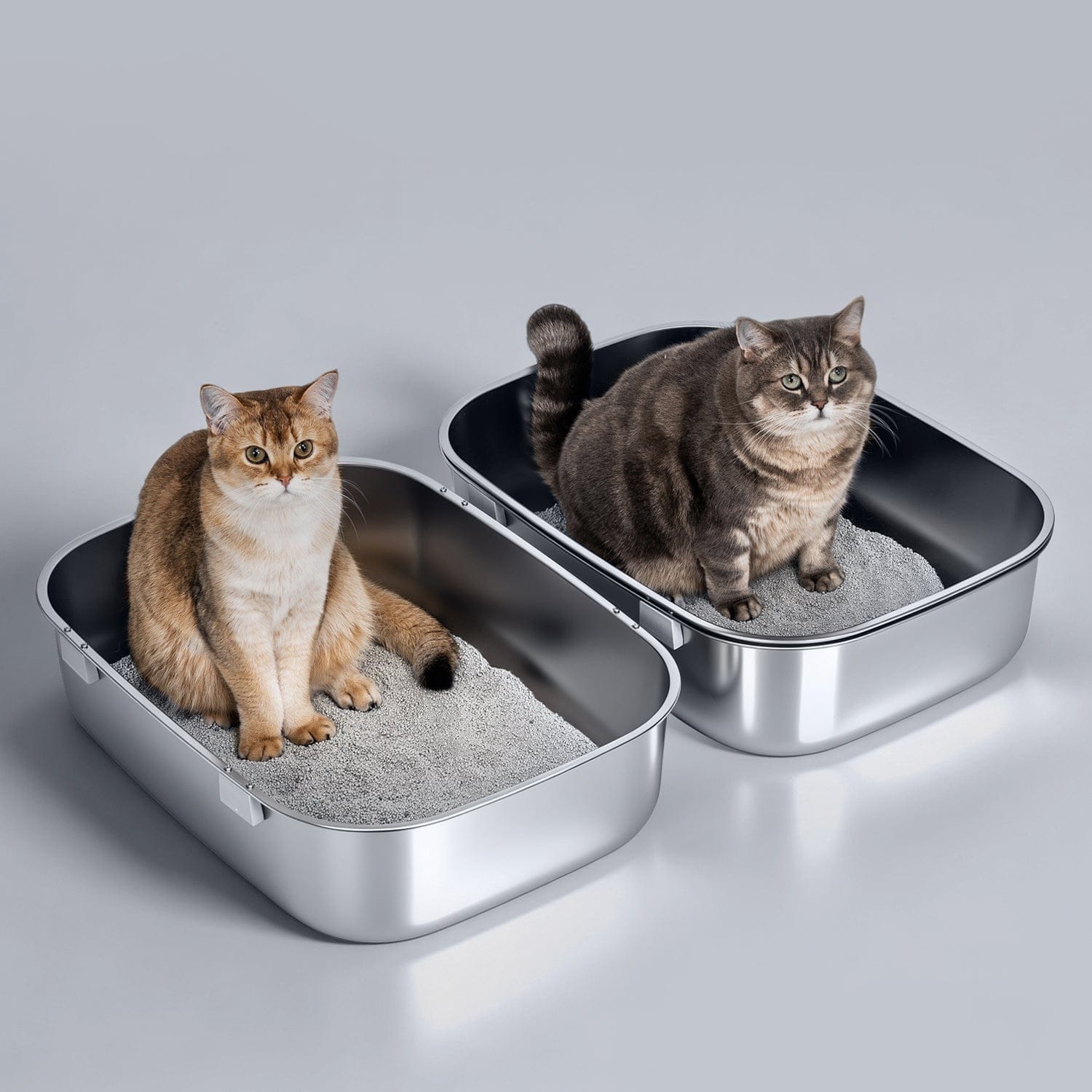
Stainless Steel: Your Solution for a Cleaner, Odor-Free Home
5-Year Cost Breakdown ($700+ vs $150)
An automated litter box, such as a Litter-Robot 5, typically costs $700-$899 upfront, leading to a five-year total ownership cost of about $2,400. This includes litter, liners, and filters, with up to 50% litter savings. In contrast, a traditional litter box starts at $10-$30, but its five-year total reaches around $1,225 for ongoing supplies. This traditional cost does not account for the significant time and effort of daily manual scooping.
| Item | Initial Cost | 5-Year Total Cost |
|---|---|---|
| Automated Litter Box | $700 - $899 (e.g., Litter-Robot 5 bundle) | ~$2,400 (includes litter, liners, filters) |
| Traditional Litter Box | $10 - $30 | ~$1,225 (includes litter, scoops, liners, deodorizers) |
Automated Litter Box: Initial Price and 5-Year Costs
Expect an initial outlay for a premium automated litter box, like a Litter-Robot 5 bundle, from $700 to $899 in 2026.
The total ownership cost over five years averages approximately $2,400.
This figure includes ongoing expenses for litter (averaging $15-30/month), liners, and filters, along with reduced maintenance needs.
An automated system offers up to 50% savings on litter usage due to efficient sifting, offsetting its higher upfront investment.
Traditional Tray: Low Entry, High Ongoing Effort
A traditional litter box has a low initial purchase price, typically $10-$30.
Over five years, the total cost for a traditional setup reaches about $1,225.
These ongoing costs cover monthly litter ($15-30), scoops, liners, and deodorizers.
The requirement for daily manual scooping represents a significant unquantified cost in time and effort, not included in the dollar figures.
Frequently Asked Questions
What is the typical deep cleaning time for a Litter-Robot?
A basic or quick deep clean for a Litter-Robot, especially the Litter-Robot 4, without full disassembly, typically takes 10-15 minutes. This involves emptying the waste drawer, wiping the globe interior, sensors, and grate. Official guidelines recommend this routine maintenance every 1-3 months (or more frequently for multiple cats). A full deep clean, which may involve disassembly and soaking components, is recommended at least every 3 months or annually for heavy use, and can take around 25 minutes including drying time.
Can mold grow in the Litter-Robot base, and how can it be prevented?
Yes, mold can grow in the Litter-Robot base due to excess moisture from high humidity, heat, urine leaks, or inadequate cleaning, potentially affecting electrical components. To prevent this, routinely wipe the base (avoiding electronics) with mild soap, ensure frequent waste drawer emptying (every few days to weekly), and allow all washed parts to dry completely. Using a Litter-Robot Shield for better urine containment and a low-dust, clumping litter can also help reduce moisture buildup.
What are some of the best alternatives to the Litter-Robot?
Several alternatives to the Litter-Robot cater to different needs. The PetSafe ScoopFree SmartSpin and Ultra are reliable self-cleaning options using crystal litter, often more compact and affordable ($399-$450 USD). The Petkit PuraMax 2 is a spacious and quiet choice for multi-cat homes, balancing cost and performance. For an open-top design, the Neakasa M1 is noted for ease of cleaning and cat comfort. Tech-savvy users might prefer the Petkit Purobot Max Pro with its advanced app control. For an entry-level automatic scooper, the PetPivot Open Top offers affordability.
How does Furrbby compare to Litter-Robot?
Furrbby, particularly its Meowra Automatic Litter Box line, often focuses on stainless steel, sifting-based litter boxes. These are designed for durability, odor control, and easier cleaning, appealing to multi-cat households or those using pine pellets. They generally position themselves as more accessible alternatives to high-priced robots. In contrast, Litter-Robot (e.g., Litter-Robot 4, EVO, 5) offers a premium, fully self-cleaning, rotating-drum robot litter box with Wi-Fi connectivity, advanced sensors, and features like LitterLevel and upcoming WasteID for detailed health monitoring, targeting tech-oriented users seeking comprehensive automation.
Is a robot litter box, like the Litter-Robot, worth its typical $700 price tag?
A high-end self-cleaning litter box typically costs between $500–$700. Its value depends on individual priorities. Reviewers suggest it can be worth the investment if you highly value significant time savings, strongly dislike scooping, and intend to use it for several years. However, for individuals on a tight budget, those with only one easily managed cat, or those who don't mind daily scooping, a $700 robot box is generally not considered cost-effective compared to a standard litter box.
Do robot litter boxes still smell?
Yes, most self-cleaning robot litter boxes can still have an odor. This is because they primarily move waste to a covered compartment, but odors from urine ammonia, feces bacteria, and moist clumps can still be present, especially if the waste drawer is not well-sealed or emptied infrequently. To minimize smell, it is crucial to empty the waste drawer every 2–3 days, regularly replace carbon filters or deodorizers, and use a high-quality clumping clay litter. While it's rarely 100% odor-free, particularly when the drawer is opened, consistent maintenance helps keep smells to a minimum.
Final Thoughts
Choosing between an advanced automated system like the Litter-Robot 4 and a simpler, often stainless steel, alternative involves different priorities. While the Litter-Robot 4 offers significant convenience with its self-cleaning functions, the plastic used in its key components, like the base and waste drawer, can lead to persistent hygiene issues such as trapped odors and potential mold growth. This may diminish the very cleanliness it promises. Solutions using stainless steel, though less automated, often address these hygiene concerns directly with a non-porous, easier-to-clean surface.
Pet owners weigh initial investment and daily convenience against long-term hygiene and maintenance. Even with the advanced features of automated litter boxes, regular deep cleaning is still needed to manage issues like potential mold in plastic parts. True value comes from ensuring a genuinely clean environment for your cat over its lifetime, not just from automated scooping. The industry will likely see designs and materials that tackle bacterial and mold growth at its source, going beyond just masking odors.

Optimal Litter Box Size: Find the Perfect Fit for Cats
Stainless Steel vs Plastic Litter Boxes Long Term Durability For Cat Owners
Multi-Cat Odor Control Furrbby Stainless Steel Litter Boxes for Cat Smells