


Soft Paws, Clean Floor: Care for Declawed or Sensitive Paws
by Taylor Claier on Jan 16, 2026
Caring for declawed cats or those with sensitive paws presents unique challenges for animal care professionals. Ensuring a smooth recovery and preventing complications, like the 17% incidence of wound dehiscence or lameness lasting up to 54 days, requires careful attention to their environment.
This article explores essential strategies, from choosing hygienic stainless steel litter boxes to selecting suitable litter types and providing easy-access setups. We’ll delve into how these choices support faster healing, minimize infection risks (declawing complication rates are 24-26%), and enhance the well-being of recovering felines.

Avoiding Infection (The Steel Factor).
Using stainless steel litter boxes minimizes bacterial growth and infection risks for declawed cats, as plastic alternatives can harbor bacteria in paw incisions.
Minimizing Infection Risks with Stainless Steel
Stainless steel litter boxes prevent bacterial growth in paw incisions, crucial for declawed cats.
Plastic boxes harbor bacteria and urine crystals, increasing infection risks for recovering pets.
Declawed cats face risks like wound dehiscence (17% incidence), claw regrowth abscesses (approximately 3-10%), and chronic digit infections.
Scientific Basis for Steel's Superiority
Stainless steel's non-porous surface resists bacterial adhesion more effectively than plastic.
Lameness persists in 26-31% of cases for 1-54 days post-surgery, often linked to litter tracking into wounds.
Complication rates for declawing range from 24-26%, highlighting the need for optimal hygiene during the 2-12 day healing phase.
Caregiver Guidance for a Hygienic Recovery
Select seamless 18/8 grade stainless steel boxes over plastic for easier disinfection with bleach solution.
Use low-dust, clumping litter and ensure the box is low for lame cats to access easily.
Implement daily paw checks and administer analgesia (e.g., buprenorphine every 8 hours, gabapentin) to prevent complications.
Pellets vs. Clay (Sticking)
Pellets track less, offer better odor control, and are eco-friendly. Some pellet types may not clump efficiently, potentially leaving wet residue. Clay litters, while providing good initial odor control, are prone to sticking to paws, track easily, generate dust, and are non-biodegradable, impacting the environment.
| Feature | Pellets | Clay |
|---|---|---|
| Texture & Tracking | Heavier size results in minimal tracking. | Sand-like texture, tracks easily, sticks to paws. |
| Clumping Efficiency | Many types do not clump efficiently, may leave wet residue. | Effective at clumping for easy scooping (clumping varieties). |
| Odor Control | Excellent odor control and high absorbency. | Good initial odor control. |
| Dust Generation | Low dust. | Generates significant dust. |
| Environmental Impact | Eco-friendly, biodegradable, decomposes naturally. | Non-biodegradable, sourced via mining. |
Texture, Tracking, and Paw Adhesion
Pellet litters, made from materials like wood or paper, have a heavier size. This helps to significantly reduce tracking outside of the litter box. However, some pellet types do not clump well, which can leave wet residue.
Traditional clay litters have a sand-like texture. This texture can stick to paws, especially after surgery. Clay litters also track more easily, spreading fine particles throughout the home.
Odor Management and Environmental Impact
Pellet litters offer excellent odor control and high absorbency. These litters are also eco-friendly, biodegradable, and decompose naturally, which is better for the environment.
Clay litters provide good initial odor control, but they generate significant dust. This dust can irritate respiratory systems in both cats and humans. Clay is also non-biodegradable and is sourced through mining, contributing to environmental harm.
Low Entry Access.
Low entry access for declawed cats means using litter boxes and setups that lessen paw strain during the first 10-14 days after surgery. This is when cats often have tender, lame, and sensitive paws. It is important for new adopters and rescue workers, since using the wrong litter can cause complications like wounds reopening, infection, or self-harm. Look for low-sided or ramped litter boxes and soft, non-clumping litters for easy, pain-free entry and exit.
Why Low Entry Access is Crucial
Low entry access is essential to reduce paw strain during the 10-14 day recovery period after surgery. Cats often have tender, lame, and sensitive paws then. This approach helps prevent complications like wounds reopening, infections, or self-inflicted injuries. It is also important for new adopters and experienced rescue workers who care for special needs cats.
Optimal Litter Box Solutions
Finding the right litter box makes a big difference for a recovering cat. Low-sided open boxes with 3-4 inch walls allow for easy entry, so cats do not have to jump. Senior or recovery boxes, with even lower 2-3 inch walls, are ideal for reducing paw pressure on tender paws. Ramped litter boxes provide zero-jump access for cats with mobility issues. As a cost-effective option, you can modify storage bins by cutting the sides to about 4 inches, which is useful for rescues.
| Type | Description | Key Benefits for Declawed Cats |
|---|---|---|
| Low-Sided Open Box | Plastic pans with 3-4 inch walls (e.g., standard 18x14 inch size). | Easiest entry; no stepping over high sides during lameness (common 26-80% of cats for 1-54 days). |
| Senior/Recovery Box | Extra-low (2-3 inch) or corner-shaped pans. | Reduces paw pressure; ideal for palmigrade stance or tenderness (reported in 34-78% of cases). |
| Ramped Litter Box | Boxes with built-in or added ramps (e.g., shallow incline). | Zero-jump access for mobility-compromised cats; prevents self-trauma in first 10-14 days. |
| Storage Bin Hack | Cut-down plastic storage tote (sides ~4 inches after mod). | Affordable DIY for rescues; soft litter like shredded paper minimizes grit on healing paws. |
Recommended Recovery Litters
Selecting the right litter prevents discomfort and complications. Use non-clumping, soft litters to keep them from sticking to surgical sites and causing issues. Shredded newspaper or paper pellets are dust-free and soak up urine without clumping. Pine pellets or non-clumping corn litters with larger grains also help reduce sticking. Many vets prefer Yesterday's News, made from recycled paper, for post-operative care.
Keep it Clean, Keep it Stainless: The Ultimate Litter Box Upgrade.
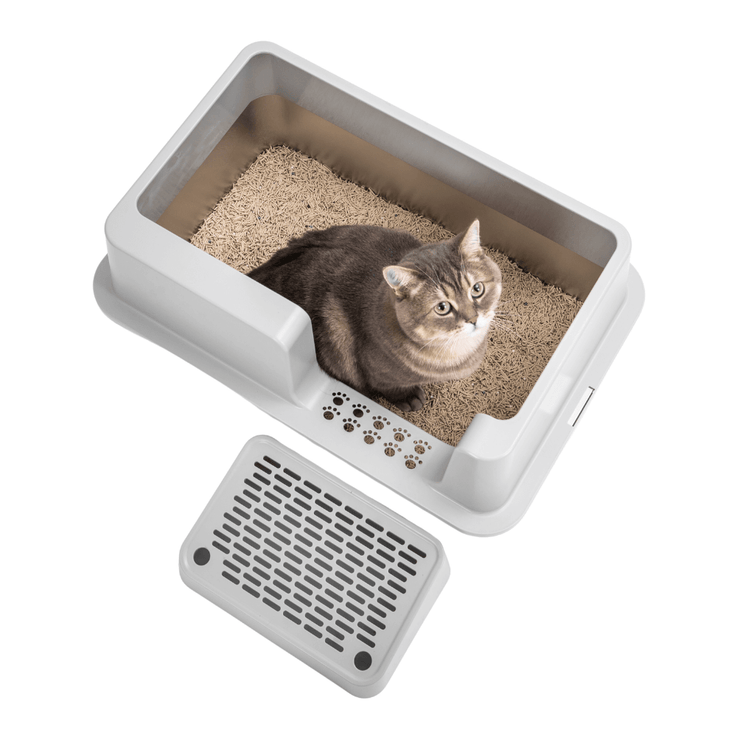
Furrbby's Smooth Edges.
Furrbby's Smooth Edges describes a specialized, soft-textured litter for declawed cats. Its smooth, rounded granules reduce paw irritation during surgery recovery, preventing cuts or abrasions on sensitive foot pads. This litter supports recovery timelines, helps with discomfort and lameness, and minimizes serious complications like wound dehiscence or claw regrowth. It is often paper- or pine-based for low dust, making it suitable post-surgery, and recommended for 2-4 weeks after adoption for cats with special needs.
Gentle Design for Paw Comfort
Specialized, soft-textured litter minimizes paw irritation during surgery recovery.
Smooth, rounded granule edges prevent cuts or abrasions on sensitive foot pads.
This litter is often paper- or pine-based for low dust, enhancing comfort for healing paws.
Supporting Recovery and Minimizing Complications
This litter supports typical declaw recovery timelines, which range from 3 days to 2 weeks.
It addresses discomfort; 78% of owners report tenderness, and 26-31% experience lameness.
Using this litter is critical post-surgery to avoid complications like wound dehiscence (17% risk) or claw regrowth (3-10%).
It is recommended for 2-4 weeks post-adoption for special-needs cats, especially when managing pain.
Frequently Asked Questions
What kind of litter box should be used for a declawed cat?
Use a low-sided, easy-entry litter box plus a very soft, fine, low-dust litter. This prevents a declawed cat from jumping or digging on painful paws. Vets recommend soft, fine-grained, or paper/grass/wheat litters marketed as “sensitive paw” or “post-surgery.” Avoid coarse or clumping clay litters to prevent litter getting into wounds and reduce pain-associated box aversion.
Can regular litter cause sore paws for a recently declawed cat?
Yes. Standard clumping or clay litters are often rough, dusty, and can stick to or contaminate fresh surgical sites. This causes pain and irritation to tender paws after declaw surgery.
What type of litter should be used for a declawed cat during recovery?
Use a soft, non-clumping, low-dust litter, such as paper-based pellets or other specially marketed 'post-surgical' or 'paw-safe' litters. This minimizes abrasion and keeps incisions clean during the 1–2 week healing period.
How long should a declawed cat stay on special litter?
Most veterinarians recommend special soft litter for about 10–14 days. Continue until your vet confirms the paws have fully healed; many practices consider healing essentially complete at around two weeks.
How can paw infection be prevented in a declawed cat during recovery?
To prevent paw infection, use only shredded paper, puppy pads, or newspaper pellets in the litter box instead of clumping clay litter, which can stick to surgical wounds. Monitor paws daily for redness, swelling, discharge, or limping, and contact a vet if these signs appear. Ensure proper pain management and transition to regular litter gradually after vet clearance, typically 2-4 weeks.
Why is a smooth litter box, like stainless steel, recommended for declawed cats?
A smooth litter box with a non-porous surface like stainless steel is highly recommended to prevent paw irritation and promote hygiene. Its non-porous surface resists scratches, absorbs no odors, and reduces bacterial growth by up to 90%, minimizing infection risk for healing paws. Its smooth finish also allows for easy cleaning without stressing sensitive paws.
Are Furrbby litter boxes safe for declawed or post-surgery cats?
Furrbby stainless steel litter boxes feature smooth, rounded edges to prevent injuries to cats’ paws and skin. The metal base is non-porous and non-toxic, with no sharp seams at the rim, reducing the risk of abrading sensitive, post-surgical, or declawed paws. For recovering cats, choose a side- or front-entry model with an entrance height they can step over comfortably and ensure 2–3 inches of soft, vet-approved litter.
What are the best litter substrates for a declawed cat to minimize paw pain?
The best litter substrates for a declawed cat are paper-based/recycled paper litter and fine-particle, soft-texture litters like grass seed or specific clumping clays. They minimize paw pain and prevent litter box avoidance. These options are recommended for post-surgery recovery due to their small, soft particles that avoid sticking between toes or causing irritation.
Final Thoughts
Caring for declawed or sensitive-pawed cats means making careful choices for their comfort and health. Choose seamless stainless steel litter boxes because their non-porous surface resists bacteria and cleans easily, unlike plastic ones. Use a low-entry box design to prevent strain and give tender paws easy access. Pair this with soft, non-clumping litters like paper pellets or specialized "smooth edge" types. This minimizes irritation and tracking, protecting healing wounds from infection.
These specific litter box and litter choices help prevent serious complications like infections, wound issues, or chronic pain. This thoughtful approach supports a faster, more comfortable recovery for your cat. It also ensures a cleaner home environment. Your attention to these details can make a big difference in your cat's comfort and well-being, making a challenging time a smoother healing journey.
The Furrbby Difference: Built to Last, Designed to Save You Money
Perfect Memorial Day Upgrade for Multi-Cat Homes
Planned Obsolescence vs. Heirloom Quality: Why Steel Wins
Memorial Day Sale: Why Now Is The Best Time To Upgrade Your Cat’s Litter Setup