


Odor Ionizers vs. Carbon Filters: Which Technology Actually Wins the War on Smell?
by Taylor Claier on Oct 08, 2025
Pet odors, a common challenge in many homes, originate from sources like litter boxes, dander, and accidents. Effectively managing these persistent smells is crucial for maintaining a fresh and comfortable living environment.
Two primary air purification technologies, odor ionizers and activated carbon filters, offer distinct approaches to tackling these issues. Each operates on different scientific principles and delivers unique benefits.
This article contrasts ionizer and carbon filter technologies for pet odor removal. It explains their effectiveness, safety, and costs, empowering you to select the optimal solution for your home's air quality.
What You Should Know About Pet Odor Removal Technologies
- Activated carbon filters excel at permanently eliminating pet odors by trapping contaminants, while ionizers mainly reduce airborne particles without full odor removal.
- For severe or persistent odors, carbon filters provide a safer, more effective solution; ionizers work best as supplemental technology for particle control.
How Pet Odors Develop and Why They Matter
Pet odors develop primarily from natural biological sources such as litter boxes, pet dander, saliva, and fur. These emit volatile organic compounds (VOCs) and ammonia, the latter particularly prevalent around cat litter areas due to urine breakdown. Chemically, ammonia is a pungent gas with a strong smell that results from the decomposition of nitrogen-rich waste, while VOCs represent a broad category of organic molecules that easily vaporize and contribute to unpleasant odors in the air. Understanding these sources is essential because they can accumulate in indoor environments, leading to persistent, offensive smells that impact comfort and wellbeing.
Beyond mere nuisance, pet odors have tangible effects on indoor air quality and human health. The presence of ammonia and VOCs can irritate the respiratory system, exacerbate allergies, and cause headaches or fatigue in sensitive individuals. Persistent bad smells can negatively influence psychological wellbeing by creating an impression of uncleanliness and reducing overall comfort in the home. Effective air purification targeting these specific compounds is critical for maintaining a healthy, pleasant living environment for both pets and their owners.
Common Sources of Pet Odors in the Home
Pet odors in the home predominantly originate from several common sources, each contributing distinct smells that can linger and impact indoor air quality. Litter boxes are a frequent culprit, releasing ammonia—a potent, pungent gas produced as a breakdown product of pet urine. Additionally, pet dander, saliva, and fur carry natural oils and proteins that degrade over time, emitting volatile organic compounds (VOCs) that contribute to the characteristic “pet smell.” These VOCs include a range of odorous molecules that can accumulate in carpets, upholstery, and other soft surfaces around the home.
Ammonia and VOCs are the main chemical drivers behind persistent pet odors, making them challenging to control without targeted air purification methods. Because these compounds are airborne and chemically active, they not only cause unpleasant scents but can also exacerbate indoor air pollution and irritate sensitive individuals. Understanding these sources is key to effectively addressing pet odors and improving overall air quality through appropriate filtration technologies.
Why Managing Pet Odors Improves Indoor Air Quality
Pet odors introduce volatile organic compounds (VOCs) and ammonia, directly degrading indoor air quality. These airborne pollutants cause discomfort and respiratory irritation, especially for children, the elderly, or those with asthma and allergies. Furthermore, persistent smells contribute to the overall particulate and pollutant load within a home, diminishing air freshness and overall comfort.
Lingering pet odors also have significant psychological effects, impacting mood, stress levels, and perceptions of cleanliness. Continuous exposure can reduce satisfaction with living spaces and increase stress, affecting overall well-being. Effective pet odor management improves tangible air quality and enhances a home's mental and emotional atmosphere, making targeted odor control essential for a healthy indoor environment. For a deeper understanding, explore the relationship between pet odors and air quality.
Activated Carbon Filters: How They Remove Pet Odors Permanently
Activated carbon filters are highly effective at removing pet odors because they physically trap odor molecules through a process called adsorption. Unlike filtration methods that merely capture particles, activated carbon’s porous structure provides an immense surface area where volatile organic compounds (VOCs) and odorous gases, such as ammonia from litter boxes, bind tightly to the carbon material. This interaction ensures that these odor-causing compounds are not just masked or displaced but are permanently removed from the air until the filter is replaced.
This adsorption mechanism gives activated carbon filters a clear advantage over ionizers, which primarily cause particles to settle without addressing the root odorous molecules. Carbon filters offer a reliable and continuous means of controlling pet smells, maintaining fresher indoor air over time. Their ability to capture a wide variety of gaseous pollutants means they provide comprehensive odor control tailored to the complex chemical profile of pet-related emissions.
The Science Behind Activated Carbon Adsorption
Activated carbon is highly effective at removing pet odors due to its incredibly large surface area created by a network of tiny pores. This porous structure allows activated carbon to adsorb volatile organic compounds (VOCs) and odorous molecules by trapping them physically on its surface. Unlike filtration methods that simply capture particles, the adsorption process binds these gases and odor-causing compounds, preventing them from returning to the air.
The permanence of odor removal with activated carbon comes from the fact that once contaminants are adsorbed, they remain securely held within the carbon until the filter is replaced. This ensures sustained air purification and long-lasting odor control, making activated carbon filters a preferred choice for managing persistent pet smells. For more details on this mechanism, see our section on activated carbon adsorption.
Performance and Practical Benefits for Pet Owners
Activated carbon filters are highly effective at removing common pet odor compounds, including ammonia, organic odors, and other gases frequently found in pet environments. These filters adsorb volatile organic compounds (VOCs) and ammonia molecules, trapping them within the porous carbon material to prevent their release back into indoor air. This makes carbon filters particularly reliable for maintaining fresher air in homes with litter boxes, shedding pets, or occasional accidents. Their ability to permanently remove these odors outperforms technologies that only neutralize or mask smells temporarily.
In terms of maintenance, activated carbon filters generally need to be replaced every 3 to 6 months depending on the intensity of odor exposure and air quality conditions, which helps maintain optimal performance. Although replacement costs can vary, most pet owners find the investment worthwhile for consistent odor control. For example, a cat owner shared that after switching to an air purifier with a robust activated carbon filter, they noticed a sustained reduction in litter box ammonia smells for over five months, significantly improving their home’s air quality and comfort. For guidance on upkeep, see our detailed section on carbon filter maintenance.
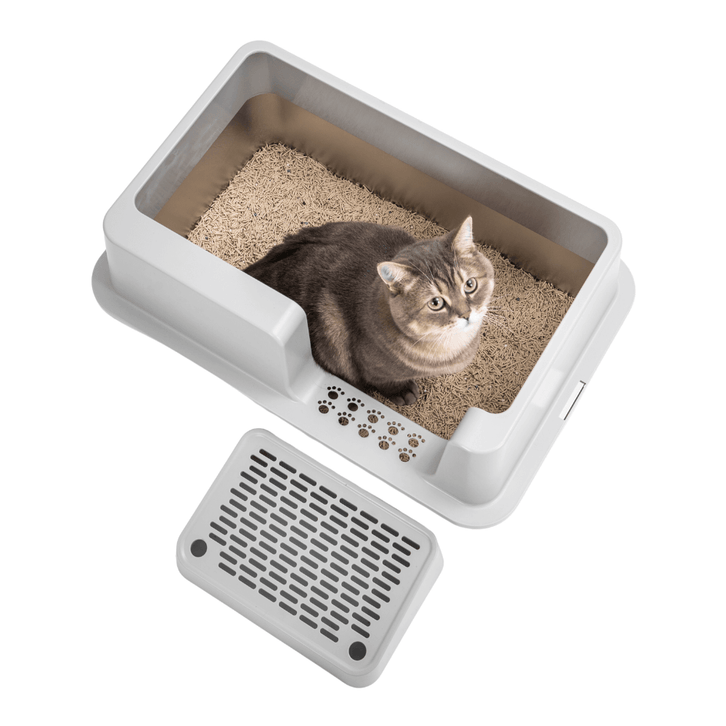
Stainless Steel Litter Boxes Built to Last
Explore durable, easy-to-clean litter boxes designed to reduce odors and fit your cat’s needs. Shop now to find the perfect stainless steel solution for your home.
Odor Ionizers: How They Work and Their Role in Pet Odor Control
Odor ionizers function by releasing negatively charged ions into the air, which attach to airborne particles such as dust, dander, and pet hair. These charged particles then clump together, becoming heavier and settling on surfaces rather than remaining suspended in the air. While this process effectively reduces airborne particulates and can contribute to a fresher feeling environment, it does not chemically break down or permanently remove odor molecules, which often remain in the air or on surfaces.
Because ionizers do not physically trap or neutralize odorous compounds like ammonia or organic pet smells, their effectiveness in eliminating strong pet odors is limited. Ionizers are best used as a supplemental technology alongside more robust odor removal methods, such as activated carbon filters. Pet owners seeking comprehensive odor control should consider that ionizers primarily improve air particle cleanliness rather than fully resolving persistent pet odor issues.
Mechanism of Ionization and Particle Control
Ionizers work by generating negatively charged ions released into the air. These ions attach to airborne particles like dust, pet dander, and other allergens, causing them to clump and become heavier. As a result, these larger clusters settle out of the air onto nearby surfaces, effectively reducing floating particulate matter and improving air clarity.
This process does not translate to the permanent removal of odor molecules. Unlike technologies that physically trap or chemically neutralize odors, ionizers do not capture or eliminate the volatile organic compounds (VOCs) responsible for pet smells. While ionizers help reduce particulate pollutants, they are limited in addressing the root cause of persistent odors in indoor environments. For a deeper understanding, see how ionizers work within the broader principle of odor ionizers for air purification.
Safety, Effectiveness, and Limitations for Pets
Ionizers work by releasing negatively charged ions that attach to airborne particles, causing them to clump together and settle on surfaces. While this process helps reduce particulate matter such as pet dander and dust, ionizers do not effectively neutralize strong odors like ammonia commonly found around litter boxes or pet accidents. Additionally, some ionizers produce low levels of ozone as a byproduct, which, although minimal, can pose respiratory risks for sensitive pets if exposure is prolonged or if the device is used improperly.
Because ionizers do not physically remove odor molecules but rather relocate particles, they are best used as supplemental tools alongside more robust technologies like activated carbon filters that can permanently capture and neutralize odor compounds. Pet owners should prioritize ionizer air purifier safety by ensuring adequate ventilation and careful placement, especially in homes with respiratory-sensitive cats and dogs. This cautious approach helps mitigate any potential ozone exposure while still benefiting from reduced airborne particulates.
Advanced Ionization: Ozone Generators for Severe Odors
Ozone generators are advanced air purification devices that remove severe pet odors by producing ozone (O3), a powerful oxidizing agent. Ozone works by chemically breaking down odor-causing molecules, such as ammonia and volatile organic compounds, through oxidation, effectively neutralizing their smell. This aggressive approach can be highly effective in situations where traditional carbon filters or ionizers fail, such as lingering smoke or intense animal odors.
Due to ozone’s reactive nature and potential respiratory hazards, ozone generators must be operated with strict safety precautions. They are intended for use only in unoccupied areas, often as a shock treatment, because exposure to ozone can irritate lungs and worsen respiratory conditions for both humans and pets. Proper ventilation following ozone treatment is essential, making these devices a specialized but powerful tool for severe odor remediation when used responsibly.
How Ozone Removes Odors and Its Chemical Properties
Ozone (O3) is a powerful oxidizing agent that effectively neutralizes odor-causing compounds by breaking down their molecular structure. When introduced into an environment, ozone reacts chemically with volatile organic compounds (VOCs) and other odorous molecules such as ammonia, disrupting their chemical bonds and converting them into less harmful, odorless substances. This oxidation process can eliminate strong and persistent smells that other filtration methods may struggle to address.
Ozone is highly reactive and unstable, meaning it quickly reverts back to oxygen, creating a temporary presence in the air. This reactivity also presents hazards, as ozone at elevated concentrations can irritate respiratory systems and cause other health risks. Its use requires careful control and monitoring, especially in residential spaces, to balance effective odor removal with safe exposure levels. For more in-depth details on this oxidizing process, see our section on ozone chemical properties.
Safe Use Guidelines and Situations for Ozone Generators
Ozone generators are powerful tools for eliminating severe odors, but their use comes with important safety precautions. These devices must only be operated in unoccupied spaces because ozone, while effective at oxidizing odor-causing molecules, can be harmful to humans and pets if inhaled. Ventilate the area thoroughly after ozone treatment before re-entering to avoid respiratory irritation or other health risks associated with ozone exposure. For detailed information on potential health impacts, see our section on health effects of ozone.
Ozone generators are typically reserved for shock treatment scenarios where persistent odors, such as smoke damage or intense ammonia smells from pet accidents, need aggressive remediation. Their strong oxidation capabilities help break down stubborn compounds that other air purification methods may not adequately address. Due to these hazards, ozone treatment should be a last resort and carefully planned to ensure the space remains vacant during operation and adequately aired out afterward to safeguard household health and safety.
Comparing Costs, Maintenance, and Choosing the Right Technology
When selecting between ionizers and activated carbon filters for pet odor control, balancing upfront costs and ongoing maintenance is crucial. Carbon filters generally have a higher initial price point due to their dense, specialized materials but deliver lasting odor removal effectiveness. They require regular replacement every 3 to 6 months depending on usage and air quality, which factors into the overall cost of ownership. In contrast, ionizers are often more affordable upfront and need minimal physical maintenance, but they do not remove odors permanently and may need periodic cleaning to maintain optimal performance.
Considering device longevity and user needs is essential for practical decision-making. Homes with multiple pets or significant odor issues benefit from carbon filters’ consistent odor adsorption despite the recurring cost of filter replacements. Ionizers can complement these setups by reducing airborne particulates, especially in smaller spaces or for those sensitive to dust and dander. The best choice hinges on odor severity, the importance of true odor elimination versus air freshness, and the investment a household is willing to make in maintenance and replacements.
Cost and Maintenance Overview of Carbon Filters and Ionizers
Activated carbon filters generally require a higher upfront investment compared to basic ionizers, with typical prices varying based on filter size and quality. Operating costs primarily come from the need to replace carbon filters every 3 to 6 months depending on usage intensity and air quality, ensuring the filter maintains its ability to adsorb pet odors effectively. Ionizers often entail lower immediate costs and minimal ongoing expenses since they usually don't require frequent part replacements, making them appealing for budget-conscious users seeking particle reduction rather than full odor elimination.
Maintenance for ionizers is relatively simple but not entirely maintenance-free; dust accumulation on ionizer plates or collectors must be cleaned periodically to preserve performance. A crucial hidden cost to consider is the potential health risk from low-level ozone production associated with some ionizers, particularly those operating near pets or people with respiratory sensitivities. These indirect costs highlight the importance of weighing not just visible upkeep but also the safety implications when assessing air purifier maintenance and overall suitability for pet households.
Which Technology Fits Your Pet Odor Challenges?
Choosing the right odor removal technology depends largely on the severity and type of pet odors you face, alongside household factors like the number and type of pets, and occupant sensitivities. For moderate to heavy pet odors, such as persistent ammonia from litter boxes or organic smells from dander and accidents, activated carbon filters remain the most reliable solution due to their permanent adsorption capabilities. They consistently remove a wide spectrum of gaseous pollutants, offering peace of mind for severe odor challenges. Ionizers, conversely, are better suited for homes with lighter odor challenges where the primary focus is on reducing airborne particles like dander rather than completely eliminating entrenched smells. Their lower operational cost makes them appealing for general air freshness and particle control.
Ozone generators, while highly effective at strong odors, require strict safety protocols. They should be reserved for occasional use in unoccupied spaces, such as post-renovation or deep cleaning after significant pet incidents, due to their potential health risks. Consider, for instance, a multi-pet household with older animals; here, chronic odors and dander are common. A robust activated carbon filtration system would be indispensable, possibly supplemented by an ionizer to manage airborne allergens. In contrast, a small apartment with a single, low-shedding cat and mild litter box odors might find sufficient relief from an ionizer combined with regular cleaning, saving on ongoing filter replacement costs. Pet owners with asthmatic or sensitive household members should prioritize carbon filters or ionizers with guaranteed low ozone emissions, avoiding ozone generators unless used carefully under professional guidance. Ultimately, users can weigh priorities such as odor severity, safety concerns, maintenance commitment, and budget when deciding. Select carbon filters for persistent, strong odors and foundational clean air quality; use ionizers as supplemental aids for particle reduction; and consider ozone treatment only for severe, occasional odor remediation needs with proper precautions.
Conclusion
Activated carbon filters stand out as the primary solution for pet odor control. They effectively and permanently trap odor molecules with high efficiency, ensuring lasting air purification.
Ionizers primarily reduce airborne particles, serving best as an auxiliary technology. They do not fully eliminate odors, meaning their role is supplemental to comprehensive odor strategies.
Ozone generators provide powerful odor elimination capabilities. Their use, however, requires careful control due to associated safety risks and the necessity of unoccupied spaces.
Selecting the appropriate technology involves considering odor severity, safety concerns, maintenance commitments, and budget. Each factor plays a crucial role in determining the best fit for your household.
Assessing your specific needs will guide your choice. Carbon filters form the foundation for persistent pet odor problems, while ionizers or ozone sources can act as cautious supplements when used appropriately.
Frequently Asked Questions
Are ionizers safe for cats and dogs?
Ionizers work by emitting negatively charged ions that attach to airborne particles, causing them to clump together and settle out of the air, thus improving air purity. While effective at reducing particulate matter, some models may produce small amounts of ozone as a byproduct, which can pose health risks at higher concentrations.
Generally, the level of ozone generated by most household ionizers is minimal and unlikely to cause harm. However, pets with sensitive respiratory systems, such as cats and dogs prone to asthma or allergies, may be more vulnerable to even low-level ozone exposure. Therefore, using ionizers cautiously in homes with pets is advisable, ensuring proper ventilation and monitoring for any signs of discomfort or respiratory irritation.
How often do you need to replace carbon filters?
Carbon filters for pet odor removal typically need to be replaced every 3 to 6 months. The exact timing depends on factors such as the frequency of pet activity, odor severity, and overall air quality in your home. Regular replacement is crucial because, over time, the activated carbon becomes saturated with trapped odor molecules and volatile organic compounds (VOCs). This reduces its ability to effectively purify the air.
Maintaining a consistent replacement schedule ensures the filter continues to adsorb odors efficiently and prevents re-release of trapped contaminants back into your living space. Monitoring your indoor environment’s odor levels and following the manufacturer’s guidelines will help optimize the lifespan of your carbon filter and sustain clean, fresh air in your home.
Which technology is better for removing strong ammonia smells?
For removing strong ammonia odors, activated carbon filters are the most effective technology. These filters adsorb and trap ammonia molecules permanently within their porous carbon structure, preventing the smell from recirculating in the air. Ionizers, in contrast, do not chemically capture ammonia and primarily cause particles to clump and settle, which does not eliminate the odor itself.
For particularly severe ammonia smells from litter boxes or pet accidents, activated carbon filters provide reliable, ongoing odor control. Ozone generators may also oxidize and neutralize ammonia chemically; however, this method requires careful application in unoccupied spaces due to ozone’s health risks. Overall, carbon filters represent the safest and most practical choice for consistent ammonia odor removal in homes with pets.
The Eco-Footprint of 3 Cats: Reducing Waste with Steel & Pine
The Science of Hole Size: Why 5mm Matters for Pine Pellets
The True Cost of a Litter Box: Why a $150 Stainless Steel Box is Cheaper Than Plastic
We Swabbed It: ATP Test Results of Plastic vs. Stainless Steel