


How to Budget for Cat Supplies: Where to Splurge & Save
by Taylor Claier on Oct 11, 2025
Bringing a cat into your home sparks joy, but it also introduces financial responsibilities that many first-time owners underestimate. Beyond the initial excitement, knowing where to invest and where to cut costs safeguards both your budget and your cat’s health, preventing stress so you can enjoy your new companion.
This guide breaks down how to budget for a cat with clear insights on initial fees, ongoing expenses, and long-term planning. We'll explore smart ways to splurge on essentials that boost wellbeing and identify areas where you can save, ensuring a happy, healthy life for your cat without financial strain.
What Every Cat Owner Should Know About Budgeting
- Understanding both upfront and ongoing costs helps prevent financial surprises and ensures consistent care.
- Strategic spending on health-promoting supplies and vet care boosts your cat’s wellbeing while savings on generic essentials balance the budget.

Understanding the Costs of Adopting or Buying a Cat
Initial Adoption Fees and Veterinary Care
Adopting a cat from a shelter often involves fees ranging from free to a modest donation, which usually covers initial vaccinations and spaying or neutering. In contrast, purchasing from a breeder typically costs $300 to $500 or more, reflecting pedigree and breeder investment. Regardless of the source, budgeting for initial veterinary care is critical. These expenses, typically adding $150 to $300, cover a comprehensive health exam, core vaccines like FVRCP and rabies, parasite prevention, and a feline leukemia test to ensure your cat is healthy before joining your family.
This preliminary veterinary care safeguards your cat's long-term health by preventing infectious diseases and identifying underlying conditions early. For example, when Sarah adopted a four-month-old kitten named Milo, the shelter noted he had a minor cold. Within days, it worsened into a serious upper respiratory infection requiring multiple vet visits and antibiotics. Because Sarah had budgeted for unexpected medical issues beyond the adoption fee, she could handle the $250 in extra costs without stress. Her story highlights how a flexible initial budget is crucial for providing immediate, quality care for a new pet. For detailed guidance, see our section on initial vet costs.
Elevate Your Cat's Experience
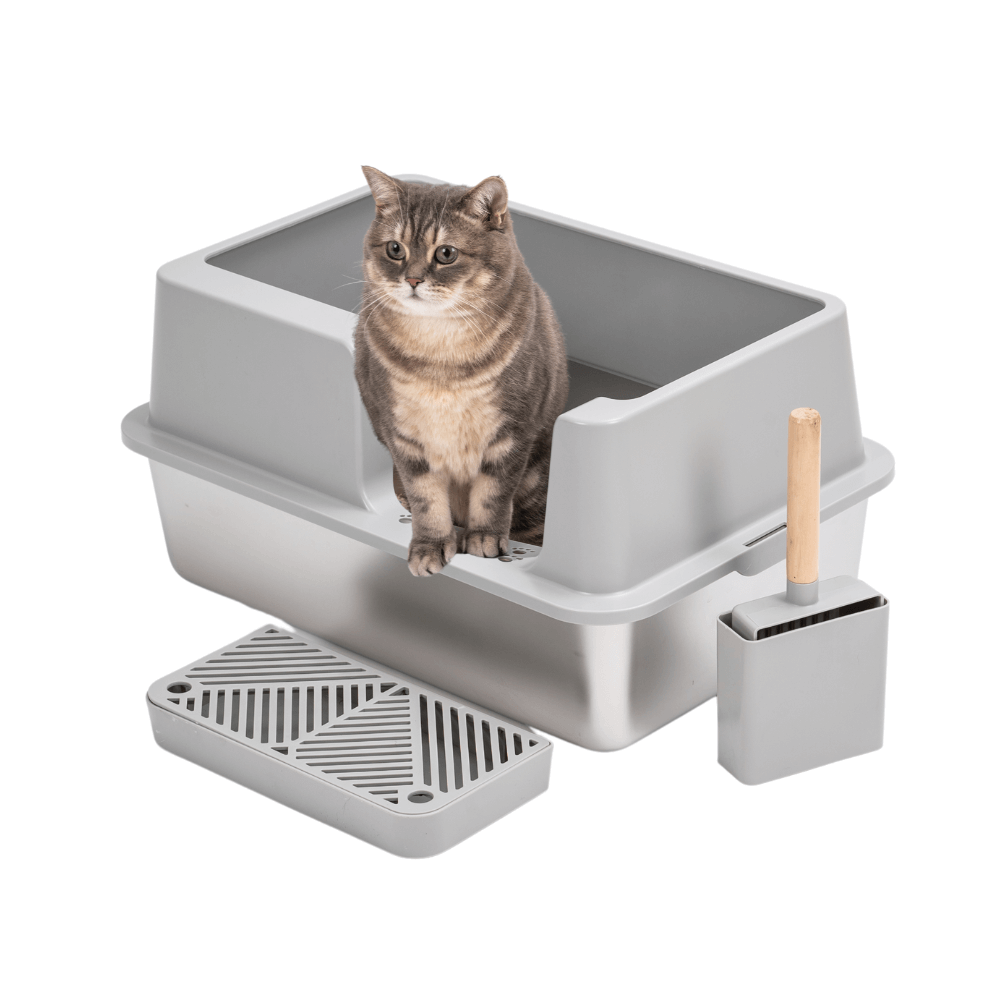
Choose our XL Side Entry Stainless Steel Litter Box for a cleaner, healthier environment. With its durable design, high walls, and innovative features, it’s perfect for big or multi-cat homes. Enjoy a hassle-free cleanup and significant savings today.
Essential Supplies: What to Buy and Where to Save
Basic Supplies and Cost-effective Options
Essential supplies for a new cat include food and water bowls, a litter box, litter, and scratching posts. While it’s tempting to save on a scratching post, investing in one that suits your cat's preferences—be it a tall vertical post for stretching or a horizontal cardboard scratcher—is crucial for their wellbeing. A good post, preferably wrapped in durable sisal fabric, redirects their natural scratching instincts away from your furniture and helps them maintain healthy claws. For a budget-friendly alternative, you can create a DIY post by wrapping a sturdy wooden plank with sisal rope, providing an effective and inexpensive outlet for this instinctual behavior.
A quality litter box is another key investment for hygiene and comfort. Look for a box that is at least 1.5 times the length of your cat, as cramped spaces can lead to avoidance. While plastic boxes are common, they can absorb odors and develop scratches that harbor bacteria, requiring frequent replacement. When selecting food and litter, generic brands can offer substantial savings. Check food labels for an AAFCO statement to ensure it provides complete and balanced nutrition, and experiment with different litter types (clay, pine, corn) to find an affordable option your cat prefers. Balancing these choices is key to choosing cat supplies wisely.
Budgeting for Ongoing and Unexpected Cat Expenses
Recurring Expenses You Can Expect
Anticipating recurring annual expenses, which average around $500, is fundamental to a sustainable cat budget. This figure primarily covers food, litter, and toys. Monthly food costs can range from $20 to $50, depending on whether you choose wet, dry, or a combination, while litter expenses might add another $10 to $20. Selecting generic brands for these items can significantly reduce costs; just ensure the food meets nutritional standards and the litter is effective for odor control to maintain a healthy environment.
Beyond daily supplies, your annual budget must include preventative health care. This includes an annual wellness exam ($50-$100), necessary vaccine boosters ($20-$40), and year-round flea, tick, and heartworm prevention ($100-$200). Proactive care is a sound financial strategy, as it helps prevent serious illnesses that are far more expensive to treat. Consulting a detailed guide on annual cat expenses can help you itemize these costs accurately.
Planning for Emergencies and Extras
Setting aside at least $500 for an emergency fund is a crucial part of responsible cat ownership. Unexpected health issues, from accidental injuries to sudden illnesses like urinary blockages, can quickly incur costs exceeding a thousand dollars for diagnosis and treatment. Having a dedicated fund allows you to make decisions based on your cat’s needs rather than financial pressure. An alternative strategy is investing in pet insurance, which can help cover a significant portion of costs for major medical events. Explore our guide on handling emergency vet expenses.
Your budget should also account for extras like boarding or pet-sitting, which can cost $25 to $50 per day. Over a cat’s 15 to 20-year lifespan, costs will evolve; senior cats, for example, often require more frequent vet visits, specialized diets, or medication for chronic conditions like arthritis or kidney disease. A flexible, long-term financial plan ensures you can adapt to these changing needs and provide consistent, quality care throughout every stage of your cat's life.
Making Smart Choices: Where to Splurge and Where to Save
Investing in Health and Comfort
Splurging on a high-quality scratching post that matches your cat’s preferences for material (sisal rope is often preferred over carpet) and orientation (vertical or horizontal) is a wise investment. It fulfills a deep-seated behavioral need to scratch, which helps them shed the outer layer of their claws, mark territory, and stretch their muscles. A sturdy, appealing post prevents destructive scratching on furniture and reduces your cat's stress, contributing to a more harmonious home environment for everyone.
A durable, well-designed litter box is another area where spending more pays off. Stainless steel models, for example, resist scratches where odor-causing bacteria can thrive, making them more hygienic and easier to clean than plastic alternatives. Similarly, investing in premium cat food with high-quality protein sources supports your cat’s health as an obligate carnivore, potentially preventing costly issues like obesity and urinary tract problems later on. Prioritizing these quality cat products is an investment in your pet's long-term wellbeing.
Smart Savings without Compromising Care
You can achieve significant savings by choosing reputable generic brands for food and litter, which often provide comparable quality to premium names at a fraction of the cost. To ensure nutritional needs are met, always check for an AAFCO-approved label on the food packaging. You can also save on entertainment by creating DIY toys; simple items like cardboard boxes, crumpled paper balls, or a feather tied to a string can provide hours of stimulation and satisfy your cat’s predatory instincts without an expensive trip to the pet store.
The most impactful way to save money long-term is through consistent preventive care. Annual wellness exams, timely vaccinations, and regular parasite control are far less expensive than treating advanced diseases they are designed to prevent. Maintaining your cat's dental health with at-home brushing can also help you avoid costly professional cleanings and extractions. Smartly learning to save on cat essentials is about balancing daily costs with strategic investments in their health.
Conclusion
Effective budgeting requires attention to initial, ongoing, and unexpected costs to provide stable care for your cat. By allocating funds wisely between necessary splurges and sensible savings, you can improve your cat’s wellbeing and your own financial peace. Planning early helps avoid surprises and establishes responsible pet ownership habits, so you can craft your personalized cat budget today and welcome your feline companion with confidence.
Frequently Asked Questions
What is the biggest recurring expense of owning a cat?
The biggest recurring expenses for cat owners are typically food and litter, which together can average around $500 annually. High-quality cat food, crucial for their health, often constitutes the largest portion of this budget. Following closely is cat litter, a constant necessity for maintaining a clean indoor environment. Beyond these, you should also budget for routine preventive healthcare, such as annual vet check-ups and parasite control medication, which are essential for long-term well-being. While these ongoing costs are predictable, they form the financial foundation of responsible cat ownership.
Is it worth buying expensive cat food?
Investing in higher-quality cat food is generally worthwhile, as it directly supports long-term health and can prevent costly medical issues. Premium foods typically use superior, more digestible protein sources and avoid cheap fillers like corn and soy, which can contribute to obesity and allergies. A nutritionally dense diet can lead to a healthier coat, better digestion, and a stronger immune system. While the upfront cost is higher, it can reduce the likelihood of future vet bills for diet-related conditions, making it a sound financial investment in your cat's quality of life.
How can I save money on vet bills?
The most effective way to save on vet bills is through proactive, preventive care. Annual check-ups allow veterinarians to catch potential health issues early, when they are easier and cheaper to treat. Staying current on vaccinations and parasite prevention also avoids expensive treatments for preventable diseases. At home, you can support your cat's health by providing a balanced diet, encouraging regular exercise to maintain a healthy weight, and performing routine dental care like brushing their teeth. Additionally, consider pet insurance or setting up a dedicated savings account to manage emergency costs without financial strain.
The Furrbby Difference: Built to Last, Designed to Save You Money
Perfect Memorial Day Upgrade for Multi-Cat Homes
Planned Obsolescence vs. Heirloom Quality: Why Steel Wins
Memorial Day Sale: Why Now Is The Best Time To Upgrade Your Cat’s Litter Setup