


Furrbby Sifter vs. Tidy Cats Breeze: The Pellet Showdown
by Laura Jane on May 08, 2026
Many pet owners adopt the Tidy Cats Breeze system only to modify it with pine pellets to reduce costs. This popular "hack" fundamentally changes how the system functions, shifting it from a pass-through design to a sifting one. Understanding the pros and cons of this user-driven change is critical for recommending the right products.
This showdown breaks down the real-world differences in performance, cost, and maintenance. We compare how Breeze's non-absorbent zeolite pellets stack up against absorbent pine, analyze their distinct approaches to odor control, and look at the environmental impact. We also reveal the system's main recurring expense—the pads—and show how switching from branded pads (at up to $2.00 each) to budget alternatives can cut ongoing costs by 75–90%.

Pellet Type (Wood vs Rock)
The Tidy Cats Breeze system is engineered specifically for non-absorbent pellets that allow liquid to pass through to a separate pad. The choice between the intended zeolite pellets and common wood-based alternatives is critical, as their fundamental properties—absorbent versus non-absorbent—determine whether the system functions correctly or fails.
| Pellet Type | Interaction with Urine | Breeze System Compatibility |
|---|---|---|
| Breeze Zeolite Pellets | Non-absorbent; allows urine to pass through directly to the pad below. | High. Pellets do not break down, preventing clogs and sludge. |
| Pine/Wood Pellets | Highly absorbent; disintegrates into fine sawdust when wet. | Low. Sawdust clogs the grate, blocks urine flow, and creates a messy sludge. |
Breeze Zeolite Pellets (Non-Absorbent)
Breeze zeolite pellets are made from a hard, non-absorbent mineral that allows urine to pass directly through to an underlying absorbent pad. Because these pellets do not break down upon contact with liquid, they keep the system free of dust and sludge. Solid waste remains on top of the pellets for simple, daily scooping. The pellets themselves are designed for reuse and typically last about one month per cat before needing replacement.
Pine/Wood Pellets (Absorbent)
Pine or wood pellets consist of highly absorbent compressed wood. When these pellets get wet, they break down into a fine sawdust. This disintegration directly conflicts with the Breeze system’s pass-through design. The resulting sawdust clogs the grate, which blocks urine from flowing to the pad and creates a messy, difficult-to-clean sludge. While these pellets are often low-cost and biodegradable, their absorbent nature makes them functionally incompatible with the Breeze tray.
The "Pad" Cost (Breeze's Secret)
The absorbent pad is the main recurring expense in the Tidy Cats Breeze system, especially when paired with low-cost pine pellets. Switching from official Breeze pads (around $1.60–$2.00 each) to budget alternatives like cut-to-size puppy pads (around $0.10–$0.40 per use) can lower ongoing pad costs by as much as 75–90%.
Official Pads vs. Budget Alternatives
Official Breeze pads typically cost between $1.60 and $2.00 per pad when purchased in a standard 10-pack.
Common alternatives, like bulk puppy pads or human incontinence pads, can be cut to size for an effective cost of just $0.10 to $0.40 per use.
This switch from branded pads to bulk alternatives can lower recurring pad expenses by 75–90%.
Monthly and Annual Cost Breakdown
Using official pads for a single cat costs about $7–$8 per month, totaling around $90–$100 per year.
In multi-cat homes that require more frequent changes (every 3-4 days), this cost can increase to $15–$20 per month.
With budget pad alternatives, the typical monthly cost drops significantly, falling into the $2–$5 range for similar usage.
Why Pad Cost Dominates with Pine Pellets
When using very cheap pine pellets (such as horse bedding), the absorbent pad becomes the main recurring expense of the system.
The monthly cost for pine pellets can be as low as $2–$4, making the $7–$20 monthly cost of official pads much more noticeable.
Combining low-cost pine pellets with budget-friendly pads keeps the total system cost well below most conventional clumping litters.
Odor Control (Natural vs Chem)
Pine pellets control odor by directly absorbing urine, where wood fibers neutralize ammonia. The synthetic zeolite pellets used in the Breeze system take a different approach; they dehydrate solid waste and allow urine to pass through to a separate absorbent pad, trapping odors away from the litter itself.
Natural Method: High-Absorbency Pine Pellets
Pine pellets manage odor by absorbing urine up to three times their own weight, using wood fibers to neutralize ammonia. They also provide a mild, natural pine scent as part of their odor control. When these pellets get wet, they break down into sawdust. This process is effective in a standard box but clogs sifting systems like the Breeze, which can worsen odors by trapping wet material.
Synthetic Method: Dehydrating Zeolite Pellets
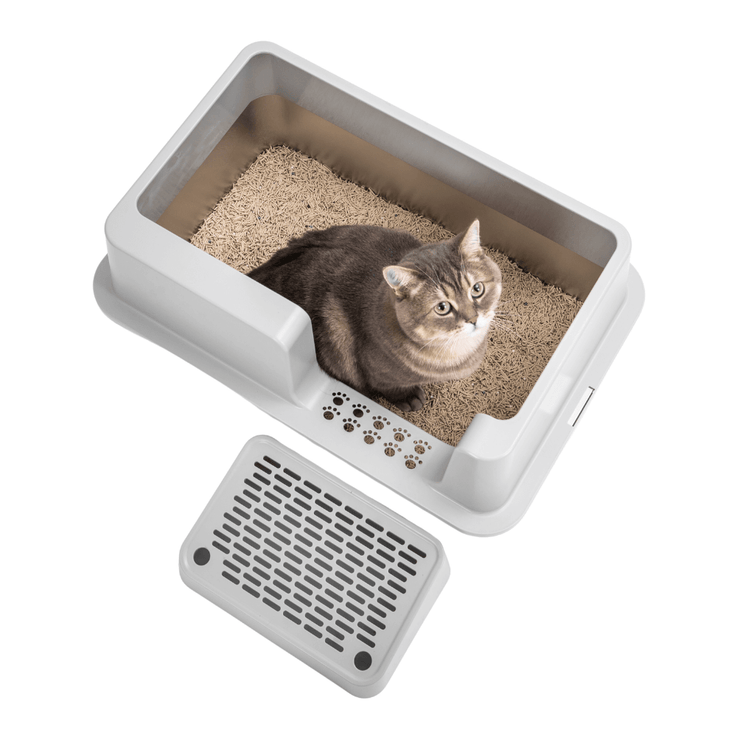
The Breeze system uses non-absorbent zeolite pellets that work by dehydrating solid waste. Urine passes straight through these pellets to an absorbent pad in a tray below, which traps the odors separately. This two-part system delivers excellent odor neutralization by preventing urine from ever saturating the litter and creating smells in the first place.
Say Goodbye to Odor and Scooping
Environmental Footprint
When evaluating the environmental impact, pine pellets generally have a lower footprint compared to the Tidy Cats Breeze system. Pine pellets are typically produced from compressed sawdust, a byproduct of the lumber industry, which repurposes a waste stream. In contrast, Breeze pellets are made from mined minerals and its absorbent pads require petrochemicals for manufacturing. The end-of-life impact also differs, as pine is biodegradable while Breeze consumables are not, contributing directly to landfill volume.
Materials and Manufacturing
The Breeze system's pellets are manufactured from mined minerals like synthetic zeolite or silica, and its single-use pads rely on petrochemicals. Pine pellets are made from compressed sawdust, a byproduct from the lumber industry that gives a second life to a waste material.
Waste and Disposal Impact
Breeze pads and pellets are not biodegradable and are sent to landfills after use. Used pine pellets decompose into sawdust, which is biodegradable. The portion containing only urine can often be composted, helping to divert waste from landfills. It is important to remember that any litter contaminated with feces, whether pine or Breeze, must be disposed of in a landfill to prevent the spread of pathogens like Toxoplasma gondii.
Packaging and Transport
Pine pellets are often sold in large 30-40 lb bulk bags, which minimizes the packaging material used per pound of litter. The Breeze system's consumables, such as pad and pellet refills, typically come in smaller packages. This results in a greater volume of packaging waste over time compared to buying pine in bulk.
Frequently Asked Questions
Can I use pine pellets in the Breeze system?
Yes, you can substitute kiln-dried pine pellets for the proprietary Tidy Cats pellets. Pine pellets break down into sawdust when wet, which then sifts into the bottom tray. It works well for dust and odor control, especially in the larger Breeze XL model, but you might run into clogged sifters or a fast-filling drawer.
What are some alternatives to the official Breeze pads?
Many people replace the Breeze pads with more affordable options like generic puppy pee pads or human incontinence pads, which can be cut to fit the tray. Another common approach is to skip the pad altogether and use pine pellets in the top section; the urine-soaked sawdust simply falls into the empty tray and is dumped out as needed.
Is the Breeze system cheaper than using pine pellets?
No, a system using the official Breeze pellets and pads is more expensive than a setup with pine pellets. A DIY pine pellet system can cost as little as $25 per year for one cat. Using the Breeze box with generic pine pellets and puppy pads is the most common way to lower the recurring cost.
What's the difference between Breeze (zeolite) pellets and wood pellets?
Breeze pellets are a non-absorbent mineral called zeolite. They let urine pass straight through to a pad and do not break down. Wood pellets are absorbent and turn into sawdust when wet, which needs to be sifted or removed. Wood is cheaper and biodegradable, but the sawdust can fill the Breeze tray quickly.
Which system controls odor better, Breeze or pine?
Pine pellets often provide better odor control by replacing ammonia smells with a natural wood scent. A clean Breeze system with its original pellets and pads can eliminate urine smell almost completely. For both systems, odor from solid waste is about the same and requires daily scooping.
Is the Tidy Cats Breeze system eco-friendly?
The standard Breeze system is not very eco-friendly. Its zeolite pellets are synthetic, not biodegradable, and end up in a landfill. Pine and wood pellets are a much better choice for the environment since they are typically a biodegradable byproduct from the lumber industry.
Final Thoughts
The Tidy Cats Breeze system is designed for non-absorbent zeolite pellets, creating a clean, pass-through design that keeps liquid and solids separate. Using absorbent pine pellets fundamentally changes how it works, turning it into a sifter that separates fresh pellets from used sawdust. Your choice depends on whether you prefer managing a urine pad or sifting out sawdust, and if you value the official system's low-mess design over the pine pellet method's lower cost.
If you want a simple, low-maintenance system and the cost of official pads and pellets isn't a concern, the Breeze setup works exactly as intended. But if you are looking for a more eco-friendly and budget-conscious option, pairing the Breeze box with pine pellets and inexpensive pads is a popular and effective alternative. You just need to be ready to manage the sawdust that will collect in the bottom tray.
The Furrbby Difference: Built to Last, Designed to Save You Money
Perfect Memorial Day Upgrade for Multi-Cat Homes
Planned Obsolescence vs. Heirloom Quality: Why Steel Wins
Memorial Day Sale: Why Now Is The Best Time To Upgrade Your Cat’s Litter Setup