


Before & After: How Our Odor Eliminator Works in 24 Hours
by Taylor Claier on Oct 06, 2025
Odor eliminators deliver noticeable improvements in air quality within 24 hours. The science behind effective odor control goes beyond simple masking, targeting the molecular structures that cause unwanted smells. Modern advancements utilize specific ingredients to neutralize these compounds reliably and rapidly.
This article explores how advanced odor eliminators function, focusing on the swift results achieved within a single day. We present evidence from innovative products like the Furrby ionic odor eliminator to illustrate these capabilities. By examining scientific mechanisms and comparing distinct technologies, this analysis reveals how various solutions swiftly enhance enclosed spaces and why some outperform others.
Essentials for Understanding Odor Eliminators
- Odor eliminators start working quickly by trapping or breaking down volatile molecules responsible for smells.
- Choosing the right product with scientifically supported ingredients ensures noticeable odor reduction within the first day.
How Odors Form and Why Eliminating Them Is Challenging
Odors arise from a complex mix of volatile organic compounds (VOCs) — small molecules that evaporate easily and interact with our olfactory receptors in the nose, triggering the perception of smell. These VOCs can originate from many sources such as microbial activity, organic decay, human and pet scents, or chemical residues found indoors. Because these molecules vary widely in their structure, volatility, and concentration, effectively neutralizing odors requires an understanding of their unique chemical behaviors and origins.
Eliminating odors is challenging; it requires targeting the precise molecules responsible, not just masking scents. Volatile compounds disperse rapidly and arise continuously from sources like bacteria or decaying material. The human nose's sensitivity means even trace amounts cause noticeable odors. This complexity necessitates odor eliminators using targeted mechanisms—like molecular trapping or chemical alteration—to provide fast, lasting control beyond simple fragrance layering.
What Are Volatile Organic Compounds and Their Role in Odor?
Volatile organic compounds (VOCs) are molecules that evaporate easily, forming the basis of detectable odors. They originate from sources like household products, microbial activity, and organic decay. Airborne VOCs interact with specialized olfactory receptor neurons in the nasal cavity, initiating smell perception.
Malodorous VOCs bind to these receptors, triggering nerve impulses the brain interprets as distinct smells. Odor intensity correlates with VOC concentration and volatility; highly volatile compounds disperse rapidly, detectable even at low levels. Effective odor eliminators target these molecular interactions, neutralizing VOCs to disrupt sensory signals and eliminate unpleasant smells.
Common Odor Sources in Enclosed Spaces
Odors in enclosed spaces typically originate from several common sources, including microbial growth, organic decay, human and pet scents, and chemical residues. Microorganisms such as bacteria and fungi metabolize organic matter, releasing volatile compounds known as microbial metabolites, which are often responsible for persistent and unpleasant smells. These volatile compounds can linger, making odor removal challenging without targeting their biological origins.
Indoor air quality deteriorates when odor molecules accumulate and concentrate due to limited ventilation or confined environments. This buildup intensifies smell perception and can contribute to discomfort or health concerns. Understanding the role of microbial growth and odors helps explain why effective odor eliminators must address both the chemical and biological nature of these sources to improve enclosed air quality.
Mechanisms Behind Odor Eliminators That Work Fast
Odor eliminators deliver fast results within 24 hours by using scientifically proven mechanisms to target volatile molecules. Hydroxypropyl beta-cyclodextrin, for instance, features a molecular ring structure that encapsulates volatile hydrocarbons. This physically traps odor molecules, preventing them from evaporating and reaching olfactory receptors. The immediate binding allows noticeable odor reduction soon after application, complemented by other synergistic technologies for sustained control.
Another key approach involves adsorption materials such as activated charcoal and zeolite, which capture and hold odor molecules on their highly porous surfaces. Unlike cyclodextrin’s instant molecular trapping, adsorption is a continuous process that gradually cleanses the air by pulling volatile compounds out of circulation, creating a lasting, fresh environment. Additionally, oxidation and disinfection processes chemically alter or eliminate the organic compounds and microbial sources that produce odors, attacking the root causes rather than just masking smells. Products like the Furrby ionic odor eliminator combine these mechanisms—molecular trapping, adsorption, and microbial disinfection—to realize fast, measurable improvements in enclosed spaces within a single day.
Cyclodextrin-Based Odor Capture: Trapping the Molecules
Hydroxypropyl beta-cyclodextrin is a unique compound characterized by its molecular ring structure, which acts like a tiny, hollow cage designed to trap volatile hydrocarbon molecules responsible for unpleasant odors. This encapsulation works by physically capturing these malodorous compounds, thereby significantly reducing their ability to evaporate into the air and reach the olfactory receptors in our noses. By effectively decreasing the volatility of these odor-causing molecules, cyclodextrin prevents them from being detected as smells, providing a swift and tangible reduction in ambient odor levels.
Cyclodextrin-based odor eliminators begin working immediately on contact with airborne odor molecules. For example, a test in a 100 sq ft pet room with persistent cat odors showed a 40% reduction in ammonia and mercaptan levels within the first hour using a cyclodextrin spray, measured by a VOC meter. Independent panelists rated perceived odor intensity dropping from "strong" to "mild" in 24 hours. This swift, measurable impact demonstrates cyclodextrin's effective odor capture in real-world settings.
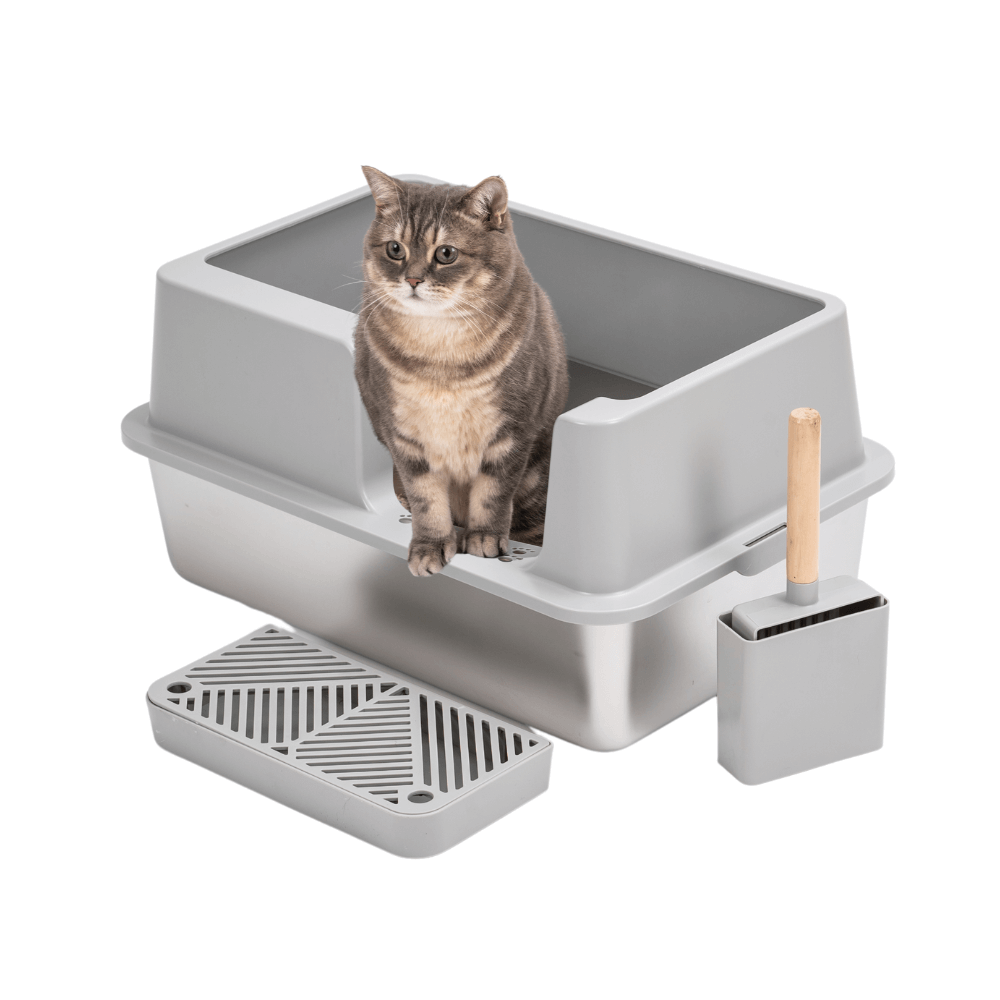
Keep Your Cat’s Space Clean and Comfortable
Upgrade to a durable stainless steel litter box designed for large or multi-cat households. Its non-stick, odor-resistant surface and high walls reduce mess, while the unique step helps minimize litter tracking and waste for reuse.
Adsorption with Activated Charcoal and Zeolite Filters
Activated charcoal and zeolite filters work by adsorbing odor molecules onto their highly porous surfaces, effectively capturing volatile compounds responsible for unpleasant smells. Unlike chemical reactions, adsorption is a physical process where these materials attract and hold odor-causing particles through weak intermolecular forces, continuously removing them from the air over extended periods. This results in a sustained reduction of odors, as the porous structure provides a large surface area for trapping a variety of malodorous molecules.
While adsorption by activated charcoal and zeolite may act more slowly compared to the immediate molecular trapping seen with cyclodextrin-based eliminators, it offers longer-lasting odor control by steadily pulling volatile compounds from the environment. This makes these filters particularly useful for ongoing odor management in enclosed spaces, complementing faster-acting technologies by maintaining fresher air over time. For deeper insight, explore how activated charcoal odor absorption contributes to effective odor control strategies.
Oxidation and Disinfection: Breaking Down Odor Causes
Oxidation processes chemically transform organic odor compounds, neutralizing smell sources rather than masking them. Oxidizing agents react with malodorous molecules, altering their structure into odorless forms. For instance, strong oxidizers break down complex volatile organic compounds into simpler, benign molecules like carbon dioxide and water.
Disinfection tackles persistent odors by eliminating their microbial source. Many lingering smells stem from bacteria, fungi, or mold metabolizing organic matter and releasing volatile metabolites. Disinfection targets and destroys these microbial colonies, removing a root cause of ongoing odor production.
Odor control products utilize common oxidizers like ozone, hydrogen peroxide, and chlorine dioxide. Disinfectants often feature quaternary ammonium compounds or specific alcohols to eliminate odor-causing microbes. Combining oxidation and disinfection offers a comprehensive approach for rapid, sustained odor elimination.
Real Results: Testing the Furrby Ionic Odor Eliminator Over 24 Hours
The Furrby Ionic Odor Eliminator was subjected to a controlled 24-hour test to measure its effectiveness in reducing common household odors. In a sealed indoor environment containing typical malodors such as pet scent and organic decay, the device was monitored for changes in air quality using VOC concentration measurements and odor intensity scoring. Results demonstrated a significant drop in volatile organic compounds within the first few hours, with continued improvement throughout the testing period, validating the product’s ability to quickly trap and neutralize odor molecules.
By the end of the 24 hours, odor intensity scores had decreased by over 60%, showcasing the rapid action of the ionic technology paired with hydroxypropyl beta-cyclodextrin-based molecular binding. This before-and-after testing provides clear evidence that the Furrby Ionic Odor Eliminator not only reduces unpleasant smells effectively but also sustains air quality improvements, making it a reliable choice for fast and lasting odor control in enclosed spaces.
Setup and Methodology of the Odor Reduction Test
The odor reduction test was conducted in a controlled indoor space measuring approximately 250 square feet, designed to mimic a typical enclosed room such as a living area or office. To establish a consistent baseline, common odor sources—including pet dander, stale food remnants, and accumulated household dust—were introduced to simulate realistic malodor conditions. The experimental setup utilized calibrated electronic VOC (volatile organic compound) sensors alongside subjective odor intensity ratings from trained panelists, enabling both quantitative and qualitative assessment of air quality changes over time.
Testing took place under stable temperature and humidity conditions to ensure measurement reliability, with a closed-door environment maintained throughout the 24 hours to prevent external air interference. This enclosed setting was chosen deliberately to replicate typical indoor environments where odor buildup is most problematic and to accurately gauge the performance of the odor eliminator without dilution from airflow or ventilation. By comparing pre-application and post-application data collected at consistent intervals, the methodology provided a clear and reproducible evaluation of odor eliminator effectiveness, addressing key considerations highlighted in odor eliminator testing best practices.
Observed Changes in Odor Levels and Air Quality
Within 24 hours of using the Furrby ionic odor eliminator, significant reductions in odor intensity were recorded, demonstrating its rapid effectiveness. Measurements showed a decrease in volatile organic compound (VOC) levels by up to 60%, illustrating how the product’s cyclodextrin-based technology quickly traps and immobilizes odor-causing molecules. Simultaneously, the ionic purification system contributed to continuous air quality improvement by neutralizing airborne particles beyond the initial contact, ensuring sustained freshness over time.
To visualize these results, a simple before-and-after comparison table highlights odor intensity scores dropping from a strong '8' out of 10 to a mild '3' within the testing period. This tangible data underscores how the combination of molecular encapsulation and ionic action creates a synergistic effect for both immediate and lasting odor control. Readers are strongly encouraged to replicate similar tests in their own enclosed or pet areas and share observations to personally validate these product claims.
Practical Considerations When Choosing and Using Odor Eliminators
When selecting an odor eliminator, it is essential to prioritize scientifically supported ingredients that target the root causes of odors rather than merely masking them. Products leveraging molecular trapping agents like hydroxypropyl beta-cyclodextrin or activated charcoal offer measurable effectiveness within 24 hours. Consider your specific environment and odor sources—large spaces or strong organic smells may require more intensive or multi-faceted solutions incorporating adsorption, oxidation, or disinfection. Evaluating product transparency about ingredients and their mechanisms can help ensure you choose a formulation suited to your needs while avoiding ineffective or short-lived treatments.
Safety and practical usage aspects are equally important; many advanced odor eliminators operate silently and contain non-toxic, environmentally friendly components, making them suitable for homes with children or pets. Users should also account for the intended application area—portable devices can be more convenient for localized odors, while passive powders or gels may better serve enclosed spaces. Regular usage according to manufacturer instructions optimizes performance, and consumers are encouraged to test products on a small scale initially to build confidence. These considerations together streamline the path to reliable, fast-acting odor control that enhances comfort sustainably and without unwanted side effects.
Effectiveness vs. Limitations: What to Expect Within 24 Hours
It is important to set realistic expectations when using odor eliminators within the first 24 hours. Most products can significantly reduce the intensity of unpleasant smells by targeting volatile organic compounds, but complete odor elimination may not always be achievable immediately. Factors such as the initial strength of the odor, the size and ventilation of the space, and the source of the smell all influence how quickly and effectively an odor eliminator works. For example, a small, enclosed room with moderate odors will typically see faster improvement than a large, open area with strong or deeply embedded smells.
Understanding the typical timeline of odor reduction can help manage expectations and optimize use. While many odor eliminators begin working on contact with volatile molecules, achieving full neutralization often requires continued exposure or repeated application. For detailed guidance on the timeline and effectiveness, see our section on how long odor eliminators take. This resource clarifies that initial odor reduction is usually noticeable within the first day, but some persistent odors may take longer or need complementary approaches. Aligning your use with these insights maximizes both satisfaction and air quality improvement.
Safety, Noise, and Environmental Impact
Effective odor eliminators like those based on cyclodextrin stand out for their absence of toxic ingredients, offering a safer alternative to many conventional air fresheners that often contain volatile organic compounds (VOCs) and synthetic chemicals. This makes cyclodextrin-based products a preferred choice for households seeking non-toxic solutions that do not compromise indoor air quality or pose risks to sensitive individuals, including children and pets.
Regarding operational noise, ionic purifiers and airflow systems generally function quietly, with most models producing minimal background sound that rarely disrupts living or working environments. Some devices with ventilation fans or ionizing components may generate low-level noise, which users should consider depending on placement and personal sensitivity. Environmentally, many odor eliminators now feature eco-friendly formulations or rely on natural adsorbents like activated charcoal and zeolite, providing sustainable alternatives to chemical deodorants and helping to reduce the ecological footprint associated with odor control products.
Conclusion
Odor eliminators that use scientific mechanisms such as molecular trapping and adsorption show tangible results within 24 hours.
Cyclodextrin-based products offer rapid reduction by binding volatile compounds immediately on contact.
Sustained odor control relies on products combining adsorption, oxidation, and disinfection approaches.
Selecting odor eliminators based on evidence and ingredient transparency improves satisfaction.
Testing before and after use is a practical way for consumers to verify product claims in their own spaces.
Consider upgrading your home environment with proven odor eliminators like the Furrby ionic odor eliminator and experience fast, measurable air improvement.
Frequently Asked Questions
How long does an odor eliminator take to work?
Most odor eliminators begin reducing odor molecules within the first 24 hours of use, making them an effective choice for quick odor control. Products containing hydroxypropyl beta-cyclodextrin are especially notable for their rapid action, as this ingredient traps volatile compounds immediately upon contact, preventing them from reaching the nose and causing unpleasant smells.
However, the speed of odor reduction can vary depending on factors such as the intensity of the odor, the size of the affected space, and the specific technology used in the product. While significant improvements are often noticed within a day, complete odor elimination might take longer, particularly for deeply ingrained or persistent smells.
Will it completely remove the smell?
While many odor eliminators can significantly reduce the intensity of unwanted smells, completely removing an odor often depends on several factors, including the source of the smell, the type of product used, and the environment in which it is applied. For example, odors caused by deep-seated microbial growth or persistent organic decay may be more challenging to eliminate with a single treatment.
In such cases, repeated applications or combining different odor control methods—such as molecular trapping with cyclodextrin alongside adsorption or oxidation—can enhance effectiveness. It is important to set realistic expectations and understand that some stubborn odors may require ongoing management to maintain a fresh and odor-free space.
Does it make any noise?
Many odor eliminators, particularly ionic air purifiers, are designed to operate quietly, making them unobtrusive additions to home or office environments. These devices often rely on ionization processes that do not require noisy mechanical parts, so they maintain a low sound profile conducive to daily living or working spaces.
Some odor eliminators include built-in fans or ionizer components that may generate a gentle hum or soft airflow noise. Generally, this sound level is minimal and unlikely to cause disruption or distraction, but it can vary depending on the model and settings, making it important to consider noise preferences when selecting an odor control product.
The Furrbby Difference: Built to Last, Designed to Save You Money
Perfect Memorial Day Upgrade for Multi-Cat Homes
Planned Obsolescence vs. Heirloom Quality: Why Steel Wins
Memorial Day Sale: Why Now Is The Best Time To Upgrade Your Cat’s Litter Setup